


Volta a Catalunya 2026: A Race Shaped by Strategy, Weather, and Emerging Rivalries
The 2026 edition of the Volta a Catalunya has unfolded as a technically demanding and tactically complex stage race, combining unpredictable weather, aggressive racing, and a tightly contested general classification. Running from 23 to 29 March, the 105th edition of the race forms part of the UCI World Tour calendar and spans seven stages across 1,059.1 kilometers of Catalan terrain.
- A Compressed Battlefield: Structure and Stakes
- Early Stages: Control and Consistency
- Stage 4: Weather Alters the Competitive Equation
- General Classification Tightens
- Classification Battles Beyond Yellow
- Regulation and Discipline: The Role of Race Officials
- The Decisive Phase: Mountains and Montjuïc
- Broader Implications: A Race Reflecting Modern Cycling
- Conclusion: A Race Still in Flux
What has distinguished this year’s race is not only the depth of competition—featuring elite teams and riders—but also how external variables, particularly weather, have reshaped race dynamics in real time.
A Compressed Battlefield: Structure and Stakes
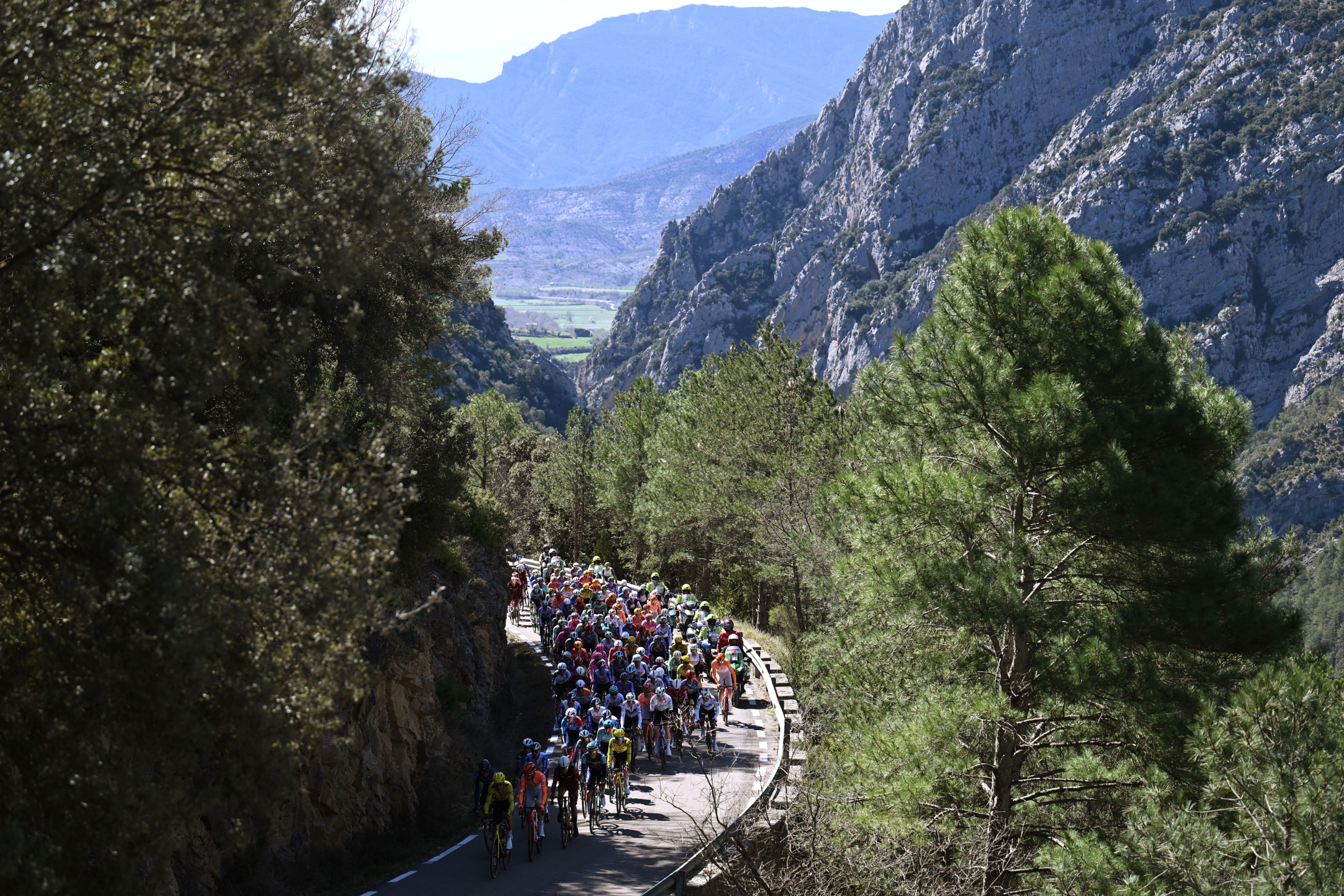
The 2026 route follows a familiar but strategically layered design: early flat stages favoring sprinters, followed by decisive mountain stages, and concluding with a technical circuit in Barcelona.

- Total distance: 1,059.1 km
- Stages: 7
- Teams: 23 (17 WorldTeams + 6 ProTeams)
This structure ensures that no single rider profile dominates. Sprinters, climbers, and all-rounders each have opportunities, but success depends on consistency across terrain types.
The presence of major teams such as INEOS Grenadiers, Visma–Lease a Bike, and Red Bull–Bora–Hansgrohe has intensified competition, particularly in the battle for general classification.

Early Stages: Control and Consistency
The opening phases of the race established a clear narrative: control by Dorian Godon.
- Stage 1 winner: Godon
- Stage 3 winner: Godon
- General classification leader after Stage 4: 15h 30′ 47”
Godon’s repeated success in flat stages allowed him to build a time buffer early, positioning him as the rider to beat. His consistency also secured leadership in both time and points classifications during the opening half of the race.
Meanwhile, competitors such as Remco Evenepoel and Tom Pidcock remained within striking distance, indicating that the race would likely be decided in the mountains rather than the flats.
Stage 4: Weather Alters the Competitive Equation
Stage 4, originally designed as a decisive mountain test from Mataró to Vallter, became a defining moment—not for climbing, but for adaptability.
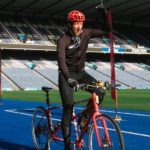

Due to severe wind conditions, including gusts reaching 90 km/h, organizers were forced to modify the route and remove the summit finish. The stage was shortened and rerouted to Camprodon, fundamentally changing its competitive profile.
This shift transformed what was expected to be a climber’s stage into a sprint finish.
Sprint Outcome
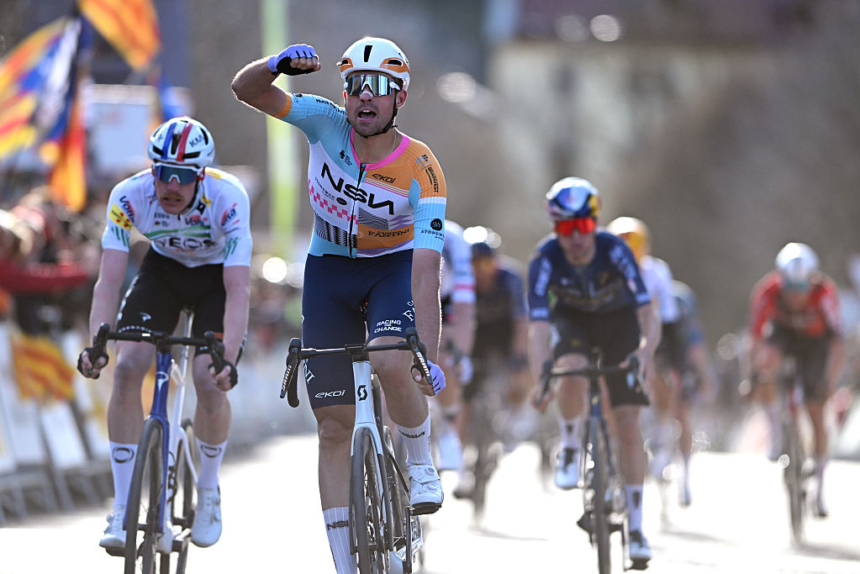
- Stage winner: Ethan Vernon
- Time: 4h 01′ 03”
Vernon capitalized on the altered conditions, delivering a decisive sprint victory. His post-stage remarks highlighted the tactical recalibration required:
“The change calmed everything down… we made the plan to come out of the last roundabout in first place and then go for it.”
The result demonstrated how quickly race strategy can pivot when environmental constraints intervene.
General Classification Tightens
Despite Vernon’s stage win, Godon retained the overall lead, with the standings tightening significantly:
- 1st: Dorian Godon
- 2nd: Tom Pidcock (+13 seconds)
- 3rd: Remco Evenepoel (+14 seconds)
- 4th: Jonas Vingegaard (+24 seconds)
Pidcock’s third-place finish on Stage 4, combined with bonus seconds, allowed him to climb to second overall. His assessment reflected the complexity of racing conditions:
“There was a massive headwind… but third is good.”
With margins this narrow, the remaining mountain stages—particularly Stage 5 and Stage 6—are expected to determine the final outcome.
Classification Battles Beyond Yellow
Beyond the general classification, multiple competitions are unfolding simultaneously:
- Points classification: Led by Dorian Godon (26 pts)
- Mountains classification: Led by Baptiste Veistroffer (39 pts)
- Young rider: Simone Gualdi
- Best team: INEOS Grenadiers
These parallel contests add tactical layers. Teams must balance stage ambitions with classification objectives, often forcing strategic compromises.
Regulation and Discipline: The Role of Race Officials
Another dimension shaping the race is regulatory enforcement. Race commissaires have issued fines and warnings across stages, reinforcing adherence to competition rules.
Notable decisions include:
- CHF 500 fine for improper feeding (Stage 1)
- CHF 500 fine for littering outside designated zones (Stage 3)
While these incidents have not yet altered major standings, such penalties can become decisive in tightly contested races.
The Decisive Phase: Mountains and Montjuïc
With key mountain stages still ahead, the race is entering its most critical phase.
- Stage 5: La Seu d’Urgell to La Molina (high mountain finish)
- Stage 6: Berga to Queralt (mountain stage)
- Stage 7: Barcelona circuit (Montjuïc laps)
These stages will test climbing ability, endurance, and team coordination. Riders like Vingegaard, known for high-altitude performance, are expected to play a decisive role.
The final stage in Barcelona, featuring repeated climbs on Montjuïc, traditionally offers opportunities for late attacks but rarely overturns large time gaps—making the preceding mountain stages critical.
Broader Implications: A Race Reflecting Modern Cycling
The 2026 Volta a Catalunya illustrates several broader trends in professional cycling:
1. Weather as a Tactical Variable
Extreme conditions are increasingly influencing race design and outcomes, requiring teams to adapt rapidly.
2. Multi-Disciplinary Riders
The tight classification gaps highlight the importance of riders who can perform across terrains—not just specialists.
3. Strategic Depth
From sprint positioning to mountain pacing, success depends on coordinated team strategy rather than individual brilliance alone.
Conclusion: A Race Still in Flux
As the Volta a Catalunya 2026 approaches its final stages, the race remains finely balanced. Dorian Godon holds the lead, but the margins are minimal, and the decisive terrain lies ahead.
With elite contenders like Tom Pidcock, Remco Evenepoel, and Jonas Vingegaard poised to attack, the outcome is far from settled. Weather disruptions, tactical adjustments, and climbing performance will collectively determine the final classification.
What is already clear is that this edition has delivered a technically rich and unpredictable contest—one that underscores why the Volta a Catalunya remains a key fixture in the cycling calendar.