

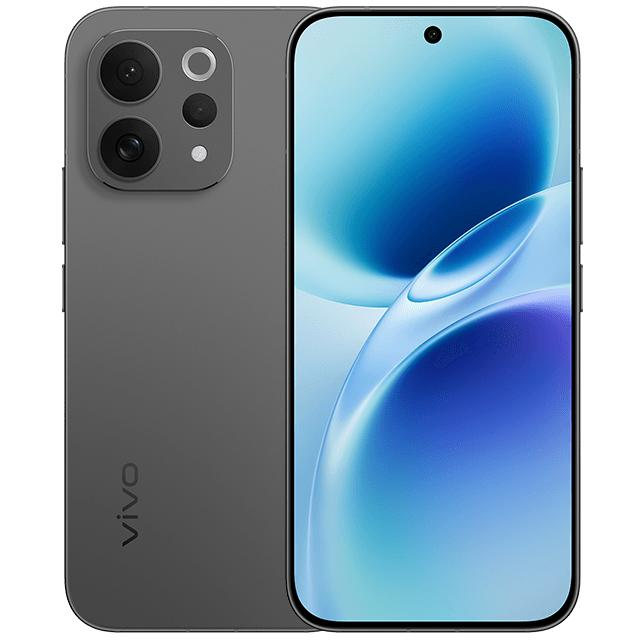
vivo S50t Gets Official — And the Difference From the S50 Is Almost Absurd
Vivo has officially expanded its S50 smartphone lineup with the launch of the new vivo S50t, a device that immediately sparked confusion, amusement, and debate across the tech community. At first glance, the S50t appears to be another premium mid-range flagship from the company. But once the specifications are compared side by side with the original vivo S50, one surprising reality becomes impossible to ignore.
The vivo S50t is almost completely identical to the vivo S50.
In fact, the only real change is the storage technology. The standard S50 ships with faster UFS 4.1 storage, while the newly launched S50t uses older UFS 3.1 storage instead. Everything else — from the display and chipset to the cameras and battery — remains virtually unchanged.
That tiny adjustment, however, allows Vivo to shave roughly CNY 100 (about $14) off the retail price.
And surprisingly, that small downgrade has generated a much bigger conversation about smartphone strategy in 2026.
A “New” Phone That Is Barely New
The vivo S50 lineup originally debuted in December with the standard vivo S50 and the S50 Pro mini. Now Vivo has quietly added the S50t as a third model in the series.
But instead of introducing a redesigned device or major feature improvements, Vivo took a different route: it essentially repackaged the same hardware with slightly slower storage.
That means buyers still get:
- A 6.59-inch AMOLED display
- 1260×2750 resolution
- 120Hz refresh rate
- Snapdragon 8s Gen 3 processor
- 12GB or 16GB RAM
- 512GB storage
- 50MP main camera with OIS
- 50MP periscope telephoto lens with 3x optical zoom
- 8MP ultrawide camera
- 50MP selfie camera
- 6,500mAh battery
- 90W wired fast charging
The only specification that changes is the move from UFS 4.1 to UFS 3.1 storage.
For many consumers, that may not sound dramatic. UFS storage mainly affects how quickly apps open, how fast files transfer, and how responsive the system feels during intensive tasks. UFS 4.1 is significantly faster on paper, but in day-to-day usage many casual users may struggle to notice a major difference.
That is exactly what makes the S50t launch so unusual.
Why Would Vivo Do This?
The answer appears to be simple: pricing flexibility.
By replacing the newer storage standard with older UFS 3.1 chips, Vivo likely reduced manufacturing costs enough to create a slightly cheaper version of the S50 without redesigning the phone entirely.
The pricing reflects that strategy:
| Model | RAM + Storage | Price |
|---|---|---|
| vivo S50t | 12GB + 512GB | CNY 3,199 ($468) |
| vivo S50t | 16GB + 512GB | CNY 3,499 ($512) |
In both configurations, the S50t costs CNY 100 less than the original S50.
That tiny difference has led many people online to question whether the S50t needed to exist at all.
One commenter joked:
“Was vivo just trying to get rid of UFS 3.1 chips?”
Another wrote:
“Waste of resources.”
And perhaps the most common reaction was simple disbelief that a brand would create an entirely new model name over such a small hardware change.
Still a Very Powerful Smartphone
Despite the controversy surrounding its existence, the vivo S50t is undeniably a strong smartphone on paper.
The Snapdragon 8s Gen 3 processor keeps it firmly in premium territory, offering flagship-level performance for gaming, multitasking, and AI-assisted features. The chip is paired with LPDDR5X RAM, helping maintain fast system responsiveness even with the downgraded storage.
The camera system is another major highlight.
Vivo continues its push toward photography-focused smartphones by including:
- A 50MP primary sensor with optical image stabilization
- A 50MP periscope telephoto camera using Sony’s IMX882 sensor
- 3x optical zoom
- An 8MP ultrawide lens
- A 50MP front-facing selfie camera
Both front and rear cameras include dedicated flash units, a feature Vivo has increasingly emphasized in portrait photography marketing.
The battery setup is equally aggressive. A massive 6,500mAh battery paired with 90W wired charging positions the S50t among the endurance leaders in its category.
Premium Design Remains Intact
One area where Vivo did not compromise is design.
The S50t maintains the same slim chassis as the original model, measuring as little as 7.49mm in some variants despite the large battery inside. The device uses a satin-finish glass back with an aluminum frame for a premium feel.
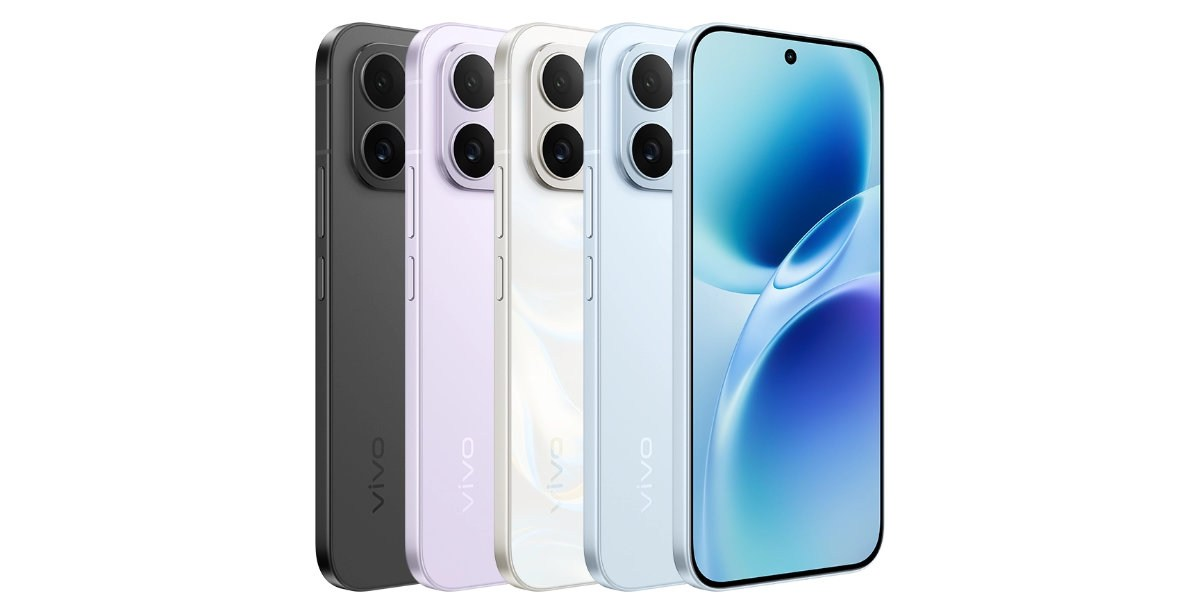
Vivo is offering the phone in several color options, including:
- Confession White
- Serenity Blue
- Inspiration Purple
- Space Black
The AMOLED display supports HDR content, P3 color gamut coverage, low blue light technology, and high-frequency PWM dimming for eye comfort.
Additional features include:
- Ultrasonic fingerprint scanner
- Wi-Fi 6
- NFC
- Bluetooth 5.4
- IR blaster
- X-axis linear motor
Software-wise, the phone ships with OriginOS 6 based on Android 16.
A Sign of a Bigger Smartphone Industry Trend?
The S50t may look strange in isolation, but it also reflects a broader shift happening across the smartphone industry.
Manufacturers are increasingly creating “micro-variants” of devices to target highly specific price points. Instead of developing entirely new hardware platforms, brands now tweak single components — storage speed, display resolution, charging wattage, or camera sensors — to create additional models with slightly different pricing structures.
Some observers pointed out that Vivo and Oppo have been especially aggressive with this strategy in recent years.
One commenter noted:
“Even the V70 is the exact same V60 with UFS 4.1 and higher resolution display. Everything else is same.”
That kind of feedback highlights growing consumer fatigue with incremental smartphone updates. Many users are starting to question whether yearly releases are becoming too repetitive.
Still, from a business perspective, the strategy can make sense. Reusing existing designs reduces development costs, simplifies manufacturing, and allows brands to maximize component inventories.
Will Buyers Actually Notice the Difference?
For most users, probably not.
The downgrade from UFS 4.1 to UFS 3.1 will primarily affect heavy workloads such as:
- Large file transfers
- 4K or 8K video editing
- High-end gaming load times
- Intensive multitasking
Average consumers using social media, streaming, photography, and messaging apps may never detect a meaningful difference.
That reality creates an interesting question: if real-world usage barely changes, does the cheaper S50t actually become the smarter purchase?
Some buyers may answer yes.
Others may simply pay the extra CNY 100 for the faster storage and peace of mind.
China-Exclusive for Now
At the moment, the vivo S50 series remains focused on the Chinese market. Some online discussions suggest that certain Vivo V-series global models may eventually share hardware similarities with the S50 lineup, but Vivo has not officially confirmed international launch plans for the S50t.
If a global version does appear, industry observers expect it could arrive under a different name, potentially within Vivo’s V-series branding.
Final Thoughts
The vivo S50t is one of the most unusual smartphone launches of 2026 so far — not because of revolutionary innovation, but because of how little actually changed.
Vivo essentially released the same phone twice, separated mainly by storage technology and a modest price difference.
Yet the story surrounding the S50t reveals something important about the modern smartphone industry: companies are now competing as aggressively on pricing precision and component optimization as they are on innovation itself.
Whether consumers embrace that strategy remains another question entirely.
For now, the vivo S50t stands as a fascinating example of how even a tiny hardware downgrade can become headline news in today’s hyper-competitive smartphone market.


