

Venmo’s Privacy Reset: Why the Payment App Is Finally Changing Course
For years, Venmo occupied a strange place in the digital economy. It was both a payment platform and an accidental social network, turning everyday financial transactions into a public feed of emojis, jokes, coffee runs, rent payments, and late-night pizza orders. That openness helped define Venmo’s identity during the social app boom of the 2010s.
Now, the company appears ready to rethink that approach.
Venmo has unveiled a major redesign of its mobile app that places a much stronger emphasis on user privacy, signaling one of the most significant philosophical shifts in the platform’s history. The updated experience changes the default visibility of transactions for new users, introduces clearer privacy controls, and attempts to rebuild trust after years of criticism surrounding how much user information was publicly exposed.
The redesign reflects a broader industry trend: social sharing is no longer automatically seen as a feature users want in financial technology products. Instead, consumers increasingly expect privacy by default.
A Long-Overdue Change to Default Privacy
The centerpiece of Venmo’s redesign is deceptively simple but deeply important.
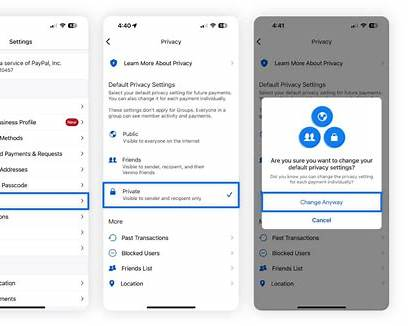
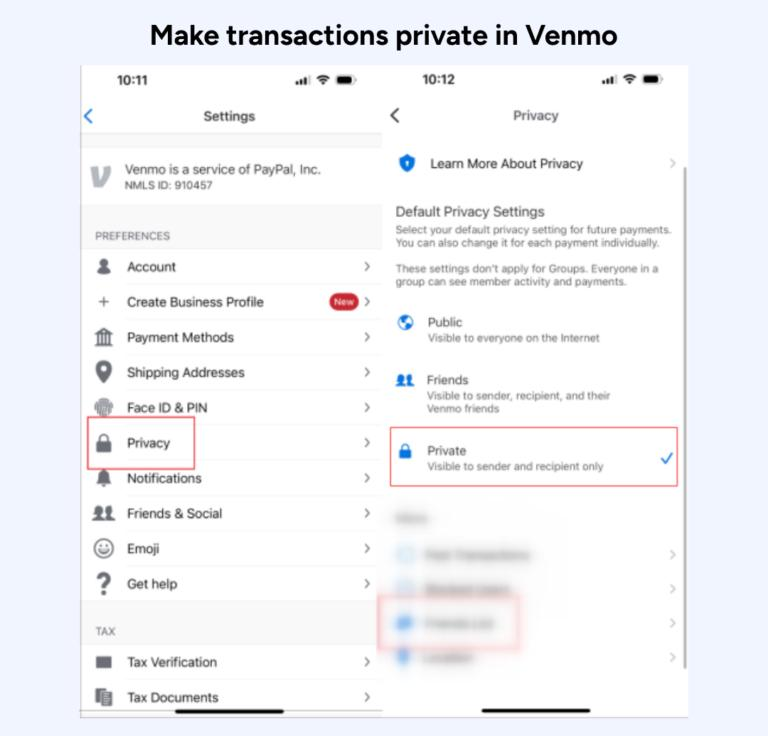
New users joining the platform will now have their transactions visible only to friends by default instead of being automatically public. Previously, anyone could potentially view payment activity unless users manually changed their settings.
The updated onboarding process also allows users to immediately choose among three visibility levels:
- Public
- Friends only
- Just me
Users can still adjust these settings later through the app’s privacy controls, but the critical difference is that the safer option is now the default.
Venmo is also redesigning the payment interface so users can clearly see whether a transaction is public, friend-visible, or private before completing a payment. The goal is to reduce accidental oversharing and make privacy decisions more transparent.
Alexis Sowa, the SVP and GM of Venmo, explained the company’s thinking behind the redesign:
“More visibility and control over what they share because for us it’s critical that they actually have trust in the Venmo experience.”
That statement highlights a growing realization across the fintech sector: trust is no longer just about security against hackers or fraud. It also includes protecting users from unnecessary exposure of their personal lives.
The Privacy Problems That Haunted Venmo
Venmo’s public transaction feed has been controversial for years.
Critics long argued that the app normalized the public broadcasting of financial relationships without users fully understanding the implications. While many transactions only included emojis or vague descriptions, the social graph itself often revealed significant personal information.
The company faced one of its biggest privacy controversies in 2021 when BuzzFeed News located President Joe Biden’s Venmo account and identified members of his inner circle using publicly accessible friend lists. At the time, Venmo did not offer a way to fully hide contacts.
The incident became a high-profile example of how exposed social payment networks could create security and privacy risks even for ordinary users, let alone public officials.
Venmo later introduced options to hide friend lists, but critics argued those controls were buried deep within settings and not enabled by default.
The issue resurfaced again in 2024 when reports revealed that Vice President JD Vance’s Venmo network could also be discovered through public contacts.
These controversies transformed Venmo into a cautionary tale within the tech industry about how seemingly harmless social features can expose sensitive relationship data.
A Social Network Disguised as a Payment App
Venmo’s original design philosophy emerged during an era when technology companies aggressively added social features to nearly every product category.
Music apps became social. Fitness apps became social. Even payment apps became social.
The idea was that visibility and engagement would drive growth. Public feeds encouraged interaction, created network effects, and turned otherwise mundane transactions into entertainment.
For younger users especially, Venmo became part of internet culture. People used clever emojis, inside jokes, and memes in payment descriptions. Public payment histories became conversation starters.
But attitudes toward online privacy have changed dramatically since then.
What once felt playful now increasingly feels invasive to many users.
Business Insider sharply criticized Venmo’s redesign for not going far enough, arguing that public-by-default financial relationships remain problematic. The publication described Venmo as a “privacy dumpster fire” and questioned why financial transactions should function as social content at all.
That criticism reflects a broader cultural shift away from oversharing and toward tighter digital boundaries.
Venmo Still Wants to Keep Its Social Identity
Interestingly, the redesign does not abandon Venmo’s social ambitions entirely.
Instead, the company appears to be trying to balance privacy with engagement.
The updated feed includes several new interactive features:
- Payment reactions
- “Pay Again” shortcuts
- “Say Thanks” actions
- A “Give a Shoutout” feature for supporting local businesses
- Larger visual elements and animated GIFs in transaction feeds
These additions suggest Venmo still sees value in maintaining its unique identity as a socially driven payment platform rather than becoming a purely utilitarian financial tool.
That strategy may help differentiate Venmo from competitors like Zelle, Cash App, Apple Cash, and traditional banking apps, many of which focus more narrowly on transaction speed and security.
However, the challenge will be convincing users that social interaction can coexist with meaningful privacy protections.
Why Privacy by Default Matters
The shift in Venmo’s defaults may sound technical, but it carries enormous real-world implications.
Research across the technology industry consistently shows that most users rarely modify default settings. That means the initial privacy configuration effectively determines how exposed the majority of users remain online.
Critics have long argued that companies exploit this behavior by making public sharing the easiest option.
Venmo’s move to “friends only” by default represents a recognition that safer defaults matter more than hidden customization menus.
Still, some privacy advocates believe the company should go further by making “only me” the standard option for all new accounts.
Concerns remain especially strong regarding public friend lists. Although users can now hide contacts manually, critics argue that most people either do not know the setting exists or never take the time to enable it.
For vulnerable users — including victims of stalking, therapists, journalists, activists, and sex workers — exposed financial relationship data can create serious personal safety risks.
Rolling Out the Redesign
Venmo says the redesign will launch gradually across iOS and Android devices over the coming weeks.
The first visible change will be the refreshed feed interface, followed by additional features and privacy enhancements over the coming months.
According to reports, the company expects the broader redesign to continue evolving through the fall of 2026.
The staggered rollout gives Venmo time to monitor user reactions while refining features based on feedback.
A Sign of Broader Industry Changes
Venmo’s redesign reflects wider changes happening across the technology landscape.
Over the last decade, platforms built around public sharing have increasingly faced pressure from regulators, users, and privacy advocates. Companies that once prioritized engagement metrics above all else are now under growing scrutiny regarding data exposure and default privacy settings.
Financial apps face especially high expectations because they handle highly sensitive behavioral information.
Consumers increasingly want payment platforms that feel secure, discreet, and predictable rather than performative.
Venmo’s pivot suggests the era of “social payments first, privacy second” may be ending.
The company is not abandoning its social DNA entirely, but it is acknowledging that users today expect far more control over what they share and who can see it.
Whether the redesign fully resolves Venmo’s longstanding privacy concerns remains debatable. Critics continue to argue that public contact visibility remains a major flaw.
Still, the redesign marks the clearest sign yet that Venmo understands its reputation around privacy can no longer be ignored.
In many ways, the company is catching up to a digital reality users have understood for years: financial activity is personal, and privacy should not be something users have to hunt through settings menus to find.


