


Rising Through Fire: The Vaibhav Sooryavanshi Story
This is not a typical coming-of-age story. It is a case study in accelerated development, where raw instinct meets structured training, and ambition aligns with opportunity.
- Rising Through Fire: The Vaibhav Sooryavanshi Story
- A Childhood Built on Obsession, Not Convenience
- The Philosophy of Attack: A Batting Identity Forms
- Breaking Through the System: Youth Cricket to National Spotlight
- Domestic Cricket: Records Before Adulthood
- IPL Entry: From Prospect to Impact Player
- The Academy Years: Where Discipline Met Fearlessness
- Influences and Mental Framework
- IPL 2026: A Shift from Individual Brilliance to Team Focus
- The Debate Around Age and Expectation
- What Comes Next: Projection and Risk
- Conclusion: More Than a Prodigy
A Childhood Built on Obsession, Not Convenience
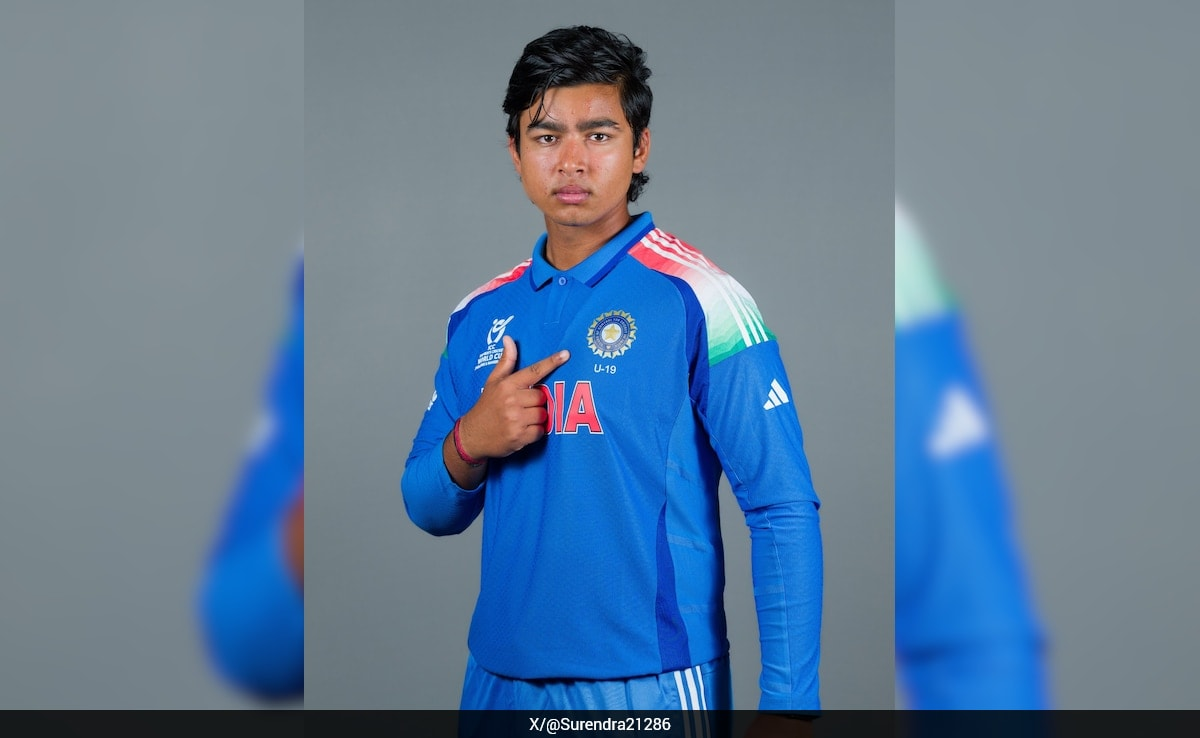
Sooryavanshi’s early life is rooted in the cricketing landscape of Bihar, where infrastructure limitations often challenge even the most determined athletes. Born on 27 March 2011 in Samastipur, his journey began unusually early—he started formal cricket training at the age of four.
The commitment required was significant. To train at a higher level, he and his father regularly traveled nearly 100 kilometers to Patna. That logistical strain is often where many careers stall. In Sooryavanshi’s case, it became foundational.



His father, himself an aspiring cricketer, played a decisive role in identifying and nurturing his potential. At eight, Vaibhav joined the GenNex Cricket Academy under coach Manish Ojha—a relationship that would shape his technical base and mindset.
Ojha quickly recognized two defining traits:
• an instinctive attacking approach
• an unusually high training tolerance


He recalls that Sooryavanshi would routinely face 400–500 balls in a single session and resist stopping unless forced.
This level of repetition is not incidental—it is how elite shot-making ability is constructed.
The Philosophy of Attack: A Batting Identity Forms
From the outset, Sooryavanshi’s game revolved around controlled aggression. Unlike many young players coached into conservatism, he leaned into risk.
His coach describes this clearly:



“He always liked to attack while batting and had beautiful timing.”
However, that approach initially created tension between instinct and structure. Coaches urged him to develop patience for longer formats, emphasizing singles, doubles, and innings-building. His response was revealing:
“Sir, if I can hit a six on that ball, why take a single?”
This was not defiance—it was a strategic worldview. He saw batting not as survival, but as dominance.
Over time, his game matured without losing that edge. The result: a rare combination of volume scoring and explosive acceleration.
Breaking Through the System: Youth Cricket to National Spotlight
Sooryavanshi’s rise through youth cricket was rapid and data-backed.
• Played U-19 cricket at just 12 years old
• Scored heavily in domestic tournaments
• Delivered a 58-ball century on U-19 Test debut
• Produced consistent performances in Asia Cup and quadrangular tournaments
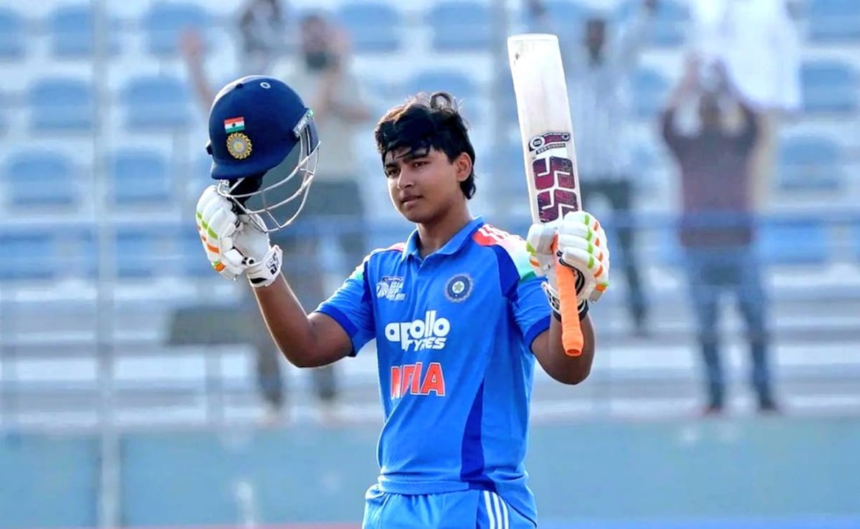
The defining moment came in the 2026 ICC Under-19 World Cup final. Facing England, he delivered a monumental innings:
• 175 runs off 80 balls
• 15 fours and 15 sixes
That innings did more than secure victory—it positioned him as one of the most explosive young batters globally.
He finished the tournament as both Player of the Final and Player of the Tournament, reinforcing his ability to perform under pressure.
Domestic Cricket: Records Before Adulthood
Even before entering franchise cricket, Sooryavanshi had already rewritten record books.
Key milestones include:
• First-class debut at 12 years and 284 days
• Youngest Indian List A debutant
• Youngest T20 debutant in Indian domestic cricket
One standout performance came during the Vijay Hazare Trophy:
• 190 runs off 84 balls
• Century in just 36 balls
• Broke AB de Villiers’ record for fastest 150 in List A cricket
These numbers are not just impressive—they are statistically anomalous for a player of his age.
IPL Entry: From Prospect to Impact Player
Sooryavanshi’s transition to franchise cricket came early and decisively. At just 13, he was signed by the Rajasthan Royals for ₹1.1 crore, becoming the youngest IPL signing.
His debut followed shortly after, and he immediately made an impact:
• First-ball six on IPL debut
• 34 runs off 20 balls in first match
• Became the youngest IPL debutant in history
The breakthrough moment came days later:
• 101 runs off 38 balls
• Century in 35 balls (second-fastest in IPL history)
This innings confirmed what scouts had already suspected—his game translates to elite-level competition.
The Academy Years: Where Discipline Met Fearlessness
Behind the headlines lies a structured development process shaped by rigorous training and targeted feedback.
During trials with Rajasthan Royals, Sooryavanshi was repeatedly tested with performance-based challenges:
• Score 18 runs in an over → completed in 3 balls
• Score 24 runs in an over → completed in 5 balls
• Adjust shot selection → successfully executed off-side hitting
Each scenario demonstrated adaptability—a critical trait often overlooked in young power hitters.
His coach highlighted that these trials validated not just skill, but execution under constraint.
Influences and Mental Framework
Sooryavanshi has cited Brian Lara and Yuvraj Singh as key influences.
His admiration centers on a specific trait:
the ability to finish matches single-handedly
This is reflected directly in his own approach—once set, he aims to remove the opposition from contention.
That mindset is increasingly valuable in modern T20 cricket, where momentum swings define outcomes.
IPL 2026: A Shift from Individual Brilliance to Team Focus
Heading into IPL 2026, Sooryavanshi’s narrative is evolving.
After scoring 252 runs in seven matches in IPL 2025—including a 35-ball century—his focus has shifted toward team success:
“This season, the goal is to win the trophy for the team.”
This signals a transition from breakout performer to team-oriented contributor—an important step in long-term career development.
The Debate Around Age and Expectation
With extraordinary performance at such a young age comes scrutiny. Questions have been raised regarding the accuracy of his official age, though his family has maintained that all documentation and testing are valid.
Regardless of the debate, the underlying reality remains unchanged:
his performance metrics are exceptional by any standard.
What Comes Next: Projection and Risk
Sooryavanshi’s trajectory places him at a critical juncture.
Key opportunities:
• Long-term IPL franchise cornerstone
• Transition to senior international cricket
• Brand and commercial growth
Key risks:
• Early burnout due to workload
• Over-reliance on aggressive shot-making
• External pressure and expectation management
If managed correctly, his development curve could mirror some of the most impactful careers in modern cricket.
Conclusion: More Than a Prodigy
Vaibhav Sooryavanshi represents a shift in how cricketing talent is identified, developed, and deployed. His journey is not simply about records or age—it is about a recalibration of what is possible within structured systems.
He is not waiting to mature into greatness.
He is attempting to accelerate into it.
The next phase will determine whether he remains a phenomenon—or becomes a defining figure in the sport’s evolution.