

Tulsi Gabbard at the Helm of U.S. Intelligence: A Political Flashpoint
A Defining Chapter in Intelligence Leadership
The tenure of Tulsi Gabbard as Director of National Intelligence (ODNI) has quickly evolved into one of the most politically charged periods in recent U.S. intelligence history. Her role—traditionally viewed as a coordinator of intelligence agencies and a neutral arbiter of national security assessments—has taken on a far more visible and controversial dimension.
At the center of the current debate is her decision in April 2026 to send a criminal referral to the U.S. Department of Justice tied to events surrounding the 2019 impeachment of Donald Trump. The move has triggered renewed scrutiny of intelligence oversight, whistleblower protections, and the boundaries between national security and political accountability.
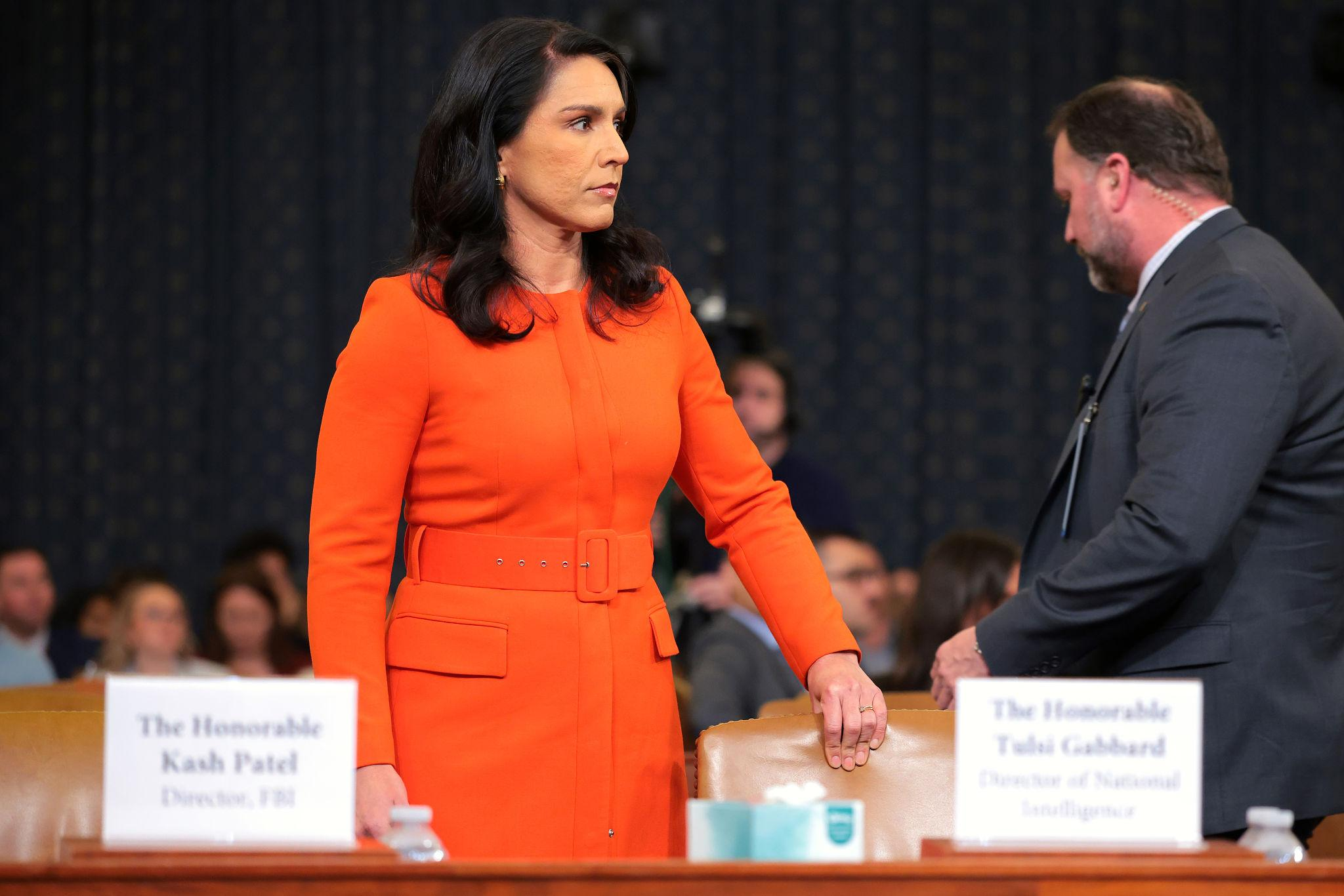
Revisiting 2019: The Impeachment Thread Reopened
Gabbard’s referral focuses on the origins and handling of the whistleblower complaint that ultimately led to Trump’s first impeachment. The complaint alleged that Trump had pressured Ukrainian President Volodymyr Zelenskyy to investigate a political rival, raising concerns about foreign interference in U.S. elections.
Her office confirmed that the referral seeks an investigation into:
- The whistleblower complaint itself
- The actions of the intelligence community watchdog
- The broader process that led to the impeachment inquiry
To support this action, Gabbard released a collection of documents, including testimony transcripts and internal notes, which she argues reveal procedural irregularities. According to her position, these materials suggest that established protocols may not have been followed in handling the complaint.
However, the documents do not explicitly establish criminal wrongdoing, leaving the matter open to legal interpretation and prosecutorial discretion.
A Sharp Political Divide
The referral has drawn immediate and polarized reactions across Washington.
Supporters view Gabbard’s actions as a necessary step toward accountability within intelligence institutions. They argue that revisiting controversial episodes—particularly those tied to presidential impeachment—helps reinforce transparency and trust in government processes.
Critics, however, see the move differently. Prominent lawmakers have warned that such actions could undermine whistleblower protections and discourage future disclosures of wrongdoing. One senior congressional figure argued that the referral may ultimately “chill future whistleblowers from coming forward,” raising concerns about long-term institutional consequences.
This divide reflects a broader tension: whether intelligence agencies should be re-examined through a political lens or shielded to preserve their independence.
Gabbard’s Strategic Shift in Intelligence Leadership
Gabbard’s approach to the ODNI role cannot be separated from her broader political evolution. Once a Democratic congresswoman and vice chair of the Democratic National Committee, she has gradually repositioned herself as a critic of what she describes as entrenched political and intelligence institutions.
Her recent actions—including:
- Releasing declassified intelligence materials
- Questioning past intelligence assessments
- Aligning with narratives critical of institutional bias
—have reinforced her image as an anti-establishment figure operating within a traditionally nonpartisan office.
This shift has implications beyond a single referral. It signals a redefinition of how the intelligence community interacts with political history, particularly controversial episodes like the Russia investigation and impeachment proceedings.
The Broader Intelligence Landscape
The Office of the Director of National Intelligence sits at the apex of the U.S. intelligence apparatus, overseeing agencies such as the CIA, NSA, and FBI intelligence operations. Historically, the office has aimed to:
- Coordinate intelligence sharing
- Provide objective national security assessments
- Maintain independence from partisan influence
Gabbard’s tenure challenges this traditional model. By actively revisiting politically sensitive cases, she is expanding the scope of the office into areas that intersect more directly with legal and political accountability.
This raises structural questions:
- Should intelligence leadership revisit past political controversies?
- Where is the boundary between oversight and political advocacy?
- How should whistleblower processes be protected or re-evaluated?
Implications for Whistleblowers and Institutional Trust
One of the most immediate concerns stemming from the referral is its potential impact on whistleblower systems. These mechanisms are designed to allow government officials to report misconduct without fear of retaliation.
If whistleblowers perceive that their actions could later become the subject of criminal scrutiny, it may deter future disclosures. At the same time, proponents argue that oversight must apply to all actors, including those who initiate high-profile investigations.
This tension highlights a fundamental challenge in democratic governance: balancing accountability with protection.
A Reflection of Political Polarization
Gabbard’s actions also mirror a wider trend in U.S. politics—deepening polarization and declining trust in institutions.
Her alignment with narratives that question intelligence community neutrality resonates with a segment of the population that views government agencies with skepticism. At the same time, critics warn that such narratives may erode confidence in institutions that rely on public trust to function effectively.
In this sense, the ODNI is no longer just a coordinating body; it has become a focal point in the national debate over truth, power, and accountability.
What Comes Next
The Department of Justice now faces the decision of whether to pursue a formal investigation based on Gabbard’s referral. This process will determine:
- Whether any legal violations occurred
- The scope of potential investigations
- The precedent set for future intelligence-related referrals
Regardless of the outcome, the episode is likely to have lasting consequences for how intelligence leadership is perceived and exercised in the United States.
Conclusion: Intelligence Leadership in a New Era
Tulsi Gabbard’s tenure as Director of National Intelligence marks a departure from convention. By engaging directly with politically sensitive historical events, she has transformed the ODNI into a more visible and contested institution.
Whether viewed as a push for accountability or a politicization of intelligence, her actions underscore a broader reality: the boundaries between national security, law, and politics are increasingly difficult to separate.
As the Justice Department weighs its next steps, the implications will extend beyond a single case—shaping the future relationship between intelligence agencies, political leadership, and the public they serve.


