Truman Capote Net Worth, Relationships, Age/Birthdate & Birthday
Overview of Truman Capote — net worth, relationships, age/birthdate, and birthday.
 loveness92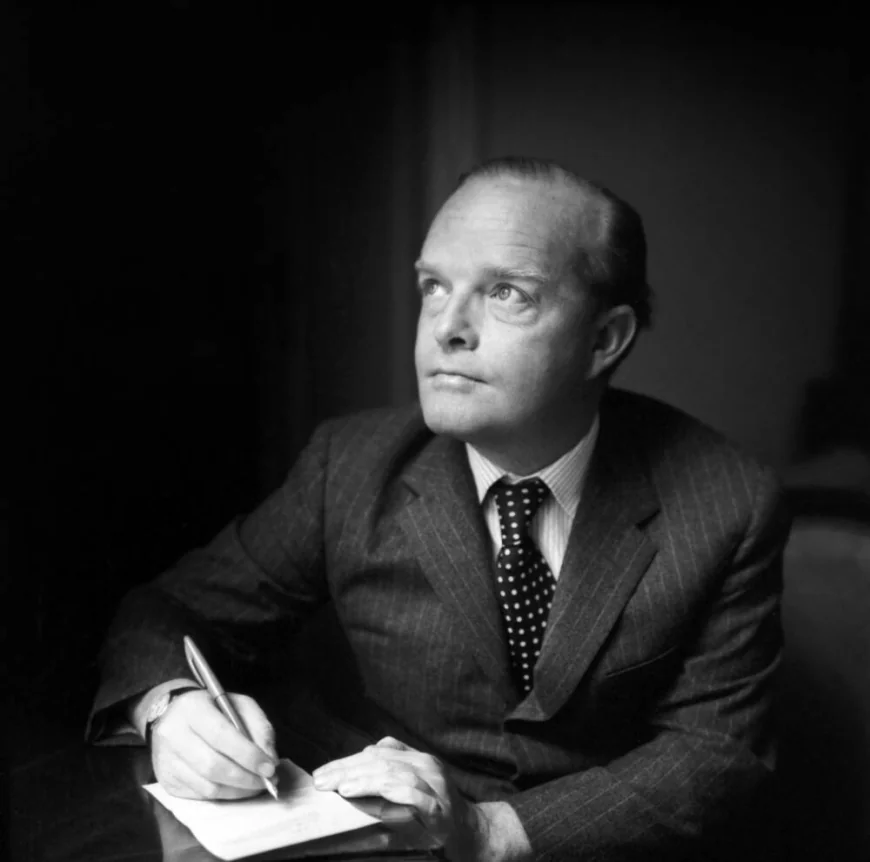
The Complicated Life of Truman Capote — Talent, Fame, and Fragile Riches
A Name Reinvented, A Voice Unmatched
Born Truman Streckfus Persons on September 30, 1924 in New Orleans, Louisiana, the man who would become known as Truman Capote was early on marked by upheaval and reinvention. His parents, Lillie Mae Faulk and Archulus Persons, separated when he was very young; subsequently, his mother remarried, and in 1935 his stepfather formally adopted him — and so he adopted the surname “Garcia Capote.”
That new name proved fitting. Capote grew into a writer whose voice — lyrical, precise, at times chilling — defied easy categorization: part Southern Gothic reverie, part cold-eyed crime journalism.
From the tender age of 11 he was already writing fiction, and by 1945 his short story “Miriam” had earned publication — soon followed by critical acclaim. His earliest works displayed a sensitivity toward loneliness, identity, and longing — themes that would haunt much of his later writing.
From Southern Roots to Literary Stardom
Capote’s early adult years were spent navigating a fractured childhood and reinventing his identity. He spent parts of his youth in Monroeville, Alabama — living with relatives and forging a deep friendship with a young neighbor named Harper Lee, who would later write To Kill a Mockingbird. That childhood friendship left its mark; Lee’s own literary sensibility reflected some of the same sensibilities Capote had developed: a fascination with the outsider, innocence, and moral complexity.
Capote’s debut novel, Other Voices, Other Rooms (1948), announced him as a voice to watch — a young writer unafraid of emotional truth, sexual ambiguity, and Southern Gothic decay.
His subsequent work grew in ambition and scope. With the publication of Breakfast at Tiffany's (1958) and — more consequentially — In Cold Blood (1965), Capote solidified his place in American letters. The latter — a nonfiction “true crime” novel based on the brutal 1959 murders of the Clutter family in Kansas — helped popularize a form of reportage blending novelistic detail and journalistic rigor. The book’s immersive research, psychological insight, and stylistic boldness became a model for what would come to be known as “New Journalism.”
Stardom, High Society, and the Allure of Celebrity
As Capote’s literary star ascended, he embraced a life as much about image and society as about writing. Known for his sharp wit, flamboyant style, and social charisma, he became a fixture in high society — particularly among the elegant “swans,” his circle of high-profile, glamorous friends.
In 1966, Capote hosted his legendary “Black and White Ball,” widely described as one of the most glamorous gatherings of its era. The event crystallized his dual identity as a literary talent and socialite — someone who moved effortlessly between the worlds of books and glamour.
Wealth, Royalties — and the Harsh Reality of Fame
Tracking Capote’s net worth is complicated, and estimates vary — reflecting both his peaks of success and the perilous decline that followed. Some sources — such as a profile on a celebrity-net-worth site — suggest his estate was valued at around US$500,000 at the time of his death.
Yet other outlets, including a recent 2024 article, posit a much higher figure — as much as US$10 million.
Why such discrepancy? Capote earned substantial advances and royalties — especially after the success of Breakfast at Tiffany’s and In Cold Blood. But the later decades of his life were marked by erratic productivity, broken promises (notably his unfinished novel Answered Prayers), and mounting personal turmoil. The frequent partying, expensive lifestyle, substance abuse, and declining literary output all likely eroded his financial base.
Thus, calling him “wealthy” at death may overstate the case — but in his prime, Capote’s bankability, cultural influence, and ability to draw social cachet were undeniably substantial.
Loves, Losses, and a Life Lived Boldly
Capote’s personal relationships were as complex and storied as his fiction. Despite the conventions of his time, he lived openly as a gay man.
For most of his adult life, his primary partner was Jack Dunphy — a writer and former dancer — whom he met in 1948. Their partnership would last, in one form or another, until Capote’s death in 1984. While at times their relationship became platonic, they remained deeply connected: Dunphy was named the chief beneficiary of Capote’s estate.
Before Dunphy, Capote had other significant relationships — including with Newton Arvin, a literature professor to whom Capote dedicated Other Voices, Other Rooms. That early bond speaks to Capote’s sensitivity and longing for intellectual intimacy, even as his public persona grew louder and more flamboyant.
In the 1970s, Capote met banker John O'Shea — a relationship that became tumultuous, marked by substance abuse and emotional abuse according to many accounts. Their time together coincided with some of Capote’s darkest years.
The Final Act — Triumph, Decline, and Enduring Legacy
After the soaring success of In Cold Blood, Capote never again matched that creative or commercial peak. His later works, including the mixed-genre collection Music for Chameleons (1980), showed flashes of his brilliance. But personal demons — addiction, betrayal among once-close friends (after the partly published Answered Prayers caused a scandal), increasing reclusiveness — began to overshadow his genius.
On August 25, 1984, Capote died in Los Angeles. The official cause: “liver disease complicated by phlebitis and multiple drug intoxication.”
Though his life ended in tragedy and fragmentation, his influence never waned. He is now widely regarded as one of the foundational figures of modern American literature — especially for bridging the divide between high fiction and reportage, and for giving voice to marginalized identities with candor, vulnerability, and stylistic daring.
What His Story Means Today
Truman Capote’s story is one of paradox: brilliance and vulnerability, glamour and loneliness, public fame and private turmoil. The volatility of his finances reminds us that literary greatness doesn’t always equate to lasting wealth. His relationships — complex, sometimes loving, sometimes destructive — reflect the human cost of brilliance and fame.
Yet for all the darkness, Capote left behind a body of work that continues to be read, studied, adapted — and admired. From the haunting intimacy of Other Voices, Other Rooms, to the urban mythos of Breakfast at Tiffany’s, to the cold-blooded realism of In Cold Blood, his writing refuses to fade.
In the end, Capote was never just the sum of his wealth or his scandals. He was a storyteller — brilliant, flawed, unforgettable. And long after the final page, his voice still lingers.