


Tropical Cyclone Narelle Red Sky: When Nature Turned Day Into Crimson Twilight
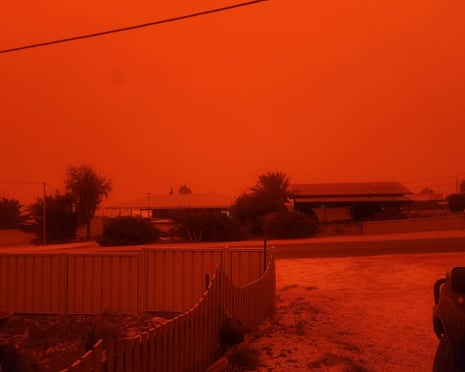
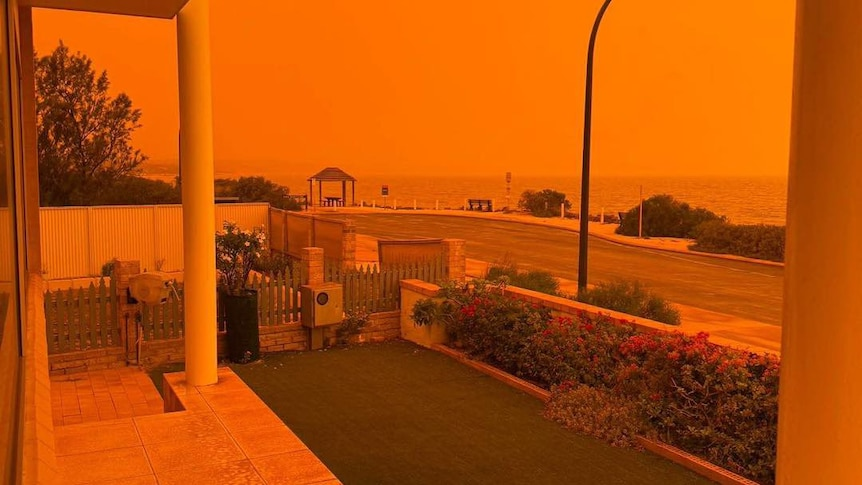
As Tropical Cyclone Narelle approached the coast of Western Australia, it delivered more than destructive winds and coastal damage—it transformed the sky itself into a deep, unsettling red. Across regions like Shark Bay and Denham, daylight faded into a surreal crimson haze, creating what many described as an “apocalyptic” scene.
For residents, the experience was immediate and physical. The air thickened with dust, visibility dropped, and the environment took on a strange, muted glow. One observer described how “it got into your throat and into your mouth… even in your eyes,” highlighting how intense the conditions became.
This was not simply a visual anomaly—it was the result of a rare convergence of meteorological forces, geography, and atmospheric physics.
The Build-Up: A Cyclone With an Unusual Path
A System That Crossed the Continent
Cyclone Narelle followed a complex and unusual route:
- It first made landfall in Queensland’s Cape York Peninsula
- Moved across the Northern Territory
- Re-intensified over the Indian Ocean
- Finally approached Western Australia
At its peak, the cyclone reached Category 4 intensity, with wind gusts exceeding 200 km/h, powerful enough to reshape both landscapes and infrastructure.
Winds That Triggered a Secondary Phenomenon
As the cyclone neared Western Australia, its outer wind bands began interacting with the region’s dry terrain. These winds lifted massive quantities of loose, iron-rich soil into the atmosphere, setting the stage for a large-scale dust storm.
The result: a dramatic shift in atmospheric composition, with dense layers of mineral particles suspended in the air.
The Red Sky Explained: Science Behind the Phenomenon
A Shift in Light Behavior
Under normal conditions, the sky appears blue due to the scattering of shorter wavelengths of light. But during this event, the atmosphere was filled with large dust particles, altering how light traveled.
The effect can be understood in three steps:
- Dust Saturation
Strong winds carried thick clouds of dust high into the atmosphere. - Filtering of Sunlight
The dust blocked and scattered shorter wavelengths (blue light). - Dominance of Red Wavelengths
Longer wavelengths—red and orange—became more visible, creating the crimson sky.
The Role of Iron-Rich Soil
Western Australia’s landscape is rich in iron oxide, giving its soil a distinctive red color. When this soil is lifted into the air:
- It intensifies red light reflection
- Enhances the saturation of the sky’s color
- Produces a deeper, more uniform crimson tone
Cloud Cover Amplified the Effect
What made this event particularly striking was the combination of dust with thick cloud cover. Instead of direct sunlight filtering through, the light became diffused—spreading evenly across the sky and ground.
This created a darker, more immersive red glow, unlike typical dust storms where sunlight still breaks through.
Ground-Level Impact: More Than Just a Visual Event
Visibility and Air Quality
The dust storm had immediate consequences:
- Visibility dropped sharply across affected regions
- Airborne particles increased significantly
- Residents experienced discomfort due to dust inhalation
In some areas, the atmosphere became so dense that everyday activities were disrupted.
Structural Damage and Economic Losses
Cyclone Narelle’s impact extended far beyond the red sky:
- Exmouth experienced severe structural damage, including destroyed roofs and damaged infrastructure
- Local airports and marinas were heavily affected
- Agricultural losses were significant, with reports of over 80% crop damage in some areas
- Dozens of pastoral properties suffered extensive destruction
Government relief measures were introduced, including financial support for affected households.
A Ripple Effect on Global Energy Markets
The cyclone also disrupted critical energy infrastructure:
- Damage to LNG facilities, including the Wheatstone plant, delayed production
- More than 30 million metric tons per year of LNG supply were affected
- Combined with geopolitical disruptions, over 25% of global LNG supply faced interruptions
This underscores how regional weather events can influence global supply chains and energy markets.
Why This Event Stands Out
A Rare Combination of Factors
While dust storms are not uncommon in Australia, this event was unusual due to:
- The intensity of the cyclone’s wind system
- The high concentration of iron-rich dust
- The presence of thick cloud cover
- The timing and scale of atmospheric disturbance
Meteorologists described it as one of the most striking examples of this phenomenon.
A Visual Event That Went Global
Images of the red sky quickly spread worldwide, appearing across major international platforms. The combination of dramatic visuals and extreme weather made it a defining environmental moment.
What It Signals for the Future
Events like the Cyclone Narelle red sky highlight broader trends:
- Increasing frequency of extreme weather systems
- Greater interaction between climate conditions and land surfaces
- Rising vulnerability of infrastructure and supply chains
Regions with dry soil and strong wind systems may experience similar events more frequently in the future.
Conclusion
The red skies caused by Tropical Cyclone Narelle were not just visually striking—they were a clear demonstration of how powerful and interconnected natural systems can be. From atmospheric physics to global energy disruptions, the event bridged science, environment, and economics in a single moment.
It serves as both a reminder of nature’s intensity and a case study in how environmental conditions can reshape the world—sometimes in ways that are as beautiful as they are disruptive.