


Tournament of Champions: Inside the High-Stakes Culinary Showdown Defining Modern Food TV
The Pressure Cooker Returns: Why This Season Matters
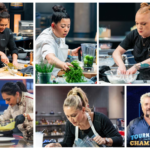
The latest chapter of Tournament of Champions has reached a decisive turning point. As Season 7 moves into its quarterfinal stage—known as the “Great 8”—the competition intensifies dramatically, transforming from a broad culinary contest into a precision battle among elite chefs.
- The Pressure Cooker Returns: Why This Season Matters
- How Tournament of Champions Works: A System Built for Chaos
- The Great 8: A Field Defined by Skill and Momentum
- Quarterfinal Results: How the Final Four Emerged
- The Stakes: More Than Just Prize Money
- The Role of the Randomizer: Strategy Meets Uncertainty
- Cultural Impact: Why the Show Resonates
- What Comes Next: The Road to the Finale
- Final Analysis: A Competition Defined by Precision and Pressure
Hosted by Guy Fieri, the Food Network series has built a reputation for pushing professional chefs beyond their limits. But this week’s episode, titled “The Great 8 Are Here”, represents something more significant than just another round—it’s the moment where contenders either prove championship-level composure or fall short under extreme pressure.
A $150,000 grand prize and the coveted Tournament of Champions belt are on the line. More importantly, legacy is at stake.
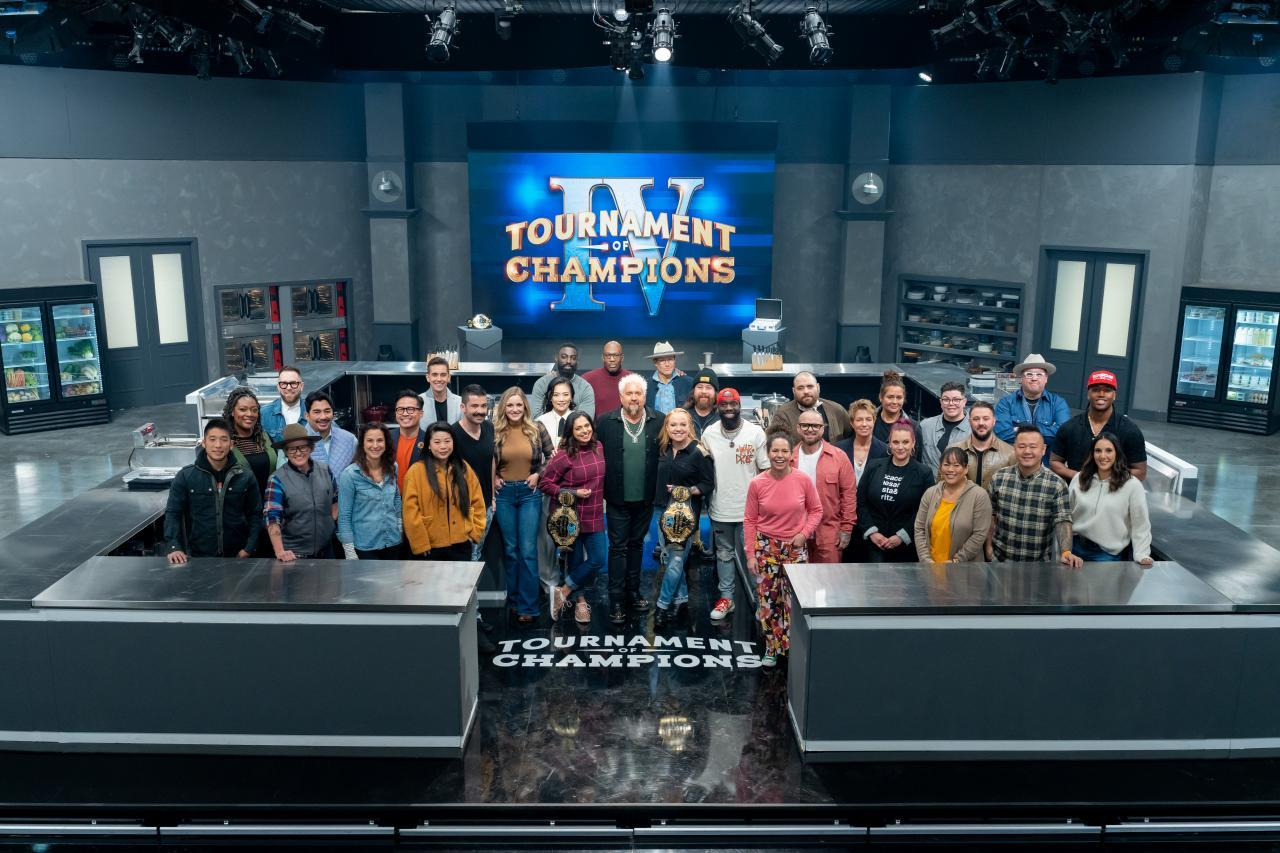
How Tournament of Champions Works: A System Built for Chaos
At its core, Tournament of Champions is structured as a bracket-style elimination competition. Season 7 began on March 1, 2026, with 34 elite chefs, each entering with credentials ranging from Michelin recognition to television fame.
The process achieves a clear objective: identify not just the most talented chef, but the most adaptable.



The Competition Framework
- Head-to-head battles determine advancement
- Blind judging ensures no bias toward celebrity chefs
- The Randomizer dictates ingredients, equipment, and cooking style
- Sudden death format eliminates chefs instantly after each match
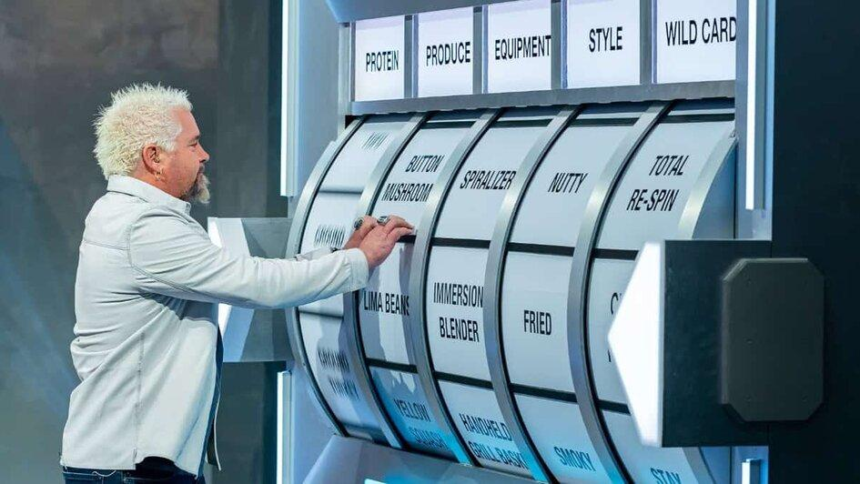
The Randomizer is the defining mechanic. It forces competitors to cook with unexpected combinations—often including unfamiliar proteins, international ingredients, or unconventional tools. This system removes predictability and rewards real-time decision-making.
As Fieri has emphasized about the show’s authenticity:
“Live audience. What you see is what you get. No bulls***. No changing the rules. No changing the clock.”
The Great 8: A Field Defined by Skill and Momentum
By the time the competition reaches the quarterfinals, the remaining chefs have already eliminated over half the field. Each competitor in the “Great 8” arrives with a distinct narrative.
Standout Contenders
- Jet Tila – A five-time finalist and statistically one of the most dominant chefs this season
- Stephanie Izard – The first female Top Chef winner, known for technical precision and creativity
- Bryan Voltaggio – A consistent runner-up seeking long-awaited redemption
- Kenny Gilbert – The breakout contender who defeated Aarón Sánchez in a major upset
Other competitors, including Marcel Vigneron, Shirley Chung, Jonathon Sawyer, and Joe Sasto, complete a lineup that blends experience with unpredictability.



What distinguishes this group is not just technical ability, but resilience. Several chefs fought through qualifiers, while others dominated early rounds. The result is a bracket where outcomes are increasingly difficult to predict.
Quarterfinal Results: How the Final Four Emerged
The quarterfinals serve a specific purpose: reducing the competition from eight to four chefs, setting up the final stage of the tournament.
Key Matchups and Outcomes
- Jet Tila vs Jonathon Sawyer
Jet Tila advanced with a narrow 79–78 victory, winning on presentation after a tie in other categories. - Kevin Lee vs Joe Sasto
Kevin Lee secured a decisive 84–76 win, driven by strong performance in taste and Randomizer execution. - Stephanie Izard vs Kenny Gilbert
Kenny Gilbert advanced 78–74, continuing his momentum as one of the tournament’s biggest surprises. - Bryan Voltaggio vs Shirley Chung
Voltaggio edged out Chung in a tight 87–85 contest, winning by margins in taste and presentation.
These results achieved a notable milestone: the Final Four now guarantees a male winner, as the remaining female competitors were on the same side of the bracket.
The Stakes: More Than Just Prize Money
Tournament of Champions Prize Structure
| Achievement | Details |
|---|---|
| Grand Prize | $150,000 cash + TOC VII belt |
| Total Competitors | 34 chefs |
| Season Length | 8 weeks |
| Current Stage | Final Four set |
While the $150,000 prize is significant, the real value lies in professional prestige. Winning Tournament of Champions can reshape a chef’s career—boosting restaurant visibility, media presence, and industry credibility.
For chefs like Bryan Voltaggio, who has repeatedly come close to victory, the title represents validation. For newcomers like Kenny Gilbert, it offers a breakthrough moment.
Gilbert captured that mindset succinctly:
“I’m so pumped. This is what I came here to do.”
The Role of the Randomizer: Strategy Meets Uncertainty
The Randomizer remains the competition’s most disruptive force. Its categories—protein, produce, equipment, style, and wildcard ingredient—are selected instantly before each round.
In the quarterfinals, combinations included:
- Whole branzino with canned ackee
- Pork collar with quince
- Duck with bananas
- Iberico pork with passionfruit
These combinations are not designed for convenience. They force chefs to reinterpret flavors across cultures and techniques, often within a strict 40-minute cooking window.
This mechanism ensures that even the most accomplished chefs cannot rely solely on experience. Adaptability becomes the deciding factor.
Cultural Impact: Why the Show Resonates
Tournament of Champions reflects a broader shift in food television. Unlike traditional cooking shows that emphasize presentation and storytelling, this format prioritizes:
- Competitive intensity
- Technical execution
- Real-time problem-solving
The blind judging system also addresses long-standing concerns about bias in celebrity chef competitions. By removing identity from evaluation, the show places focus squarely on the dish itself.
Additionally, the inclusion of international ingredients highlights global culinary diversity. From Caribbean ackee to Asian cooking styles, the show mirrors the increasingly interconnected nature of modern cuisine.
What Comes Next: The Road to the Finale
The next phase of Season 7 is the two-hour finale airing April 19, 2026, featuring:
- Jet Tila vs Kevin Lee
- Bryan Voltaggio vs Kenny Gilbert
The winners of these matches will advance to the final showdown for the championship.
Each remaining chef represents a different storyline:
- Jet Tila – The seasoned contender seeking dominance
- Kevin Lee – A rising competitor entering his first Final Four
- Bryan Voltaggio – A veteran chasing redemption
- Kenny Gilbert – The underdog with momentum
Final Analysis: A Competition Defined by Precision and Pressure
The quarterfinals of Tournament of Champions demonstrate why the series has become one of the most compelling formats in competitive television.
It is not simply about cooking—it is about performing under constraints that eliminate comfort, predictability, and reputation. Every decision is exposed, every mistake magnified.
As the competition narrows to four chefs, the margin between victory and elimination continues to shrink. The final outcome will likely depend not on experience alone, but on execution in a single decisive moment.
That is the defining premise of Tournament of Champions: in a controlled environment designed for chaos, only one chef can adapt faster than the rest.