





Thunderstorms Explained: Power, Risk, and the Science Behind the Storm
A Sudden Shift in the Sky
Across regions as varied as Gujarat, Delhi-NCR, Northern California, and parts of the United States Midwest, a familiar pattern has emerged in recent forecasts: rising temperatures interrupted by bursts of rain, gusty winds, and thunderstorm activity. These storms, often brief but intense, are not isolated anomalies—they are a fundamental part of Earth’s atmospheric system.
- A Sudden Shift in the Sky
- What Is a Thunderstorm?
- The Science of Lightning: Nature’s High-Voltage Phenomenon
- Why Thunderstorms Are Increasingly Noticeable
- Regional Snapshots: Thunderstorms in Action
- The Hidden Risks: More Than Just Rain
- Safety During Thunderstorms: Practical Guidelines
- The Temporary Nature of Thunderstorms
- Broader Implications: Climate, Comfort, and Air Quality
- Looking Ahead: What Thunderstorms Tell Us
- Conclusion: Respecting the Power of the Storm
Recent bulletins from the India Meteorological Department highlight how thunderstorms are currently shaping weather patterns across large parts of India. With “light thunderstorm with lightning and surface wind of 30–40 kmph (in gusts), accompanied by light to moderate rain” expected in multiple districts, these systems are influencing daily life, travel, and even air quality.
But beyond the forecasts lies a deeper question: what exactly is a thunderstorm, and why does it matter so much?


What Is a Thunderstorm?
A thunderstorm is a localized weather system characterized by lightning, thunder, heavy rainfall, and often strong winds. At its core, it is driven by atmospheric instability—when warm, moist air rises rapidly into cooler layers of the atmosphere.
This rising air forms towering cumulonimbus clouds, the hallmark of thunderstorms. Inside these clouds, powerful updrafts and downdrafts create electrical charges, eventually leading to lightning.


What makes thunderstorms particularly significant is their intensity relative to their size. They can develop quickly, last for a short duration, and yet produce dramatic and sometimes dangerous effects.
The Science of Lightning: Nature’s High-Voltage Phenomenon
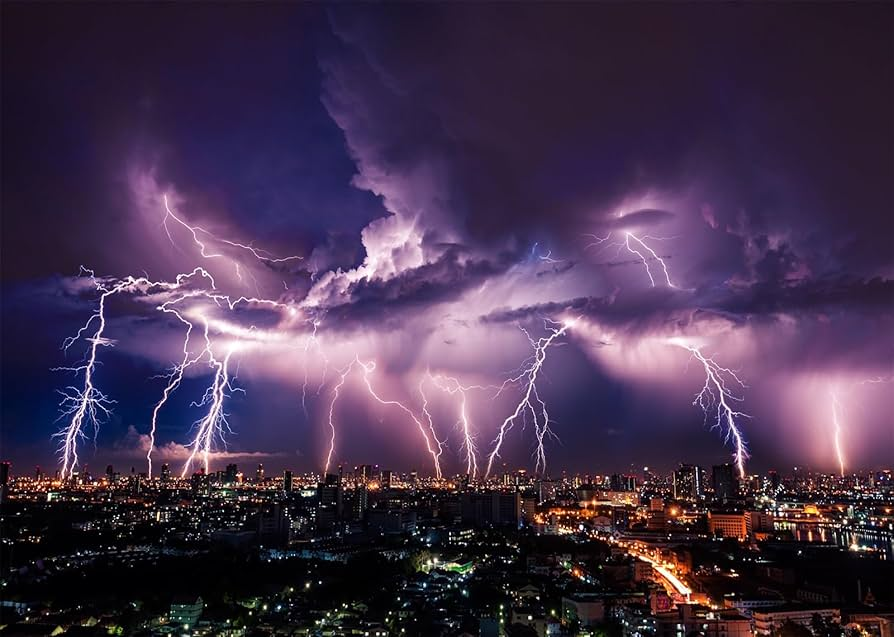
Lightning is the defining feature of a thunderstorm—and one of the most dangerous.
According to meteorological insights highlighted in recent safety discussions, a typical lightning bolt can carry 300 million volts of electricity and reach temperatures of approximately 50,000 degrees Fahrenheit. This makes it hotter than the surface of the sun.
Lightning occurs when electrical imbalances within a cloud—or between a cloud and the ground—become too great. The atmosphere then discharges this energy in a rapid, visible flash.


Thunder, the sound that follows, is simply the shockwave created by the sudden expansion of air heated by lightning.
A critical safety principle emerges from this:
“If you can hear thunder, you are technically within striking distance of lightning.”
Why Thunderstorms Are Increasingly Noticeable
Recent weather updates across multiple regions point to a recurring driver: western disturbances and shifting wind patterns.
In India, for example, the current thunderstorm activity is linked to a western disturbance positioned over northeast Pakistan and adjoining Afghanistan, combined with cyclonic circulations. These systems introduce moisture and instability into the atmosphere, creating ideal conditions for storms.
Similarly, in Delhi-NCR, meteorologists attribute recent thunderstorms to:
- Increased cloud formation
- Moisture inflow from western regions
- Pressure imbalances
- Changing wind directions
The result is a temporary but noticeable shift—cooler temperatures, cloudy skies, and intermittent rainfall.
Regional Snapshots: Thunderstorms in Action
Gujarat: Widespread Storm Activity
Forecasts indicate thunderstorms across multiple districts, including Ahmedabad, Rajkot, and Vadodara. Winds are expected to reach 30–40 km/h, accompanied by light to moderate rainfall.
The conditions are expected to stabilize after a short period, followed by rising temperatures and increased humidity—especially in coastal regions.
Delhi-NCR: Relief with a Warning
In Delhi and surrounding cities such as Noida and Gurugram, thunderstorms have brought:
- A temperature drop of 2–3°C
- Gusty winds up to 40 km/h
- Rain probability between 40% and 65%
While the weather offers relief from heat, authorities have issued alerts advising caution due to lightning and sudden weather shifts.
Northern California: Travel Disruptions Expected
Storm systems in Northern California are projected to bring:
- Rain chances rising from 30% to 65%
- Thunderstorm activity concentrated between 2 p.m. and 8 p.m.
- Reduced visibility and slick roads
The implications here are practical—commutes, outdoor plans, and infrastructure can all be affected.
Midwest United States: Severe Weather Potential
In parts of Nebraska and surrounding regions, thunderstorms are expected to develop along a cold front, with risks including:
- Large hail
- Gusty winds
- Continued precipitation over several days
These systems illustrate how thunderstorms can evolve into more severe weather events.
The Hidden Risks: More Than Just Rain
Thunderstorms are often underestimated because of their short duration. However, the associated hazards can be significant.
1. Lightning Strikes
Lightning is the most immediate danger. While the probability of being struck indoors is low, it is not zero. Electricity can travel through metal and water systems, which explains why experts advise against activities like showering during a storm.
A documented incident in Oklahoma in 2022 showed lightning traveling through a metal exhaust vent and striking a toilet—demonstrating how unpredictable its path can be.
2. Strong Winds
Gusty winds, often reaching 30–40 km/h or higher, can:
- Damage structures
- Uproot trees
- Disrupt transport systems
3. Flash Flooding
Heavy rainfall over a short period can overwhelm drainage systems, leading to localized flooding.
4. Travel Hazards
Reduced visibility and slippery roads increase the risk of accidents, particularly during peak storm hours.
Safety During Thunderstorms: Practical Guidelines
Understanding what thunderstorms do is only part of the equation. The more critical aspect is knowing how to respond.
The goal of safety measures is straightforward: minimize exposure to lightning and unstable conditions.
Key Safety Practices
- Stay indoors during thunderstorms
- Avoid water-related activities (e.g., showering, washing dishes)
- Stay away from metal objects and electrical appliances
- Avoid open areas and elevated positions
- Secure loose outdoor items
- Plan travel with flexibility
These steps are not precautionary for rare scenarios—they directly address the known behavior of lightning and storm dynamics.
The Temporary Nature of Thunderstorms
One of the defining characteristics of thunderstorms is their transience.
In many of the regions currently experiencing storm activity:
- Conditions are expected to stabilize within 48–72 hours
- Temperatures will gradually rise again
- Dry or humid conditions may follow
For instance, forecasts indicate that Gujarat will return to dry conditions after midweek, while Delhi’s cooler spell is expected to last only until April 9 before temperatures climb again.
This cyclical pattern underscores the role of thunderstorms as transitional weather events, often marking shifts between seasons or atmospheric states.
Broader Implications: Climate, Comfort, and Air Quality
Thunderstorms influence more than immediate weather—they affect broader environmental and societal conditions.
Air Quality Improvement
Rainfall can reduce airborne pollutants, temporarily improving air quality. In Delhi, for example, the Air Quality Index (AQI) has shown improvement following recent showers.
Heat Relief
Thunderstorms often bring short-term cooling, providing relief during early summer or pre-monsoon periods.
Infrastructure Stress
Frequent storm activity can strain urban systems, particularly in areas with inadequate drainage or aging infrastructure.
Looking Ahead: What Thunderstorms Tell Us
Thunderstorms are not just weather events—they are indicators of atmospheric dynamics at work.
They reveal:
- The movement of global weather systems
- Seasonal transitions
- The balance between heat, moisture, and pressure
While they may appear sudden and unpredictable, thunderstorms follow identifiable patterns driven by physics and geography.
Conclusion: Respecting the Power of the Storm
Thunderstorms occupy a unique space in the natural world—brief yet powerful, localized yet impactful.
From Gujarat’s widespread storm alerts to Delhi’s temporary cooling and California’s travel warnings, the message is consistent: thunderstorms demand attention.
They are reminders of how quickly conditions can change, how powerful natural forces can be, and how essential preparedness remains.
Understanding them is not just about meteorology—it is about adapting to an environment that is constantly in motion.