

The Many Lives of “The Hunt”: Why One Title Keeps Returning to the Center of Screen Culture
Few titles in entertainment carry as much built-in tension as “The Hunt.” It suggests pursuit, danger, moral reversal, and the unsettling question of who is predator and who is prey. In recent years, that phrase has resurfaced across film and television in strikingly different ways: as a politically combustible American satire, as a French Apple TV thriller awaiting a renewal decision, and as the subtitle of a new Middle-earth project promising a return to old-school blockbuster craft.
Taken together, these three projects show why “the hunt” remains such a durable storytelling engine. It can frame class conflict, political paranoia, survival horror, psychological guilt, or mythic adventure. More importantly, it reflects a cultural moment in which audiences are drawn to stories about suspicion, pursuit, and fractured trust.
A Title That Means More Than One Story
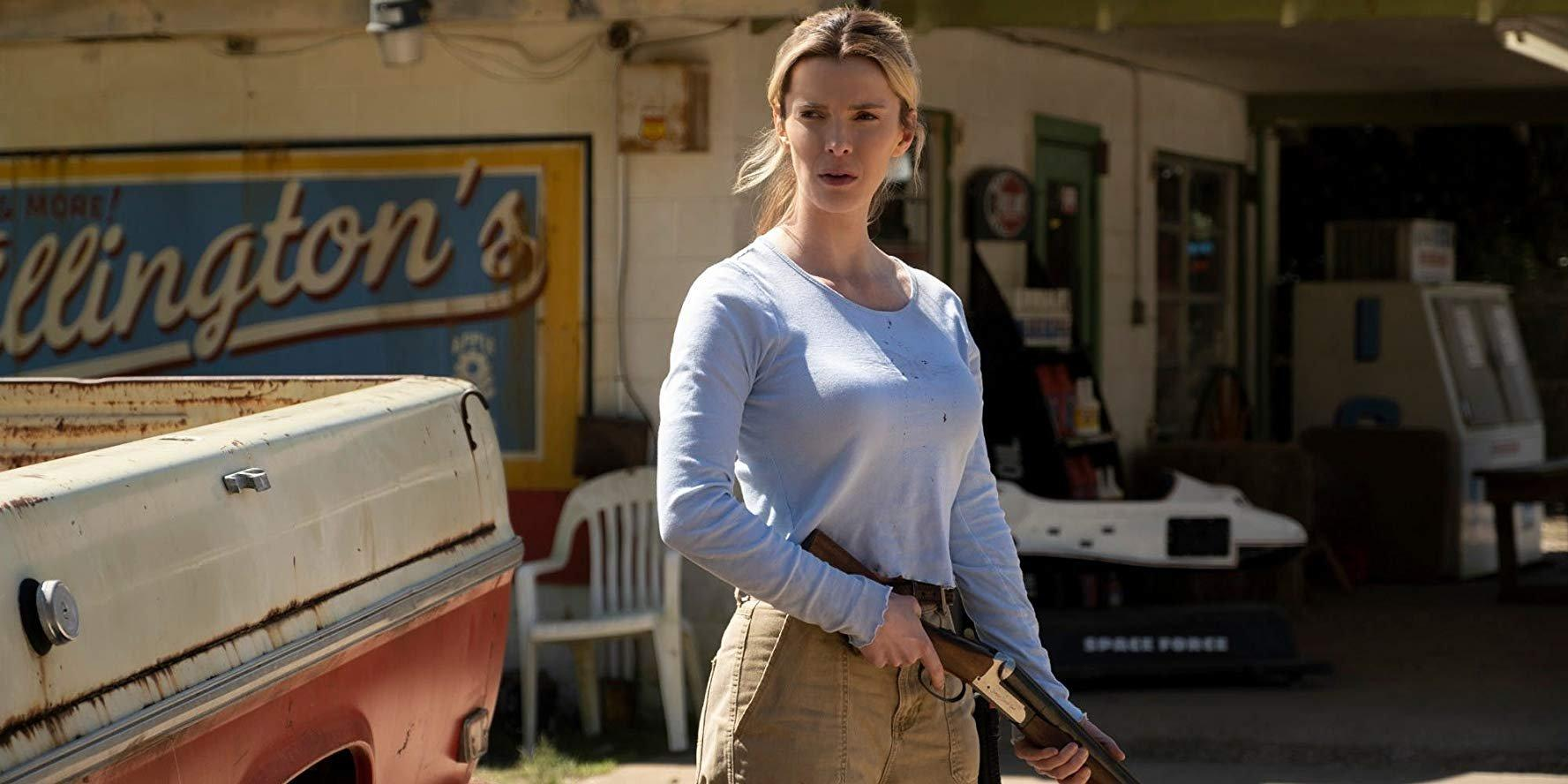
The most controversial recent use of the title belongs to The Hunt, the satirical thriller from director Craig Zobel. Its premise is intentionally provocative: 12 strangers wake in a clearing and discover they are being hunted by wealthy elites. The film centers on Betty Gilpin as Crystal, a survivor who begins to turn the deadly game against those who designed it. The cast also includes Emma Roberts, Ike Barinholtz, and Glenn Howerton, with Blumhouse Productions behind the film’s lean thriller structure.
But “The Hunt” is also the English title orbiting another project: Traqués, the French thriller released on Apple TV. That six-episode miniseries follows Franck and his friends after a hunting weekend spirals into violence, secrecy, surveillance, and revenge. Led by Benoît Magimel, with Mélanie Laurent as Krystel and Damien Bonnard in a key supporting role, the series concluded with its finale, “The Assault,” on April 1, 2026.
A third version of the phrase is now moving through fantasy cinema: The Lord of the Rings: The Hunt for Gollum. Directed by Andy Serkis, the project is being positioned as a return to the tactile, location-driven production methods that helped define Peter Jackson’s original trilogy. Serkis has said, “I absolutely think you can make them like that because we are doing it,” emphasizing returning craftspeople, set designers, miniatures, location shooting, prosthetics, and a blend of old and new techniques.
The Political Firestorm Around Craig Zobel’s Film
The 2020 film became controversial before many audiences had even seen it. Its story of liberal elites hunting perceived conservative citizens arrived in a U.S. climate already defined by political outrage, partisan media cycles, and intensifying debate over screen violence. In August 2019, Donald Trump criticized “Hollywood” on social media without naming the film, a moment that amplified the uproar around it.
The timing made the controversy even more volatile. After mass shootings in August 2019, Universal Pictures paused marketing and postponed the film’s release. The delay did not quiet the debate; it arguably made the film more symbolic. By the time it eventually opened in U.S. theaters on March 13, 2020, it had already been absorbed into a broader argument over satire, violence, censorship, and political identity.
One week later, on March 20, 2020, Universal moved the film to premium VOD, placing it among the early examples of distribution upheaval as theatrical closures loomed. That shift helped ensure the film’s afterlife would be shaped not only by cinema audiences but also by viewers encountering it later through digital platforms and streaming services.
Satire in an Age That Struggles With Satire
Craig Zobel’s defense of the film has been consistent: the target was not one political side, but the culture of snap judgment itself. According to the provided material, Zobel has emphasized that the film was meant to satirize polarization and the way online conflict hardens people into opposing camps.
That distinction matters because The Hunt works less as a straightforward political statement than as a provocation about reaction. Its premise is outrageous, but its real subject is how quickly people assign motive, identity, guilt, and moral certainty. The film’s enduring relevance comes from that discomfort. Viewers may arrive expecting a survival thriller, but the film also asks them to examine how easily entertainment can become another battlefield in the culture war.
Its lasting power is not simply that people argued about it. It is that the argument became part of the film’s identity. Each time the movie resurfaces on streaming or digital storefronts, the debate returns with it: Is it exploitation, satire, social criticism, or all three at once?
Apple TV’s French Thriller Faces a Different Kind of Hunt
The Apple TV miniseries The Hunt, originally titled Traqués, is not built around national political satire in the same way. Its drama begins with a private hunting weekend and escalates into a moral and psychological crisis. Franck and his friends are attacked by unknown assailants, return fire, and then retreat into secrecy, fearing they may have killed someone. Over the following days, Franck becomes convinced that another group of hunters is watching them and seeking revenge.
This version of “the hunt” is more intimate. The fear is not only being chased; it is being exposed. The characters’ silence becomes a trap, and the possibility of retaliation turns ordinary life into a surveillance nightmare.
The series’ own path to release was also troubled. It was originally scheduled for December 3, 2025, but was pulled from Apple TV’s schedule in late November 2025 after plagiarism accusations. Creator Cédric Anger had failed to properly credit author Douglas Fairbairn, whose 1973 novel Shoot formed the foundation for the storyline. After Gaumont Television completed an investigation and corrected the credits, Apple TV set a new premiere date of March 4, 2026.
Renewal Uncertainty After the Finale
As of May 5, 2026, Apple TV had neither canceled nor renewed The Hunt. The uncertainty is heightened by the show’s format: it is listed as a six-episode miniseries, complete on IMDb, with no clear split-season pattern. Its reception also appears mixed, with a reported 5.4/10 on IMDb and 80% on Rotten Tomatoes.
That leaves the series in an ambiguous position. On one hand, miniseries are traditionally designed as closed stories. On the other, streaming platforms often reassess limited formats when audience demand or franchise potential appears strong enough. The provided information notes that the production reportedly cost around $16 million, meaning any continuation would likely depend on viewership, engagement, and whether Apple sees room to extend the paranoia-and-revenge premise beyond its initial arc.
The question is not only whether another season can be made. It is whether another season should be made. If the first season achieved narrative closure, expansion risks diluting the concept. But if the characters’ guilt, fear, and retaliation dynamics still have dramatic room, Apple could reframe the series as an anthology-style or continuing thriller.
Middle-earth’s Hunt Goes Back to Craft
While the Netflix film and Apple TV series explore modern paranoia, The Lord of the Rings: The Hunt for Gollum turns the phrase toward myth. For Andy Serkis, the project is not simply a return to a famous character but a return to a method of filmmaking that many fans associate with the original Lord of the Rings trilogy.
Serkis has said the production is bringing back people from the original films, including workers from the set department and set design, while also using miniatures, prosthetics for the orcs, and location shooting. He described the project as “walking the tightrope of creating a world that people are familiar with, but also it’s an entirely new story.”
That comment signals a major creative challenge. Middle-earth is not just a setting; it is an aesthetic memory for millions of viewers. Fans remember the landscapes, the practical textures, the weathered armor, the forced-perspective tricks, and the delicate balance between handmade craft and digital innovation. Serkis’s promise suggests that The Hunt for Gollum will attempt to merge the visual language of The Hobbit films and the original trilogy while staying within the law and canon of the world.
Gollum, Strider, and the Appeal of the Unseen Chapter
The new film is positioned between The Hobbit trilogy and the original Lord of the Rings trilogy. That placement gives it room to explore characters at transitional points in their journeys. Serkis has said there is “a lot to explore with the character of Gollum,” a figure he sees as psychologically rich and symbolically powerful. The provided material also notes that Serkis views Gollum as a metaphor connected to surviving addiction.
Another major point of interest is Aragorn, reportedly recast with Jamie Dornan and credited as “Strider.” Serkis explains the significance directly: “That’s where he is at this particular part of the journey.” He adds, “He wouldn’t think of himself as Aragorn, son of Arathon, at this part of the journey. He’s living in the wilderness. He’s a doomed lone ranger.”
That framing could give the film a different emotional register from the epic grandeur of the original trilogy. Instead of a crowned king in waiting, audiences may meet a rougher, lonelier wanderer defined by concealment, duty, and uncertainty. In that sense, the “hunt” may be as much about identity as pursuit.
Why “The Hunt” Keeps Resonating
Across all three projects, “the hunt” functions as more than a plot device. It is a pressure test.
In Craig Zobel’s film, the hunt exposes political caricature, elite resentment, media panic, and the instability of satire in a polarized culture. In Apple TV’s French miniseries, the hunt becomes a mechanism of guilt, secrecy, and revenge. In Middle-earth, the hunt suggests a mythic pursuit that could illuminate hidden chapters between familiar sagas.
What connects them is the reversal of certainty. Hunters become hunted. Survivors become suspects. Icons become vulnerable. Audiences are asked to question whether pursuit is justice, vengeance, entertainment, obsession, or self-destruction.
That flexibility explains why the title keeps returning. It is simple, primal, and adaptable. It can fit a modern political thriller, a European suspense drama, or a fantasy prequel. It immediately creates stakes and invites moral tension.
The Bigger Entertainment Trend
The recurrence of “the hunt” also reflects broader industry patterns. Streaming platforms and studios are investing heavily in recognizable concepts that can cut through crowded release calendars. A title like The Hunt has immediate genre clarity, while The Hunt for Gollum carries franchise recognition and built-in fan curiosity.
At the same time, audiences are showing sustained interest in stories about paranoia, surveillance, social division, and survival. These themes translate across markets because they speak to common anxieties: mistrust of institutions, fear of being watched, class resentment, moral panic, and the sense that ordinary life can suddenly become hostile terrain.
For studios, the appeal is obvious. A hunt narrative is easy to market. For writers and directors, it offers a flexible structure. For audiences, it delivers tension while leaving room for deeper questions.
Conclusion: Pursuit as the Story of the Moment
“The Hunt” endures because it is both action and metaphor. It can be a chase through woods, a political argument, a revenge spiral, or a journey into the margins of Middle-earth. The title’s repeated return across screen culture shows how powerfully pursuit stories speak to the present.
The Netflix controversy revealed how quickly a film can become a political object before audiences fully engage with it. Apple TV’s miniseries shows how a hunting accident can become a story about guilt and fear. The Hunt for Gollum suggests that even in fantasy, the most compelling journeys may be the ones that follow damaged, hidden, or morally complicated figures.
In each case, “the hunt” is not just about catching someone. It is about what the chase reveals.


