


Ted Bundy: The Making, Myth, and Legacy of America’s Most Notorious Serial Killer
A Chilling Narrative That Still Haunts America
Few criminal cases in modern history have left as deep and enduring an imprint on public consciousness as that of Ted Bundy. His crimes—marked by brutality, deception, and psychological manipulation—redefined how society understood serial killers. But Bundy’s story is not only about violence; it is also about how charisma, media attention, and systemic investigative challenges converged to create one of the most infamous criminal legacies of the 20th century.
- A Chilling Narrative That Still Haunts America
- Early Life: A Troubled Beginning Behind a Normal Facade
- The Double Life: Charm Concealing Violence
- A Trail of Disappearances and Fear
- Arrest, Escapes, and Escalation
- The Florida Murders: A Violent Climax
- Trials, Confessions, and Execution
- Media, Myth, and Public Fascination
- Psychological Profile: Understanding the Mind Behind the Crimes
- Broader Impact: How Bundy Changed Criminal Investigation
- Cultural Legacy and Ongoing Relevance
- Conclusion: A Legacy Defined by Violence and Lessons Learned
This narrative traces Bundy’s life, crimes, capture, and enduring cultural impact—examining not just what he did, but why his case continues to resonate decades later.
Early Life: A Troubled Beginning Behind a Normal Facade
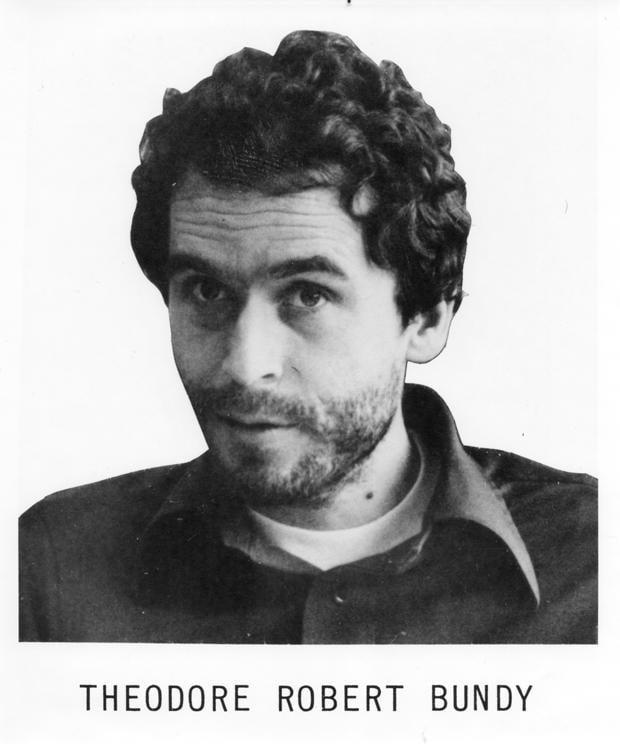
Born on November 24, 1946, in Burlington, Vermont, Bundy entered the world under complex and uncertain circumstances. His birth name was Theodore Robert Cowell, and his early upbringing was shaped by family instability and secrecy surrounding his parentage.

Raised initially by his grandparents, Bundy grew up believing his mother was his sister—a revelation that later contributed to emotional tension and identity confusion. His childhood was marked by conflicting accounts: while some described him as shy and withdrawn, others recalled disturbing behaviors, including cruelty toward animals and early signs of manipulation.
Despite these red flags, Bundy later developed into an intelligent and socially capable young man. He attended the University of Washington, where he studied psychology and became involved in political campaigns. On the surface, he appeared ambitious, articulate, and well-adjusted—traits that would later enable him to evade suspicion.


The Double Life: Charm Concealing Violence
By the early 1970s, Bundy had constructed a dual identity. To acquaintances, he was polite, intelligent, and even compassionate—working at a suicide hotline and engaging in civic activities. Beneath that exterior, however, he was developing violent fantasies and patterns of predatory behavior.
Between 1974 and 1978, Bundy embarked on a killing spree across multiple U.S. states, including Washington, Oregon, Utah, Colorado, and Florida. His victims were primarily young women—often college students—who fit a consistent physical profile.
His methods were calculated. He frequently posed as an injured man or authority figure to gain trust, luring victims into his car before attacking them.
Investigators later identified a consistent modus operandi: deception, abduction, assault, and murder, often followed by post-mortem interactions with victims—behavior that underscored the deeply pathological nature of his crimes.



A Trail of Disappearances and Fear
Bundy’s crimes initially baffled law enforcement. The lack of forensic technology at the time, combined with his mobility across state lines, made it difficult to connect cases.
In the Pacific Northwest, young women began disappearing at an alarming rate. The pattern intensified in 1974, with victims vanishing from campuses and public spaces.
One of the most chilling incidents occurred at Lake Sammamish State Park, where Bundy abducted two women in broad daylight. Witnesses described a charming man introducing himself as “Ted,” offering one of the first concrete leads in the case.
Despite multiple tips—including from acquaintances who recognized him—Bundy initially avoided arrest. Authorities struggled with the paradox of a suspect who did not fit the stereotypical image of a violent criminal.
Arrest, Escapes, and Escalation
Bundy’s first arrest came in August 1975 in Utah during a routine traffic stop. Police discovered suspicious items in his vehicle, including handcuffs, a crowbar, and masks.
Though initially charged with kidnapping, investigators soon connected him to multiple murders.
What followed was unprecedented: Bundy escaped custody twice in 1977—once by jumping from a courthouse window and later by sawing through a jail ceiling. These escapes not only shocked the public but also highlighted vulnerabilities in the criminal justice system.
After his second escape, Bundy fled to Florida, where his crimes escalated in both frequency and brutality.
The Florida Murders: A Violent Climax
In January 1978, Bundy carried out one of his most infamous attacks at a Florida State University sorority house. Within minutes, he assaulted multiple women, killing two and severely injuring others.
Shortly afterward, he murdered 12-year-old Kimberly Leach—his youngest confirmed victim.
These crimes marked a turning point. The scale and violence of the attacks intensified national media attention and placed immense pressure on law enforcement.
Bundy was finally captured in February 1978 after a police officer stopped him in a stolen vehicle.
Trials, Confessions, and Execution
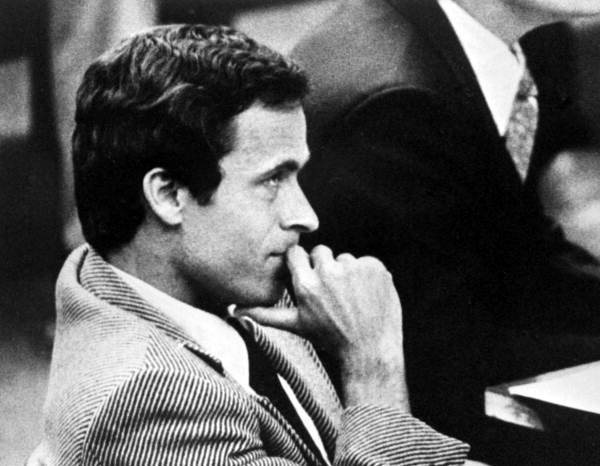
Bundy’s trial in Florida became a media spectacle. Representing himself at times, he displayed confidence and composure, captivating public attention.
He was ultimately convicted of multiple murders and sentenced to death.
During his time on death row, Bundy confessed to 30 murders, though investigators believe the true number may be significantly higher.
On January 24, 1989, he was executed in Florida’s electric chair at the age of 42.
Media, Myth, and Public Fascination
One of the most unsettling aspects of Bundy’s case was the public fascination it generated. His intelligence, appearance, and courtroom demeanor led some to view him through a distorted lens—transforming him into a media figure rather than solely a criminal.
This phenomenon drew criticism, particularly from feminist criminologists who argued that media coverage romanticized Bundy and obscured the suffering of his victims.
His case inspired numerous books, films, and documentaries, cementing his place in popular culture.
Psychological Profile: Understanding the Mind Behind the Crimes
Experts have long debated Bundy’s psychological makeup. He has been described as a “sadistic sociopath,” driven by control, dominance, and violent fantasies.
His ability to compartmentalize—maintaining a normal social life while committing horrific crimes—has been a focal point in criminology studies.
Bundy himself once admitted:
“I am the most cold-hearted son of a bitch you’ll ever meet.”
This chilling self-assessment underscores the calculated nature of his actions.
Broader Impact: How Bundy Changed Criminal Investigation
Bundy’s case had far-reaching implications:
1. Advances in Law Enforcement Coordination
His multi-state crimes exposed the lack of communication between jurisdictions, leading to improvements in information sharing.
2. Evolution of Profiling Techniques
Psychological profiling gained prominence as investigators sought to understand behavioral patterns of serial offenders.
3. Rise of Forensic Science
Although DNA technology was not widely available during his crimes, later developments—such as DNA testing—have continued to confirm connections to his victims, even decades later.
Cultural Legacy and Ongoing Relevance
Decades after his execution, Bundy remains a reference point in discussions about criminal psychology, media ethics, and public fascination with true crime.
His story raises enduring questions:
- Why are people drawn to figures like Bundy?
- How should media balance storytelling with sensitivity to victims?
- What lessons can modern law enforcement learn from past failures?
Recent forensic developments, including DNA confirmations linking Bundy to additional victims, demonstrate that his case is not entirely closed—even today.
Conclusion: A Legacy Defined by Violence and Lessons Learned
The story of Ted Bundy is more than a record of crimes—it is a case study in deception, systemic gaps, and societal response to extreme violence.
His ability to operate undetected for years exposed weaknesses in investigative systems. His trial and media coverage revealed the complexities of public perception. And his legacy continues to shape how modern society understands serial crime.
Ultimately, Bundy’s case serves as both a warning and a catalyst—highlighting the need for vigilance, coordination, and a clear-eyed approach to justice.