





Taylor Dearden: The Quiet Rise of The Pitt’s Most Understated Star
A Career Shaped by Precision, Not Noise
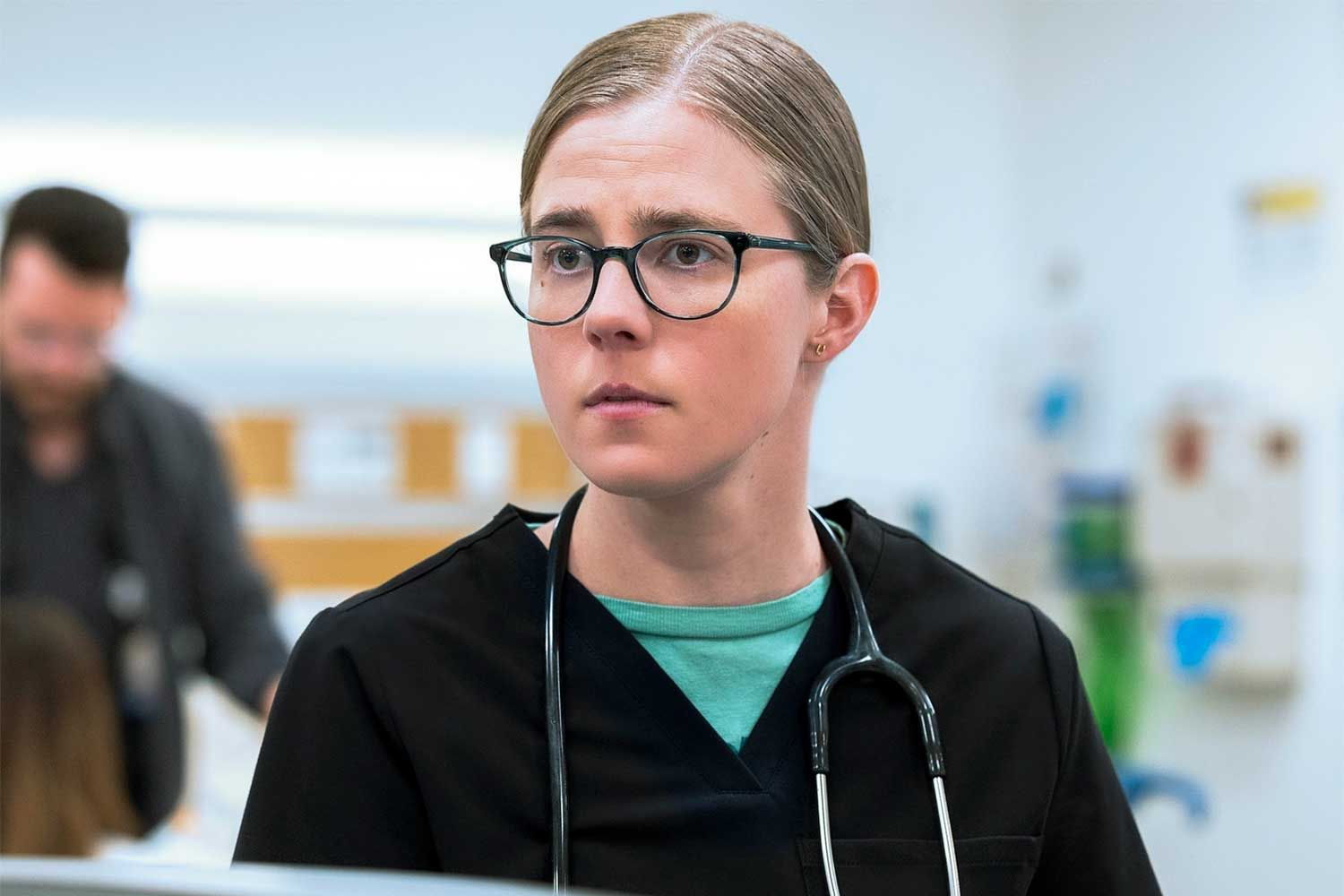
At a moment when television increasingly rewards bold personalities and high visibility, Taylor Dearden has built her reputation in a markedly different way. Her ascent has not been driven by spectacle or relentless self-promotion, but by careful, character-driven performances—most notably as Dr. Melissa “Mel” King in the HBO Max medical drama The Pitt.
- A Career Shaped by Precision, Not Noise
- From Hollywood Lineage to Independent Identity
- The Breakthrough: Dr. Mel King in The Pitt
- Redefining Romance on Screen
- The Paradox of Visibility
- Acting as Translation: ADHD and Performance
- Industry Impact: A Shift in Character Archetypes
- What Comes Next?
- Conclusion: A Different Model of Stardom
Now 33, Dearden is navigating a rare position in modern entertainment: rising fame paired with relative anonymity. As she recently explained, “I get away with a lot more anonymity than everyone else because everyone looks the exact same outside of the show, but dolled up.”
This paradox—being central to a hit series while remaining largely unrecognized—captures both her current career phase and the broader appeal of her work.
From Hollywood Lineage to Independent Identity
Born Taylor Dearden Cranston on February 12, 1993, in Los Angeles, she grew up in a household deeply embedded in the entertainment industry. She is the daughter of Bryan Cranston and Robin Dearden—two established actors whose careers span decades.
Yet her trajectory has not leaned heavily on that legacy. Instead, Dearden’s early work reflects a gradual, deliberate build:



- A small role in Breaking Bad (2010)
- Web series appearances like 101 Ways to Get Rejected
- Breakout attention in MTV’s Sweet/Vicious
- Supporting roles in Netflix’s American Vandal
This progression illustrates a pattern: Dearden has consistently chosen roles that prioritize character depth over mainstream visibility.
The Breakthrough: Dr. Mel King in The Pitt
The defining pivot in Dearden’s career arrived with The Pitt, a medical drama created by R. Scott Gemmill. The series follows healthcare workers navigating a high-pressure 15-hour shift at a trauma center, blending procedural intensity with emotional storytelling.
At its core is Dr. Mel King—a second-year resident whose quiet competence and emotional complexity have made her one of the show’s most compelling figures.
Dearden’s portrayal stands out for several reasons:



1. A Nuanced Depiction of Neurodivergence
Dearden, who has ADHD herself, integrates her lived experience into the role. Rather than leaning into stereotypes, she emphasizes internal struggle and emotional depth.
“Neurodivergence is continually being misunderstood… without ever showing anything on the inside,” she noted.
2. Emotional Realism Over Dramatic Excess
Mel is not written as a typical TV protagonist. She is socially awkward at times, deeply empathetic, and often overwhelmed—traits that resonate with audiences precisely because they avoid exaggeration.
3. A Character Defined by Caregiving
Mel’s identity is shaped by her role as a caregiver, particularly to her twin sister. This dynamic introduces themes of dependency, identity, and personal sacrifice that extend beyond the hospital setting.
Redefining Romance on Screen
One of the most discussed aspects of Dearden’s performance is her interpretation of Mel’s emotional life—particularly her stance on romance.
In interviews, Dearden has been explicit about how she approaches the character:
“I always saw Mel as someone who is not romantic — as actually genuinely asexual — and friendship is the most important thing for her.”
This perspective introduces a relatively rare representation in mainstream television. Rather than positioning romance as a narrative necessity, Mel’s relationships are centered on connection, trust, and companionship.
Importantly, Dearden leaves room for narrative flexibility:
“What I’ve envisioned may not be the direction they want to go.”
This balance—between actor interpretation and evolving storytelling—reflects a collaborative approach that is increasingly common in modern serialized television.
The Paradox of Visibility
Despite her central role, Dearden remains one of the least recognizable members of the cast. The reasons are surprisingly practical:
- Her hair is altered for the show (darkened from her natural blonde)
- The medical setting standardizes appearance (scrubs, minimal styling)
- Off-screen, she presents very differently from her character
The result is a form of “invisible fame”—a condition where an actor’s work is widely recognized, but their public persona remains understated.
Even on set, this dynamic plays out:
“The director will say, ‘We’re just waiting for Taylor to come down,’ and I’ll be right there… They always go, ‘Oh God. Yeah, sorry.’”
Acting as Translation: ADHD and Performance
Dearden’s openness about her ADHD adds another dimension to her craft. Diagnosed at a young age, she has spoken candidly about how it shapes both her life and her acting process.
Interestingly, she describes acting as a form of structured expression:
- Scripts provide clarity that real-life conversations often lack
- Preparation allows her to manage communication more effectively
- Playing characters can reduce social friction she experiences personally
“I’m on the ADHD spectrum so I gave myself advice in the mirror,” she said, describing one of her coping strategies.
This intersection between neurodivergence and performance is central to her authenticity on screen—and contributes to the broader cultural shift toward more accurate representation.
Industry Impact: A Shift in Character Archetypes
Dearden’s rise aligns with a wider transformation in television storytelling:
From Stereotypes to Complexity
Neurodivergent characters are no longer confined to comic relief or caricature. Mel represents a move toward multidimensional portrayals.
Expanding Definitions of Connection
By framing her character as potentially asexual, Dearden challenges long-standing assumptions about narrative structure—particularly the centrality of romance.
Authentic Casting
Actors drawing from personal experience are increasingly shaping how stories are told, rather than simply executing pre-defined roles.
What Comes Next?
With The Pitt continuing into its second season and beyond, several narrative directions remain open:
- Exploration of Mel’s identity outside caregiving
- Potential development (or rejection) of romantic storylines
- Deeper examination of neurodivergence in high-pressure environments
At the same time, Dearden herself has expressed interest in expanding her range—particularly in theater and roles that require new skills such as languages or musical performance.
Given her trajectory, the next phase of her career will likely maintain the same underlying principle: deliberate, character-focused choices over rapid mainstream exposure.
Conclusion: A Different Model of Stardom
Taylor Dearden’s career challenges conventional assumptions about how actors achieve recognition. She is not defined by viral moments or celebrity branding, but by precision, restraint, and a commitment to authenticity.
In The Pitt, she has helped redefine what a medical drama character can be—grounded, complex, and quietly transformative.
Her relative anonymity may not last. But for now, it remains a distinguishing feature of an actor whose work speaks louder than her public profile.