


Syria at a Crossroads: Reconstruction, Returns, and Rising Controversy
More than a decade after the outbreak of civil war in Syria, the country is once again at the center of international attention. Recent diplomatic developments, economic discussions, and security cooperation efforts suggest a shift in how global powers are engaging with Damascus.
- Syria at a Crossroads: Reconstruction, Returns, and Rising Controversy
- A Diplomatic Reset: Germany and Syria Rebuild Ties
- The Al-Sharaa Factor: Leadership, Legitimacy, and Criticism
- Refugee Returns: Policy, Pressure, and Reality
- Reconstruction and Economic Opportunity
- Security Developments: Intelligence and Regional Cooperation
- A Fragile Stability in a Volatile Region
- What Comes Next: A Critical Turning Point
- Conclusion: Between Opportunity and Uncertainty
At the heart of this renewed focus is the controversial leadership of interim president Ahmed al-Sharaa and a growing willingness from European nations—particularly Germany—to re-engage with Syria politically and economically.
This moment reflects a complex intersection of reconstruction ambitions, refugee policies, and geopolitical realities.
A Diplomatic Reset: Germany and Syria Rebuild Ties
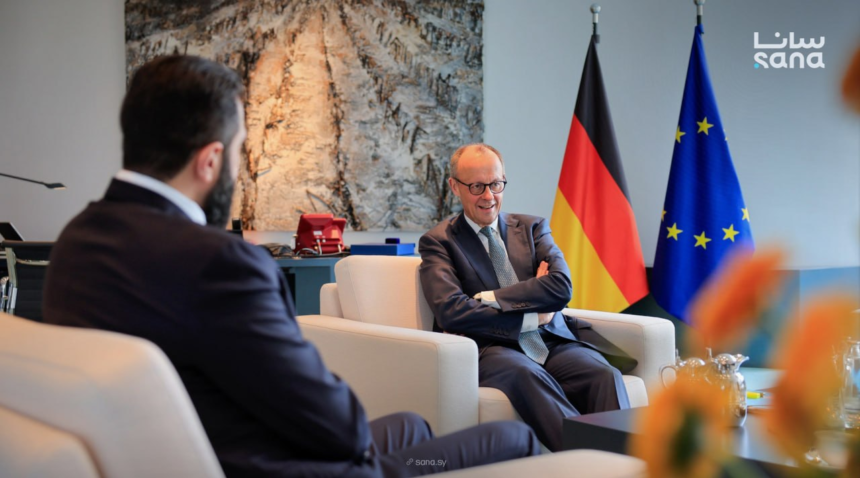
One of the most significant recent developments is Germany’s effort to deepen cooperation with Syria, signaling a notable shift in European foreign policy.
German Foreign Minister Johann Wadephul emphasized that Syria holds “enormous” potential as both a market and a production partner. He described the country as a “strategic hub between Europe, the Gulf states and the Indo-Pacific,” highlighting its geographic and economic relevance.


This positioning suggests that Syria is no longer viewed solely through the lens of conflict but increasingly as a future economic partner.
At a high-level economic forum in Berlin, German officials pledged support for:
- Rebuilding Syrian state institutions
- Supporting economic recovery
- Expanding bilateral trade opportunities
Despite ongoing regional instability, Wadephul acknowledged that Syria has managed to prevent broader conflict spillover—calling it “a great success” given tensions across the Middle East.
The Al-Sharaa Factor: Leadership, Legitimacy, and Criticism
The visit of Ahmed al-Sharaa to Berlin marked a turning point—but also sparked controversy.



While some governments see him as a necessary partner for stabilization, critics highlight:
- Allegations of human rights violations
- Concerns about minority protection
- Questions about democratic legitimacy
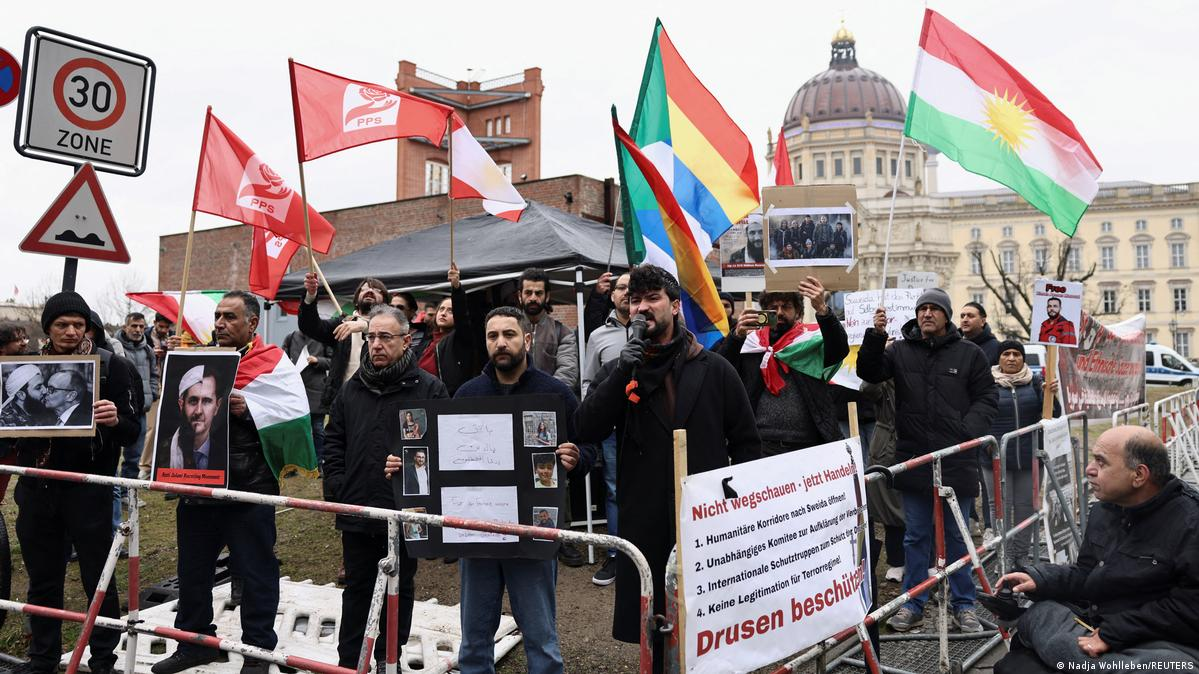
His reception in Berlin reflected this divide. Supporters gathered enthusiastically, chanting “Allahu Akbar,” while protests and political criticism underscored deep unease about legitimizing his leadership.
Even within Germany, political and civil society groups remain split. Some argue engagement is essential for peacebuilding, while others warn it risks compromising democratic values.
Refugee Returns: Policy, Pressure, and Reality
A central issue shaping Germany-Syria relations is the question of refugee repatriation.
Germany currently hosts approximately 1 million Syrians, many of whom fled the civil war beginning in 2011.
Chancellor Friedrich Merz has proposed an ambitious plan:
- 80% of Syrians in Germany should return within three years
- A joint task force will coordinate repatriation efforts
- Financial support—around €200 million—will assist Syria’s reconstruction
However, the policy remains highly controversial.
Key Challenges to Repatriation
- Security concerns: Conditions in Syria are still described as “volatile”
- Infrastructure damage: Many areas remain heavily destroyed
- Economic hardship: Limited access to jobs, food, and services
- Legal risks: Refugees who return may lose protected status abroad
Non-governmental organizations have strongly cautioned against forced returns, arguing that safe and dignified conditions are not yet guaranteed.
Reconstruction and Economic Opportunity
Despite ongoing challenges, Syria is actively positioning itself for reconstruction and investment.
Al-Sharaa has framed the country as entering a “new beginning,” emphasizing:
- Legal reforms to attract foreign investment
- Opportunities in energy, construction, and technology
- Efforts to stabilize governance structures
Germany and other partners see potential in sectors such as:
- Infrastructure rebuilding
- Industrial production
- IT and software development
- Energy systems modernization
This aligns with broader geopolitical dynamics, where Syria could serve as a logistical and economic bridge between regions.
Security Developments: Intelligence and Regional Cooperation
Recent events also highlight growing cooperation on security matters.
In a notable operation, Turkish intelligence—working with Syrian authorities—captured a fugitive spy at the Syria-Lebanon border after more than a decade on the run.
The case underscores:
- Increasing coordination between regional intelligence agencies
- Syria’s evolving role in cross-border security
- Ongoing concerns about espionage and militant networks
Such developments suggest that beyond reconstruction, Syria remains a critical player in regional stability and intelligence dynamics.
A Fragile Stability in a Volatile Region
Despite signs of progress, Syria’s situation remains deeply complex.
German officials acknowledge that while conditions have “fundamentally improved,” the broader environment is still unstable.
Key risks include:
- Spillover from regional conflicts (including tensions involving Iran)
- Internal political fragmentation
- Ongoing humanitarian challenges
- Ethnic and sectarian tensions
At the same time, Syria has managed—so far—to avoid being drawn into escalating regional conflicts, which some leaders view as a sign of cautious stabilization.
What Comes Next: A Critical Turning Point
Syria now stands at a pivotal moment.
Three parallel trajectories are shaping its future:
- Reconstruction and economic reintegration
- Refugee return and demographic shifts
- Political legitimacy and governance reform
The success—or failure—of these efforts will determine whether Syria can transition from a post-conflict state into a stable and functioning nation.
Conclusion: Between Opportunity and Uncertainty
The re-engagement between Syria and international partners marks a significant shift in global attitudes. Economic cooperation, refugee policy, and security collaboration all point toward a country attempting to rebuild and redefine its role.
Yet, the path forward remains uncertain.
The leadership of Ahmed al-Sharaa continues to divide opinion, while the realities on the ground challenge optimistic timelines for recovery and repatriation.
Syria’s future will depend not only on international support but also on its ability to address internal divisions, rebuild trust, and create conditions for a genuinely inclusive and stable society.