



Stromausfall Rosenheim: Inside the Widespread Chiemgau Blackout
A Sudden Disruption Across Southern Bavaria
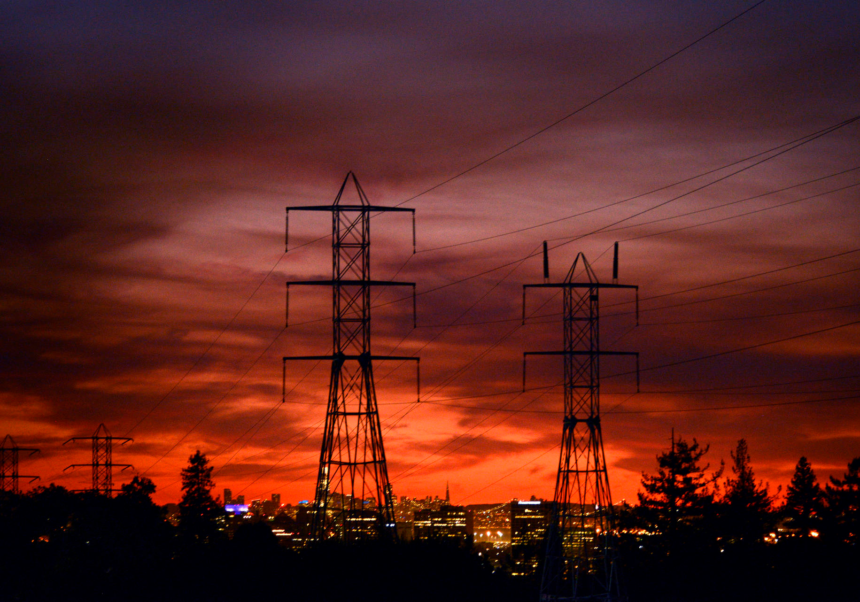
On the afternoon of April 1, 2026, a large-scale power outage swept across the southern district of Rosenheim and neighboring areas in Upper Bavaria, leaving tens of thousands of residents without electricity. What began as scattered reports quickly escalated into a regional emergency affecting communities around Lake Chiemsee, exposing both the vulnerabilities and resilience of modern energy infrastructure.
- A Sudden Disruption Across Southern Bavaria
- The Geography of the Blackout
- Timeline of Events: From First Reports to Full Restoration
- What Caused the Rosenheim Power Outage?
- Communication Breakdown: When Power Loss Affects Connectivity
- Emergency Preparedness in Action
- Economic and Social Impact
- Broader Implications: What This Outage Reveals
- Looking Ahead: Will Similar Outages Become More Common?
- Conclusion: A Short Outage with Long-Term Lessons
The outage, which started around mid-afternoon, disrupted daily life across multiple municipalities. Homes went dark, businesses paused operations, and communication networks faltered. By early evening, authorities confirmed that approximately 40,000 households had been affected before power was gradually restored.
The Geography of the Blackout
The disruption was not confined to a single town. Instead, it stretched across a wide geographic area, highlighting the interconnected nature of regional power grids.

Among the communities impacted were:
- Riedering
- Bad Endorf
- Rimsting
- Prien
- Bernau
- Gstadt
- Frasdorf
- Aschau
- Breitbrunn
- Fraueninsel
Additional areas in the Traunstein district also experienced outages, with the affected zone extending roughly from Bad Endorf and Aschau to Ruhpolding and Seebruck.



This broad footprint underscores how a single failure point in a high-voltage system can cascade across multiple municipalities.
Timeline of Events: From First Reports to Full Restoration
Understanding the sequence of events clarifies how authorities and infrastructure operators responded to the crisis.
Initial Phase (Around 2:45–3:30 p.m.)
The first reports of power failure emerged in the early afternoon. Residents in towns like Prien noticed not only electricity loss but also disruptions to telephone and mobile networks.
Escalation and Emergency Response (3:30–5:30 p.m.)
As the outage spread, emergency services moved into high-alert mode:



- Fire departments staffed 20 fire stations to ensure rapid emergency response
- Warning apps issued alerts about widespread energy supply disruptions
- Police confirmed the outage was concentrated around the Chiemsee region
- Shops temporarily closed, and municipalities activated contingency procedures
Despite the scale, train services remained operational, indicating that critical transport systems were not immediately compromised.
Stabilization and Recovery (By ~5:45–7:00 p.m.)
Electricity was gradually restored across the region:
- Many towns regained power after roughly one hour
- Full restoration for all households was confirmed shortly before 7:00 p.m.
- Businesses reopened and normal activity resumed
By evening, the grid was described as stable again, though investigations into the cause continued.
What Caused the Rosenheim Power Outage?
While initial reports cited uncertainty, subsequent updates provided more clarity.
The network operator identified the issue as:
- “Technical malfunctions in the high-voltage grid”
- Likely linked to infrastructure within a substation operated by Bayernwerk
However, key details remained unresolved:
- The exact substation responsible was not publicly confirmed
- Authorities indicated that investigations were ongoing
- A spokesperson noted: “We are currently still investigating the matter and will then decide how we will communicate about the incident.”
This combination of partial transparency and ongoing analysis is typical in complex grid incidents, where multiple systems must be examined before definitive conclusions are released.
Communication Breakdown: When Power Loss Affects Connectivity
One of the most immediate consequences of the outage was the disruption of communication infrastructure.
Residents reported:
- Mobile network instability
- Telephone service interruptions
- Reduced access to real-time information
This highlights a critical dependency: modern telecommunications rely heavily on continuous power supply. When electricity fails, even backup systems may struggle to maintain full coverage during widespread outages.
Emergency Preparedness in Action
The coordinated response by local authorities demonstrated how emergency systems are designed to function during infrastructure failures.
Key measures included:
- Preemptive staffing of fire stations
- Continuous monitoring by police and municipal authorities
- Activation of public warning systems
- Maintenance of emergency numbers without interruption
Notably, emergency call lines remained fully operational throughout the outage, ensuring that public safety was not compromised.
Economic and Social Impact
Although the outage lasted only a few hours, its effects were immediate and tangible.
Business Disruptions
Retail outlets and service providers temporarily shut down, particularly in towns like Prien. Even short outages can lead to revenue loss, especially for businesses reliant on digital systems.
Public Uncertainty
With limited communication and unclear causes, residents experienced a period of uncertainty. Municipal authorities themselves initially lacked precise information about the source of the failure.
Infrastructure Stress Test
The event effectively acted as a real-time stress test for the region’s energy and emergency systems, revealing both strengths (rapid restoration) and weaknesses (communication gaps, grid vulnerability).
Broader Implications: What This Outage Reveals
The Rosenheim blackout is not an isolated incident—it reflects broader challenges facing modern energy systems.
1. Grid Complexity and Interdependence
High-voltage grids are interconnected networks. A technical fault in one component can propagate quickly across regions, affecting thousands of households.
2. Growing Demand on Infrastructure
As energy consumption increases—driven by digitalization, electrification, and data-intensive industries—the margin for failure narrows.
3. Need for Redundancy
The incident reinforces ongoing discussions about:
- Decentralized energy systems
- Backup infrastructure
- Grid resilience strategies
4. Importance of Transparent Communication
Delays in identifying and communicating the cause contributed to uncertainty. Future incidents may require faster, clearer public updates to maintain trust.
Looking Ahead: Will Similar Outages Become More Common?
While Germany’s power grid is generally considered highly reliable, isolated large-scale outages continue to occur. The Rosenheim incident suggests several future trends:
- Increased investment in grid modernization
- Expansion of smart grid technologies
- Greater focus on local energy resilience (e.g., microgrids)
- Enhanced emergency communication systems
Authorities and energy providers are likely to use this event as a case study for improving response protocols and infrastructure robustness.
Conclusion: A Short Outage with Long-Term Lessons
The “Stromausfall Rosenheim” event lasted only a few hours, but its implications extend far beyond that timeframe. Affecting around 40,000 households, disrupting communication networks, and mobilizing emergency services across multiple communities, the outage exposed both the fragility and resilience of modern infrastructure.
While power was restored relatively quickly, key questions remain about the precise technical failure and how similar incidents can be prevented in the future. As energy systems evolve, events like this serve as critical reminders that reliability, redundancy, and rapid response are essential pillars of modern society.