Stockard Channing Net Worth, Relationships, Age/Birthdate & Birthday
Overview of Stockard Channing — net worth, relationships, age/birthdate, and birthday.
 loveness92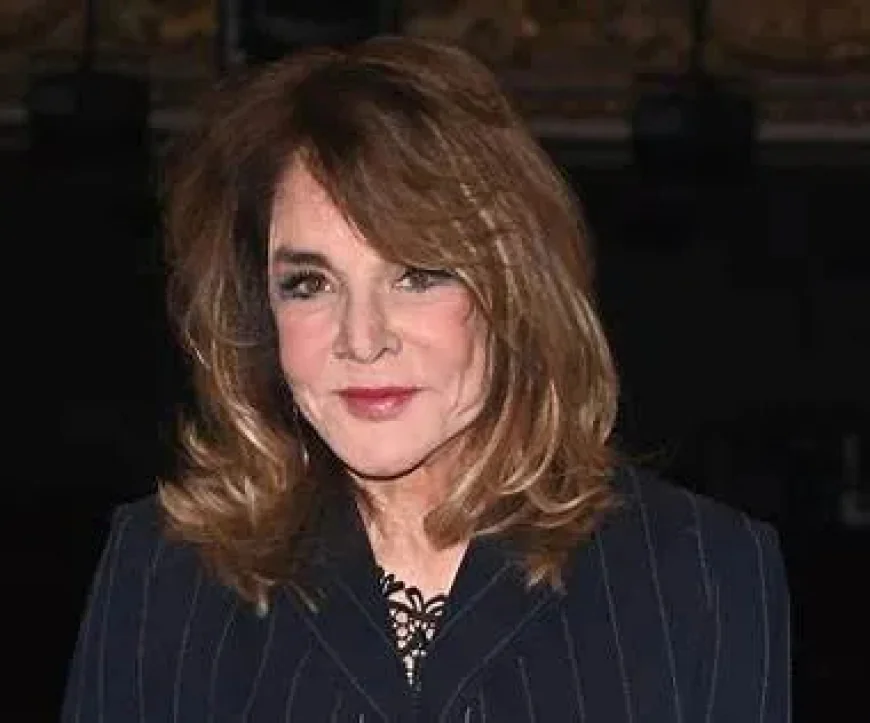
Stockard Channing — A Life in Stages and Spotlight
From Manhattan’s Upper East Side to Broadway marquees and Hollywood soundstages, Stockard Channing’s journey reads like a masterclass in reinvention, resilience, and refined craft. Her story traverses privileged upbringing, academic excellence, tumultuous Hollywood, and celebrated artistic triumph — all culminating in a career that continues to inspire decades in.
Born for the Stage and Screen: Early Chapters
Stockard Channing was born Susan Antonia Williams Stockard on February 13, 1944 in New York City. Raised on Manhattan’s affluent Upper East Side, she was the daughter of Mary Alice (née English) and Lester Napier Stockard, a shipping-business scion. Her childhood and upbringing offered her both opportunities and exposure — yet instead of trading on privilege, she chose her path carefully: Channing attended The Chapin School in New York and later the Madeira School in Virginia.
She went on to study history and literature at Radcliffe College, graduating summa cum laude in 1965. Despite a promising academic fate, Channing gravitated to acting — training at HB Studio in New York before launching herself into the theater’s demanding, unpredictable world.
The Long Road to Hollywood — and What Followed
Channing’s acting career didn’t begin with instant fame. Instead, she spent years in experimental theater — one of her earliest performances was in a 1969 production of an Elaine May play in Boston. Her Broadway debut came in 1971 in a rock musical adaptation of Shakespeare’s Two Gentlemen of Verona.
Her earliest film roles were modest, starting with small and often uncredited appearances. But in 1975 she appeared opposite heavyweights like Warren Beatty and Jack Nicholson in Mike Nichols’ dark comedy The Fortune — a role that earned her enough recognition to keep doors open, even if it was not yet a breakout.
Then came 1978 and the casting that would define her in pop-culture memory. As tough yet vulnerable high-school rebel “Rizzo” in the screen adaptation of the musical Grease, Channing brought attitude, edge, and depth. It wasn’t just a role — it became iconic.
Yet despite “Grease”’s massive success, she later revealed that the movie was not taken seriously by Hollywood at the time — a reality that forced her to return to her first love: the stage.
Reinvention, Recognition, and Staying Power
While many actors burn bright and fade, Channing’s resilience stood out. Her return to theater paid off: in 1985 she won the Tony Award for Best Actress in a Play for the Broadway revival of A Day in the Death of Joe Egg.
But she didn’t abandon film and television. In 1993, she delivered a powerful performance in Six Degrees of Separation — a role she had originated onstage — earning a nomination for the Academy Award for Best Actress.
On television, she became a household name once more for her portrayal of First Lady Abbey Bartlet in The West Wing (1999–2006), a performance that earned her one of her multiple Primetime Emmy Award wins. Over the decades, Channing has remained prolific and versatile, navigating between stage, film, and television with grace, depth, and integrity.
Estimating the Ledger: Net Worth and Cultural Value
Estimates of Stockard Channing’s net worth vary, reflecting the volatile nature of show-business income and the difficulty of valuing decades of diversified work. One widely cited figure places her net worth at approximately US$15 million.
Other sources, however, give more conservative estimates — for example, one lists her net worth at around US$5 million.
What these numbers alone can’t capture is the intangible wealth she has built: a legacy of iconic roles; awards spanning major institutions (Tony, Emmy, Oscar nomination); and continued relevance in an industry that often forgets earlier generations. In that sense, her real “net worth” may lie as much in respect and influence as in dollars.
Matters of the Heart: Relationships, Loss, and Choices
Stockard Channing’s personal life has been complex and marked by both partnership and independence. Over the years, she was married four times: first to Walter Channing Jr. (1963–1967), then to Paul Schmidt (1970–1976), followed by David Debin (1976–1980), and finally David Rawle (1980–1988).
After her marriages, she had a long-term relationship with cinematographer Daniel Gillham from about 1990 until his death in 2014.
In a 2025 interview, Channing candidly shared that — after four marriages and decades of life in and out of the spotlight — she is not seeking further romantic relationships. “I’m very happy with the friends I have … Life is good. Life is very good,” she said.
Having moved permanently to London after Gillham’s passing, Channing appears to have found peace and perspective in her later years.
Why Stockard Channing Still Matters
Channing’s story resonates because it’s not a fairy tale — it’s a testament to persistence, reinvention, and owning one’s truth. She has survived Hollywood’s fickle tides, found redemption on stage, and achieved recognition on her own terms. More than just a “Grease” star or a “West Wing” first lady, she’s an emblem of versatility, dignity, and survival in an industry that rarely offers second acts.
Her work has spanned decades with integrity; her roles — from rebellious teen to commanding matriarch — have showcased a rare breadth. And her personal journey, marked by love, loss, solitude, and self-acceptance, adds humanity to her mythos.
In a world that often idolizes youth and novelty, Stockard Channing remains proof that talent, tenacity, and self-authenticity endure — and age/birthdate like February 13, 1944 become just part of the backdrop to a life lived on her own terms.