Steve Clifford Net Worth, Relationships, Age/Birthdate & Birthday
Overview of Steve Clifford — net worth, relationships, age/birthdate, and birthday.
 loveness92
The Quiet Ascent of Steve Clifford — A Journey Carved in Defense, Discipline, and Dedication
The story of Steve Clifford is not one of flashy headlines or public spectacle. Rather, it’s a steady, meticulously built legacy — from small-town Maine to leading NBA rosters, and finally to guiding future generations as an advisor. Clifford’s path reflects the power of perseverance, defensive fundamentals, and a lifelong love for basketball.
Roots in Rural Maine: Formative Years and Early Inspirations
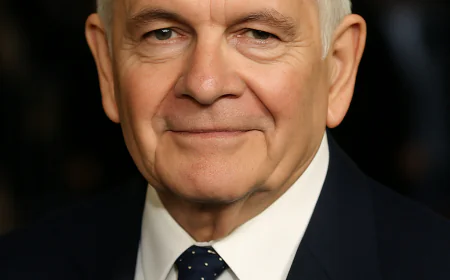
Steve Clifford was born on September 17, 1961, in Island Falls, Maine. Growing up in a modest setting, he spent his early years in Mattawamkeag, Maine, before moving during childhood to Vermont — where he attended North Country Union High School under the guidance of his father, Gerald Clifford, who coached the school’s basketball team.
Clifford carried his early exposure to basketball into college, playing four seasons at the University of Maine at Farmington (UMF). In his final two seasons, he was named team captain and earned recognition as the team’s Best Defensive Player — a sign of the defensive-first philosophy that would later define his coaching style. He graduated with a degree in special education, but it was clear that basketball would remain central to his life.
From High School Gyms to College Sidelines: Building the Coaching Foundation
After college graduation, Clifford’s first coaching role was far from the bright lights of the NBA. He returned to Maine and became a teacher at Woodland High School — where he also served as head basketball coach for two seasons.
He then spent several years as an assistant coach at smaller collegiate programs, including Saint Anselm College, Fairfield University, Boston University, and Siena College.
The first major turning point came in 1995 when Clifford accepted the head coaching position at Adelphi University, an NCAA Division II program. Over four seasons, he led the team to four straight 20-win campaigns and four appearances in the NCAA Division II tournament — a remarkable run that cemented his reputation as a capable and disciplined leader.
These years honed his coaching philosophy: defense, structure, fundamentals — not flashy offense, but rock-solid consistency. This foundation would become Clifford’s calling card for the rest of his career.
Climbing the NBA Ladder: Assistant Roles and Defensive Credibility
Clifford’s first break into the NBA came in 2001, when he joined the New York Knicks as a scout, later becoming an assistant coach. Over the next decade, he worked under seasoned coaches and developed a growing reputation as a defensive-minded strategist. He served as assistant coach for the Houston Rockets and the Orlando Magic, before a stint with the Los Angeles Lakers in 2012-2013.
With Orlando, Clifford was part of a coaching staff that reached the playoffs multiple times and helped the team gain a reputation for gritty defense and disciplined play. These seasons deepened his understanding of elite-level basketball, and further solidified the defensive backbone that would anchor his head-coaching philosophy.
Taking the Helm: Head Coaching and Defensive Revival in Charlotte
In May 2013, Clifford accepted his first NBA head-coaching job with the Charlotte Bobcats (soon to be renamed the Charlotte Hornets).
From his first season, Clifford turned the team’s defense around — transforming what had been one of the league’s weakest defensive units into a top-five defense. His debut season produced a 43–39 record and earned the team a playoff berth — a stark contrast to the 28 combined wins in the two seasons prior to his arrival.
Clifford’s reputation as a defensive disciplinarian earned league-wide respect. He finished fourth in Coach of the Year voting after that first season.
Although playoff success eluded the Hornets under his leadership, Clifford’s ability to promote toughness, accountability, and structure became his hallmark.
Orlando Return, Final Hornets Stint, and Transitioning to Advisor Role
After his initial tenure in Charlotte ended in 2018, Clifford took over as head coach of the Orlando Magic. Almost immediately, he led the Magic to a division title and playoff appearance — marking the franchise’s first postseason berth in several years.
While subsequent seasons presented challenges — including roster turnover and injuries — Clifford’s tenure in Orlando further demonstrated his ability to rebuild and stabilize struggling franchises.
In 2022, he returned for a second stint as head coach of the Charlotte Hornets. Then, in April 2024, the organization announced he would step down as head coach and transition into a front-office advisory role.
Most recently — as of August 2025 — Clifford was hired by the Phoenix Suns to serve as a coaching advisor under their new head coach. This move reflects a natural evolution: after decades on the sidelines, he is shifting toward mentorship and strategic counsel — guiding the next generation with his wisdom and experience.
Financial Standing: How Much Is Steve Clifford Worth?
Estimates of Steve Clifford’s net worth vary — in part because public sources often rely on extrapolation from reported salaries and coaching contracts. According to one 2023 piece from a basketball news outlet, his net worth was placed around US$12 million.
However — perhaps reflecting more conservative evaluations — several other sources, including one from 2024, place his net worth closer to US$4 million.
This disparity underscores a broader truth: beyond the glamour of the NBA, many coaches build wealth through modest contracts, steady earnings, and longevity — rather than headline-making deals. Given his long career, decades of service across multiple teams, and now his advisory roles, it’s plausible that the higher estimate reflects cumulative earnings, deferred contracts, and other long-term assets.
Private Life: Relationships and Personal Footprint
Despite his public presence on NBA sidelines, Steve Clifford remains notoriously private off the court. According to recent reporting, he is unmarried and publicly believed to be single, with no widely published record of children or public romantic relationships.
Clifford appears content to let his work speak for itself. His discretion about personal matters only adds to his reputation as a focused, no-nonsense coach — someone who prioritizes basketball, mentorship, and integrity over fame or publicity.
What His Birthday and Legacy Mean to the Game
Clifford’s birthday, September 17, stands as a quiet reminder on the calendar — not of flash or accolades, but of a lifetime devoted to basketball’s less glamorous aspects: defense, discipline, mentorship, and consistency. Those who know him often speak of a coach whose impact isn’t measured in highlight-reel plays, but in minutes defended, players improved, and cultures changed.
His journey — from a Maine high school gym to NBA benches, and now to advisory roles — is a testament to what sustained dedication and humility can yield. As he continues in his role with the Phoenix Suns, younger coaches and players now benefit from decades of refined wisdom.
For analysts, journalists, and fans alike, Steve Clifford remains one of the understated but essential figures in modern basketball — a man who doesn’t chase headlines, but builds institutions.
Why Steve Clifford’s Story Matters
-
Clifford demonstrates that NBA success doesn’t always come from superstar athleticism — sometimes it comes from vision, defense, and leadership.
-
His longevity across decades shows the value of adaptability: high school → college → NBA assistant → NBA head coach → advisor.
-
For aspiring coaches, Clifford’s path provides a blueprint: start small, focus on fundamentals, stay patient, and respect the game.
Steve Clifford’s net worth, personal life, and coaching journey may not dominate sports gossip, but his legacy in defense-oriented coaching and quiet leadership will likely influence basketball for years to come.