

When Love Turns Ominous: Inside Something Very Bad Is Going to Happen
In the crowded landscape of modern streaming horror, few titles announce their intent as bluntly—or as ominously—as Something Very Bad Is Going to Happen. Released on Netflix on March 26, 2026, the eight-episode miniseries arrives with a premise that is deceptively simple: a wedding is approaching, and something goes terribly wrong.
- A Wedding Week Drenched in Dread
- The Creative Force Behind the Horror
- A Cast Designed to Disturb
- Episode Structure and Narrative Progression
- Horror as a Metaphor for Commitment
- Atmosphere Over Shock: A Different Kind of Horror
- Critical Reception and Structural Tension
- Cultural Context: Why This Story Resonates
- What Happens Next?
- Conclusion: A Title That Delivers on Its Promise
But beneath that premise lies a carefully constructed psychological horror narrative—one that explores fear not as a sudden shock, but as a slow, creeping certainty.
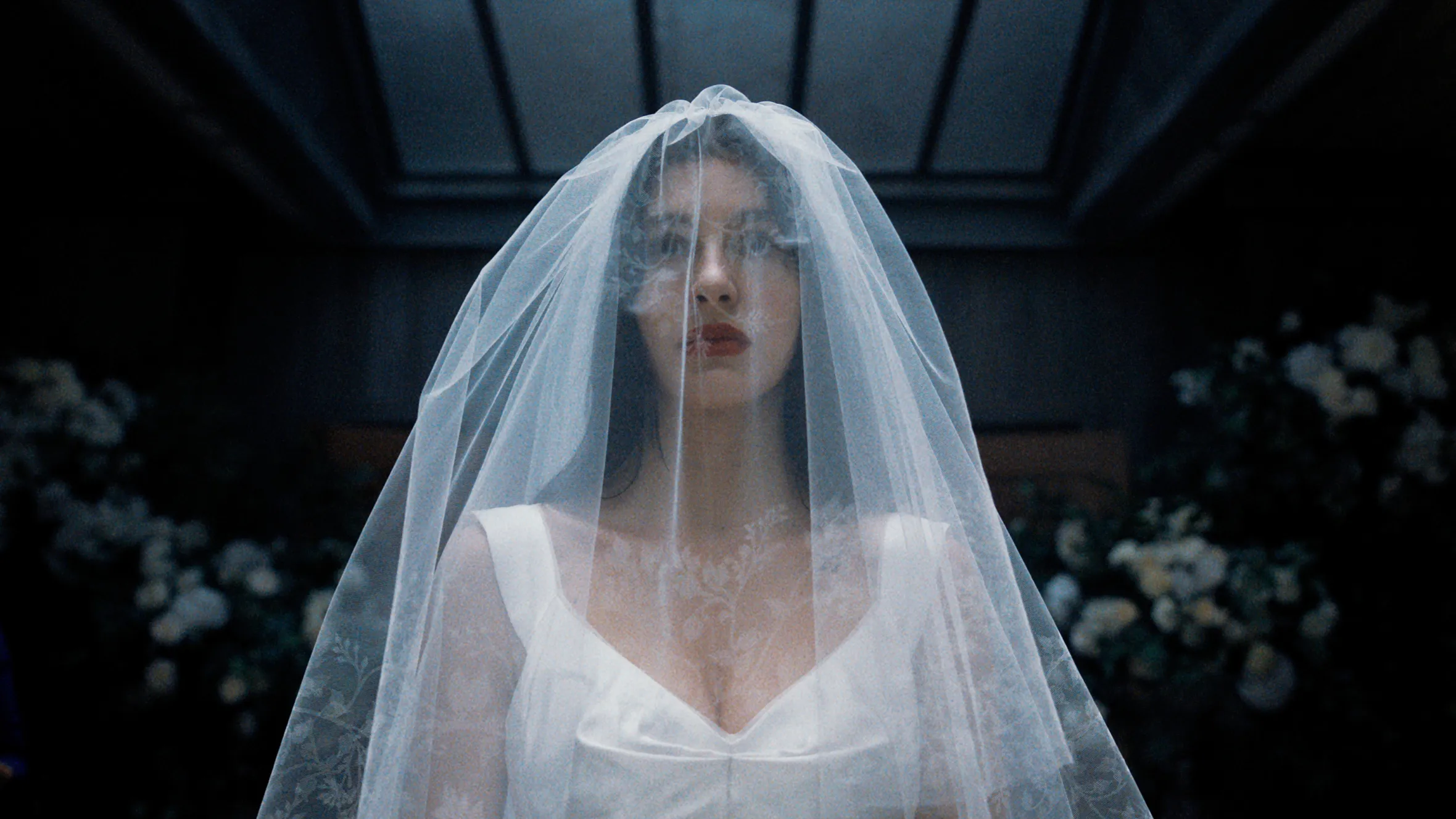
A Wedding Week Drenched in Dread
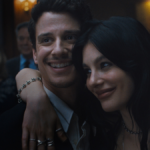
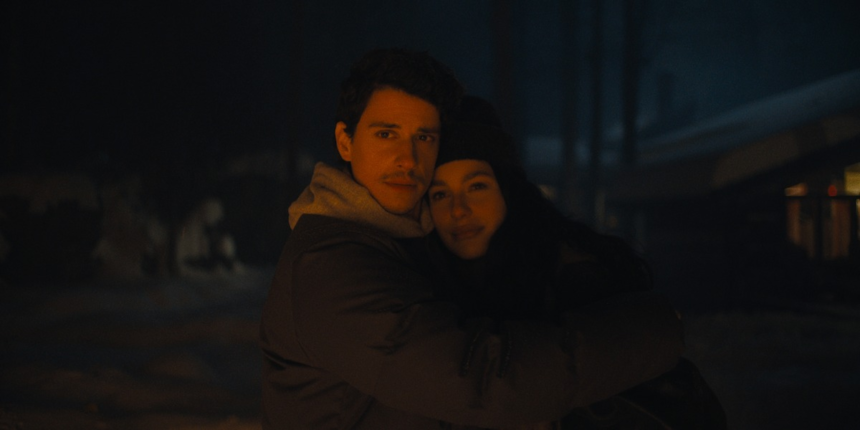
At the center of the story are Rachel Harkin and Nicky Cunningham, portrayed by Camila Morrone and Adam DiMarco. The couple is just days away from their wedding when their journey begins to unravel.
The premise is intentionally minimal:
Rachel and Nicky are engaged to be married in a week. Before they can tie the knot, something very bad happens to get in the way.
That “something” is not immediately defined. Instead, the series builds tension through a sequence of unsettling encounters and symbolic warnings—dead animals, eerie roadside discoveries, and cryptic messages like “DON’T MARRY HIM.”

The result is not a conventional horror structure. Rather than a single catastrophic event, the show constructs dread as an accumulation of signs—each one harder to ignore than the last.
The Creative Force Behind the Horror
The series is created and showrun by Haley Z. Boston, whose vision is central to its tone and structure. Boston also serves as an executive producer alongside The Duffer Brothers, whose involvement signals a continuation of their interest in atmospheric, character-driven horror.
Production is handled by Upside Down Pictures, with filming taking place in Toronto between January and May 2025.
Boston’s approach to horror is notably conceptual. Rather than relying purely on gore or spectacle, she builds the narrative around a psychological question:
What if the fear of making the wrong life decision became something tangible—and deadly?

A Cast Designed to Disturb
While Morrone and DiMarco anchor the narrative, the supporting cast adds layers of unease, particularly through Nicky’s family:
- Jennifer Jason Leigh as Victoria Cunningham, a cold and enigmatic matriarch
- Ted Levine as Boris Cunningham
- Jeff Wilbusch as Jules Cunningham
- Karla Crome as Nell
- Gus Birney as Portia Cunningham
- Zlatko Burić in a mysterious role
The Cunningham family is not merely background. They function as a narrative device—embodying the unknowns and inherited histories that come with marriage. Their behavior oscillates between polite and predatory, reinforcing Rachel’s growing paranoia.
Episode Structure and Narrative Progression
The series unfolds across eight episodes, each released simultaneously on March 26, 2026. The episode titles themselves signal escalation:
- “Never Get On One Knee”
- “Bride-Shaped Hole”
- “I Will Light You on Fire”
- “The Witness”
- “Something Living, Something Dead, Something Stolen, Something Red”
- “I Do”
Rather than episodic closure, the structure favors cumulative tension. Each installment introduces new anomalies, pushing Rachel—and the audience—further into uncertainty.
Horror as a Metaphor for Commitment
What distinguishes Something Very Bad Is Going to Happen is its thematic core. The horror is not solely external; it is rooted in a universal anxiety: the fear of choosing the wrong partner.
Boston has framed the series around a formative idea:
“You can do whatever you want in your life, just make sure you don’t marry the wrong person.”
This concept drives the narrative. The supernatural elements—rumors of a bride-killing entity, disturbing family traditions, ominous warnings—serve as extensions of that fear.
The series effectively reframes marriage as both a romantic ideal and a potential trap. The phrase “’til death do us part” becomes less poetic and more literal, blurring the line between emotional commitment and existential risk.
Atmosphere Over Shock: A Different Kind of Horror
Technically, the show leans heavily on atmosphere:
- Disorienting editing and abrupt scene transitions
- A soundtrack that transforms romantic music into something unsettling
- Visual motifs such as blood-red imagery and recurring symbols
While the series does not avoid graphic moments—depictions of violence and disturbing imagery appear—it relies more on suggestion than explicit horror. This aligns it with psychological horror traditions rather than purely visceral ones.
Critical Reception and Structural Tension
Early reactions suggest a divided but engaged response. The series has been described as:
- “wildly insane, unpredictable”
- “a clever spin on prenuptial jitters”
- “overlong” yet consistently compelling
Some criticism centers on pacing, with the eight-episode format occasionally feeling stretched. However, this extended runtime also allows the show to deepen its thematic exploration.
Importantly, the series maintains engagement through unpredictability. Even when narrative clarity wavers, the emotional tension remains intact.
Cultural Context: Why This Story Resonates
The timing of the series is significant. In an era where relationships are increasingly scrutinized—both publicly and privately—the idea of questioning commitment resonates strongly.
The show taps into several contemporary anxieties:
- The pressure to find “the right person”
- Fear of long-term commitment
- The unknown dynamics of family integration
- The instability beneath outwardly perfect relationships
By embedding these concerns within a horror framework, the series amplifies them without losing relatability.
What Happens Next?
As a miniseries, Something Very Bad Is Going to Happen presents a contained narrative. However, its thematic approach suggests broader possibilities:
- Expansion into anthology-style storytelling
- Further exploration of psychological horror rooted in everyday fears
- Continued collaboration between Boston and the Duffer Brothers
Whether or not the story continues, the series establishes a clear creative identity—one that prioritizes emotional unease over conventional horror tropes.
Conclusion: A Title That Delivers on Its Promise
Something Very Bad Is Going to Happen succeeds in one critical respect: it fulfills the expectation set by its title.
But what makes it effective is not the inevitability of something bad—it is the uncertainty surrounding what that “bad” actually is. The series keeps viewers in a state of suspended interpretation, where every detail could be a warning or a misdirection.
Ultimately, the horror lies not just in what happens, but in the realization that it might have been avoidable all along.