
“Something Very Bad Is Going to Happen” Premieres on Netflix: A Wedding Horror That Rewrites the Genre
A Disturbing Countdown to “I Do”
Netflix’s latest original series, “Something Very Bad Is Going to Happen,” has officially premiered, bringing with it a chilling blend of psychological dread and relationship horror. The eight-episode miniseries arrives with significant anticipation, fueled by its unsettling premise and the creative backing of high-profile producers.
- A Disturbing Countdown to “I Do”
- From Love Story to Psychological Horror
- The Creative Forces Behind the Series
- A Strong Ensemble Anchored by Camila Morrone
- A Narrative Built on Dread and Escalation
- Horror That Reflects Real-World Anxiety
- A Bold—but Divisive—Creative Vision
- A Story That Lives Up to Its Title
- What This Means for Netflix’s Horror Strategy
- Conclusion: A Wedding You Won’t Forget
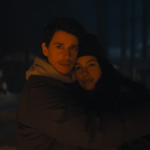
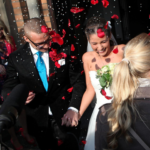
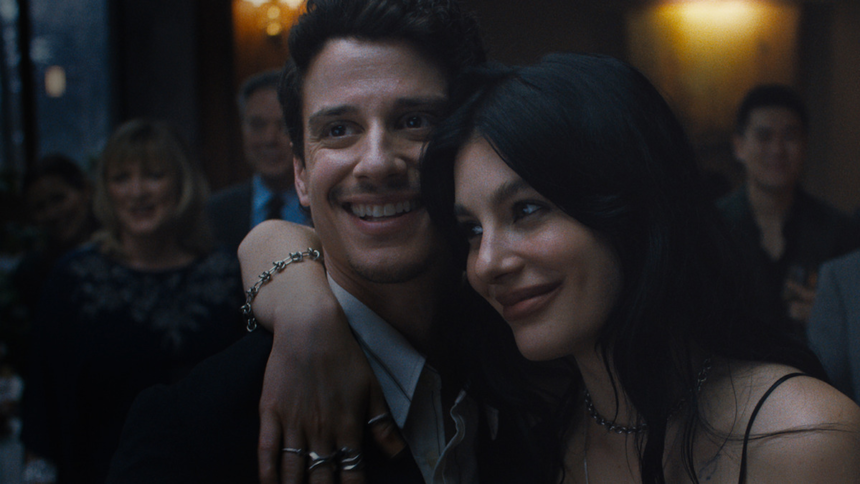
At its core, the series transforms one of life’s most familiar milestones—a wedding—into a slow-burning nightmare. The story follows Rachel Harkin and her fiancé Nicky Cunningham, whose seemingly joyous lead-up to marriage begins to fracture under an increasingly ominous atmosphere. What should be a celebration quickly spirals into suspicion, paranoia, and fear.
From Love Story to Psychological Horror
The narrative unfolds during the tense week before the wedding, as Rachel arrives at Nicky’s secluded family home. Almost immediately, subtle irregularities begin to surface. Conversations feel off. The environment feels wrong. And most unsettling of all, Rachel becomes convinced that something catastrophic is about to happen.

This transformation—from romance to dread—is not accidental. Creator Haley Z. Boston deliberately crafts a story that avoids conventional jump scares in favor of something more insidious: a creeping, character-driven anxiety.
As Boston explains, her approach is rooted in emotional realism:

“I love to explore characters… then infusing that with unsettling horror.”
This emphasis gives the series a distinctive tone—one where fear emerges not from monsters alone, but from doubt, relationships, and the terrifying possibility of making the wrong life choice.
The Creative Forces Behind the Series
The show is led by creator Haley Z. Boston, with executive producers Matt and Ross Duffer—best known for redefining genre television with Stranger Things. Their involvement signals a continuation of their interest in blending emotional storytelling with genre experimentation.
Boston’s concept is rooted in a simple but potent question:
How do you know the person you’re about to marry is truly “the one”?
Rather than answering that question directly, the series turns it into a source of existential horror. The wedding becomes a pressure point, amplifying uncertainty, fear, and inherited trauma.
A Strong Ensemble Anchored by Camila Morrone
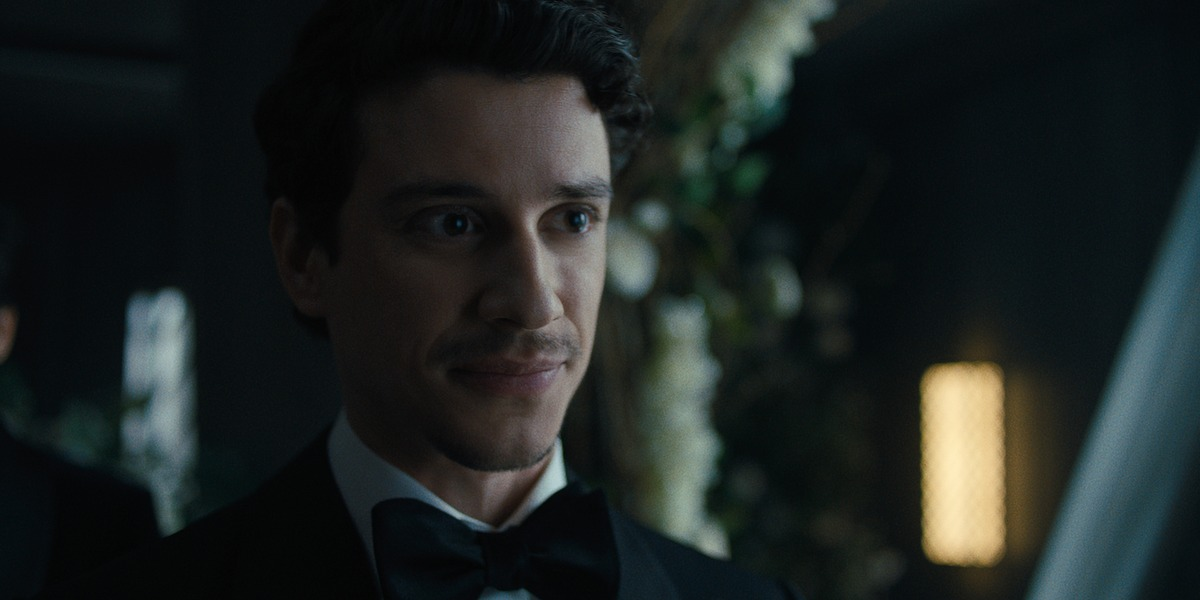
The series is driven by a layered cast, led by Camila Morrone as Rachel and Adam DiMarco as Nicky.
Rachel is portrayed as a complex, introspective character—someone raised in isolation, shaped by a father who instilled in her a constant sense of danger. She is both curious and deeply anxious, making her the perfect lens through which the audience experiences the unfolding terror.
Nicky, by contrast, represents stability and emotional grounding, though he struggles to reconcile his rational mindset with Rachel’s growing fears. Together, they form a dynamic that feels believable—until the story begins to fracture it.
Supporting performances, including Jennifer Jason Leigh and Ted Levine as Nicky’s parents, reinforce the unsettling tone. The family itself becomes a key source of tension, embodying a familiar but exaggerated truth: entering a partner’s world can feel like stepping into something alien.
A Narrative Built on Dread and Escalation
The series distinguishes itself through its pacing. Rather than relying on immediate shocks, it builds tension gradually, allowing unease to accumulate.
Early scenes introduce small disturbances—a strange conversation, an unsettling encounter, a growing sense that reality itself may be unreliable. Over time, these fragments evolve into a fully realized horror framework involving curses, fate, and generational consequences.
At the center of the story is a chilling premise:
a family curse that forces descendants to marry their true soulmate—or face death.
This concept reframes the wedding not as a celebration, but as a life-or-death test. The closer Rachel gets to the altar, the more intense the psychological pressure becomes.
Horror That Reflects Real-World Anxiety
While the show incorporates supernatural elements, its most effective moments are grounded in real emotional fears.
The idea that one might be making the wrong decision in a lifelong commitment is a universal anxiety. By literalizing that fear into a deadly curse, the series bridges psychological realism and supernatural horror.
Critically, the show taps into a broader cultural truth: relationships are often shaped not just by two individuals, but by families, histories, and inherited dynamics.
This layering allows the series to resonate beyond its horror elements, functioning as both a thriller and a commentary on modern relationships.
A Bold—but Divisive—Creative Vision
Early reactions suggest that the series is as ambitious as it is unconventional. Its willingness to shift tones, experiment with structure, and explore multiple horror subgenres has drawn both praise and criticism.
Some view it as daring and unpredictable, while others find its narrative approach disjointed.
However, even critics acknowledge its originality. The show resists easy categorization, blending psychological horror, dark comedy, and surreal storytelling into a single, evolving narrative.
A Story That Lives Up to Its Title
Without revealing full spoilers, the series ultimately delivers on its promise: something very bad does happen.
The wedding—initially framed as the story’s central event—becomes the site of chaos, violence, and irreversible consequences. The narrative escalates into a confrontation between fate and choice, forcing its characters to confront not only their relationships, but the very nature of destiny itself.
Yet even within its darkest moments, the story introduces ambiguity. The ending suggests that horror and liberation can coexist, leaving viewers with questions rather than clear resolutions.
What This Means for Netflix’s Horror Strategy
The release of “Something Very Bad Is Going to Happen” reflects a broader trend in Netflix’s content strategy: investing in character-driven, genre-blending storytelling.
Rather than relying solely on conventional horror tropes, the platform continues to explore narratives that combine emotional depth with unsettling concepts. This approach appeals to audiences seeking more than surface-level scares.
The involvement of established creators and rising talent also signals a commitment to expanding the boundaries of serialized horror.
Conclusion: A Wedding You Won’t Forget
“Something Very Bad Is Going to Happen” arrives as one of Netflix’s most distinctive horror offerings in recent years. It is not simply a story about fear—it is a story about doubt, commitment, and the hidden anxieties that accompany life’s most significant decisions.
By transforming a wedding into a psychological battleground, the series delivers a narrative that is both deeply personal and profoundly unsettling.
Whether viewed as a bold creative experiment or a polarizing genre hybrid, one thing is clear:
this is not a conventional horror story—and it was never meant to be.