



Sekiro Anime: From Brutal Game to Cinematic Storytelling
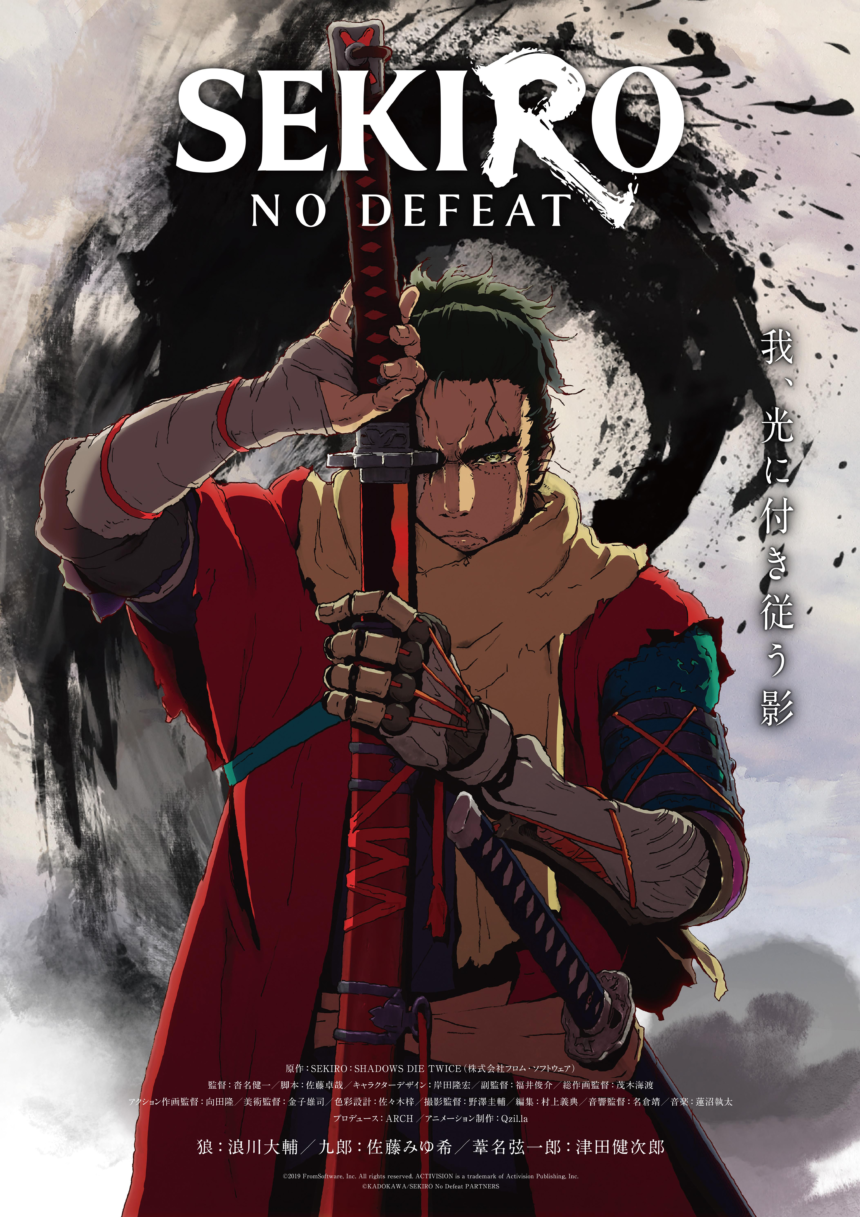
The transition from video games to anime has rarely been straightforward. Yet Sekiro: No Defeat is attempting something ambitious: translating one of the most demanding and atmospheric action games ever made into a fully realized anime experience. With new trailers unveiled and key details emerging ahead of its 2026 release, the project signals a defining moment—not just for the Sekiro franchise, but for game-to-anime adaptations as a whole.
- A New Chapter for a Modern Classic
- Reimagining a Player-Driven Experience
- Visual Identity: Hand-Drawn Precision
- Faithfulness vs. Adaptation: Walking a Fine Line
- Sound, Emotion, and Narrative Depth
- Returning Voices and Expanding the World
- Violence, Beauty, and Emotional Duality
- Industry Impact: A New Benchmark for Adaptations?
- What Comes Next
- Conclusion: A Test of Adaptation Done Right
This is not simply a retelling. It is a reinterpretation of a world built on precision combat, moral ambiguity, and player-driven storytelling.
A New Chapter for a Modern Classic
Originally released in 2019, Sekiro: Shadows Die Twice by FromSoftware established itself as a landmark in action-adventure design. Set during Japan’s Sengoku period, the game follows a lone shinobi known as Wolf, tasked with rescuing his lord, the Divine Heir, amid political chaos and supernatural threats.
The anime adaptation, titled “Sekiro: No Defeat,” retains this core narrative while reworking it into a linear, cinematic format. The story centers on a fractured Japan, where the land of Ashina stands at the heart of a brutal conflict. As internal forces rise and power shifts, the fate of the region rests on a kidnapped boy and his silent protector.

The official premise captures the scale of the narrative:
“Japan is fractured into many independent nations entangled in ceaseless war… The only hope lies in a kidnapped boy — the Divine Heir — and his silent protector: a loyal shinobi known only as Sekiro.”
Reimagining a Player-Driven Experience
One of the most complex challenges facing the production team is structural: Sekiro is fundamentally interactive. Players shape outcomes through their choices, with multiple narrative branches leading to different endings.



Director Kenichi Kutsuna acknowledges that this interactivity cannot be replicated directly in anime:
“With the game, of course, you’re playing in the character, or the player’s, POV… that wouldn’t really work for an anime, so we tried to adapt it as much as possible as an audio-visual type of medium.”
Instead of replicating all possible paths, the anime leans into one of the game’s three major narrative branches, ensuring cohesion while preserving the spirit of player agency. The result aims to maintain interpretive openness—allowing viewers to engage with the story in a way that echoes the game’s design philosophy.
Visual Identity: Hand-Drawn Precision
Unlike many modern productions that rely heavily on digital or hybrid animation, Sekiro: No Defeat is built on hand-drawn 2D animation. This choice is not merely aesthetic; it is central to the project’s identity.
Kutsuna emphasized the artistic ambition behind this approach:



“By embracing the hand-drawn essence of 2D animation, we can achieve a transcendent beauty in action that goes beyond cool to something deeply poignant.”
The animation is handled by Qzil.la Inc., with production and planning supported by KADOKAWA Corporation and ARCH Inc. Additional collaboration from Studio Betta further reinforces the project’s creative depth.
The goal is clear: to capture both the brutality of combat and the quiet, melancholic beauty of the Sengoku era.
Faithfulness vs. Adaptation: Walking a Fine Line
From the outset, fan expectations have been intense. FromSoftware’s reputation for meticulous world-building and high-quality gameplay means any adaptation faces scrutiny.
Kutsuna addressed these concerns directly:
“We’ve done everything we could… maintaining a level of quality that wouldn’t tarnish the FromSoftware and ‘Sekiro’ brand.”
The production has worked closely with FromSoftware throughout development. The screenplay and storyboarding were reviewed and approved to ensure alignment with the original world. This collaboration represents a notable milestone, as it marks the first time FromSoftware has allowed one of its IPs to be adapted into another on-screen medium.
At the same time, certain liberties were necessary. The shift from first-person gameplay to a third-person narrative required adjustments in perspective, pacing, and emotional framing.
Sound, Emotion, and Narrative Depth
Music plays a significantly expanded role in the anime format. Composer Shuta Hasunuma highlights how audio design evolves when moving from interactive gameplay to linear storytelling:
“There’s a lot more nuance that can be expressed in a linear format… a very wide range you’re trying to make sure was properly expressed in the music.”
The anime also incorporates the theme song “Blu” by Ryuichi Sakamoto, reinforcing its emotional tone and historical atmosphere.
Where the game often relied on environmental storytelling and player discovery, the anime uses sound and score to guide emotional interpretation more directly.
Returning Voices and Expanding the World
A key strength of the adaptation lies in its casting continuity. Several voice actors from the original game reprise their roles, including:
-
Daisuke Namikawa as Wolf
-
Miyuki Sato as Kuro
-
Kenjiro Tsuda as Genichiro Ashina
-
Jin Urayama as The Sculptor
-
Shizuka Ito as Emma
-
Takaya Hashi as Owl
-
Tetsuo Kanao as Isshin Ashina
This continuity reinforces authenticity, while the anime format allows deeper exploration of character relationships—particularly the bond between master and servant.
Producer Tetsushi Suzuki described this thematic focus:
“We discussed… how to portray the story of a lonely master and servant… Although they are bound together, they remain isolated.”
Violence, Beauty, and Emotional Duality
Early footage and trailers suggest the anime will not dilute the intensity of the source material. Iconic boss encounters—including Genichiro Ashina, the Corrupted Monk, and Gyoubu Oniwa—appear to be recreated with striking detail.
The series maintains the game’s signature duality:
-
Brutal combat marked by blood and precision
-
Traditional Japanese aesthetics rooted in elegance and symbolism
This contrast is central to Sekiro’s identity, and the anime appears committed to preserving it.
Industry Impact: A New Benchmark for Adaptations?
The release of Sekiro: No Defeat could have broader implications for the entertainment industry.
Game-to-anime adaptations have historically been inconsistent, often struggling to balance fidelity with narrative clarity. However, this project introduces several key shifts:
-
Direct collaboration with original developers
-
High production investment in hand-drawn animation
-
Respect for narrative ambiguity and audience interpretation
If successful, it may redefine expectations for adapting complex, player-driven games into linear storytelling formats.
What Comes Next
The anime is scheduled to stream on Crunchyroll in 2026, with anticipation building following its SXSW showcase and trailer release.
Director Kutsuna remains cautiously optimistic:
“Whether you are a fan of the game or experiencing the world… for the first time, I believe this film will leave you with something meaningful.”
That statement reflects the broader ambition of the project: not just to satisfy existing fans, but to introduce Sekiro to a wider audience without compromising its essence.
Conclusion: A Test of Adaptation Done Right
Sekiro: No Defeat represents a critical test case in modern storytelling. It attempts to translate a deeply interactive, punishingly difficult game into a narrative that can stand on its own—without losing the emotional and philosophical weight that made the original so compelling.
Its success will depend on balance: between fidelity and reinvention, between spectacle and introspection, and between fan expectations and creative vision.
If it succeeds, it may not only validate Sekiro as a cross-medium franchise—it may also set a new standard for how video games are adapted into anime.