



SCOTUS Birthright Citizenship: A Defining Legal Battle Over Who Is an American
A Case That Reaches Beyond the Courtroom
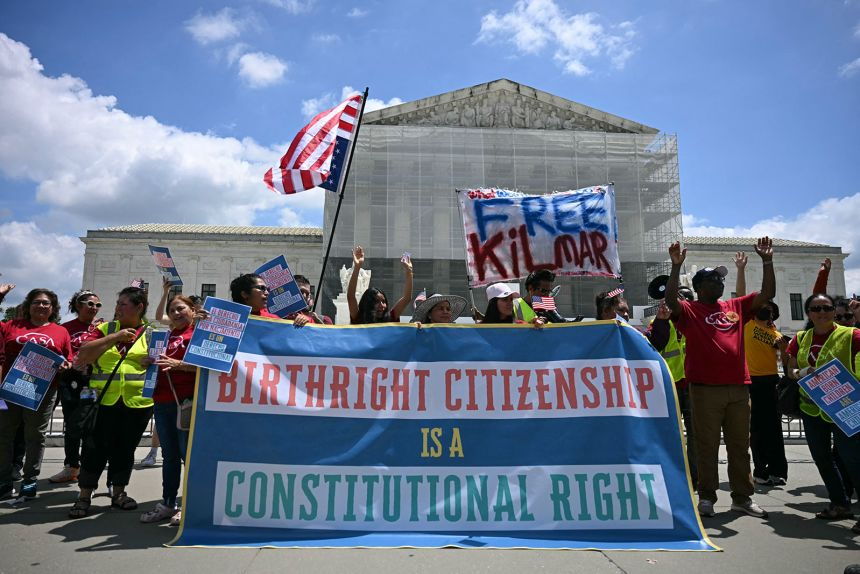
The debate over birthright citizenship has returned to the center of American law and politics, with the Supreme Court of the United States now poised to weigh one of the most consequential constitutional questions in decades. At stake is not only the interpretation of the 14th Amendment but also the future of millions of families whose sense of belonging depends on it.
- A Case That Reaches Beyond the Courtroom
- The Constitutional Foundation: What the 14th Amendment Says
- The Executive Order That Sparked the Legal Clash
- The Core Legal Question: What Does “Jurisdiction” Mean?
- The Role of Precedent: The Wong Kim Ark Decision
- A Potential Shortcut: The 1940 Citizenship Law
- Human Impact: Families Caught in Legal Uncertainty
- Political and Legislative Dimensions
- What Comes Next: A Decision with Lasting Consequences
- Conclusion: A Defining Moment for American Identity
For generations, birthright citizenship has operated as a foundational principle: anyone born on U.S. soil is automatically a citizen, with only narrow exceptions. But a legal challenge tied to an executive order issued by Donald Trump seeks to narrow that interpretation—potentially redefining what it means to be American.
The court’s decision, expected by mid-2026, could reshape immigration policy, constitutional law, and social identity across the country.
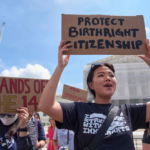

The Constitutional Foundation: What the 14th Amendment Says
At the center of the case lies the Citizenship Clause of the 14th Amendment, ratified in 1868. It states that all persons born in the United States and “subject to the jurisdiction thereof” are citizens.
This clause was adopted in the aftermath of the Civil War, primarily to overturn the infamous Dred Scott v. Sandford decision, which denied citizenship to Black Americans. The amendment established a universal standard: citizenship based on birthplace rather than ancestry.



For over a century, courts and lawmakers have broadly interpreted this provision. The prevailing understanding is that nearly everyone born in the U.S. is a citizen, regardless of their parents’ immigration status, except in limited cases such as children of diplomats or hostile occupying forces.
The Executive Order That Sparked the Legal Clash
On January 20, 2025, Trump signed an executive order seeking to restrict birthright citizenship. The policy would deny automatic citizenship to children born in the United States if their parents were in the country illegally or temporarily.
The order has never taken effect. Courts across the country quickly intervened, blocking its implementation and ruling that it likely violates both the Constitution and federal law.
Federal judges have been explicit in their reasoning:
- The order “likely violates the Fourteenth Amendment of the Constitution” and federal law.
- It “flouts the plain language of the Fourteenth Amendment” and contradicts long-standing precedent.
These rulings set the stage for the Supreme Court to step in and resolve the dispute.
The Core Legal Question: What Does “Jurisdiction” Mean?
The case ultimately hinges on the interpretation of a five-word phrase: “subject to the jurisdiction thereof.”
The Trump administration argues that this phrase should be read narrowly. According to its legal position, only those who owe “direct and immediate allegiance” to the United States—such as citizens and permanent residents—fall under this definition.
Under this interpretation, children of undocumented immigrants or temporary visitors would not automatically receive citizenship.
Opponents of the order strongly disagree. They argue that “jurisdiction” simply means being subject to U.S. laws, which applies to nearly everyone physically present in the country.
Justice Sonia Sotomayor articulated this view clearly, stating:
“Children born in the United States and subject to its laws are United States citizens.”
For critics, the administration’s interpretation represents a significant departure from both historical practice and constitutional text.
The Role of Precedent: The Wong Kim Ark Decision
A key precedent in the case is the 1898 Supreme Court ruling in United States v. Wong Kim Ark.
In that case, the Court held that a man born in San Francisco to Chinese immigrant parents was a U.S. citizen by virtue of his birth. The decision affirmed what Justice Horace Gray described as the “ancient and fundamental rule of citizenship by birth within the territory.”
The ruling also clarified the narrow exceptions to birthright citizenship, reinforcing the idea that the principle applies broadly across races and nationalities.
Supporters of birthright citizenship argue that this precedent is decisive and binding. The Trump administration, however, contends that the case has been misinterpreted and should not control modern policy.
A Potential Shortcut: The 1940 Citizenship Law
While much attention has focused on constitutional interpretation, the Supreme Court may choose a narrower path.
Congress codified citizenship rules in a 1940 law—later reaffirmed in 1952—that mirrors the language of the 14th Amendment.
Challengers argue that even if the Constitution were interpreted more narrowly, the executive order would still violate this statute. This creates an alternative legal route for the Court: strike down the order based on federal law without deciding the broader constitutional issue.
Such an approach would align with judicial restraint principles, avoiding a sweeping constitutional ruling while still resolving the case.
Human Impact: Families Caught in Legal Uncertainty
Beyond legal theory, the case carries significant human consequences.
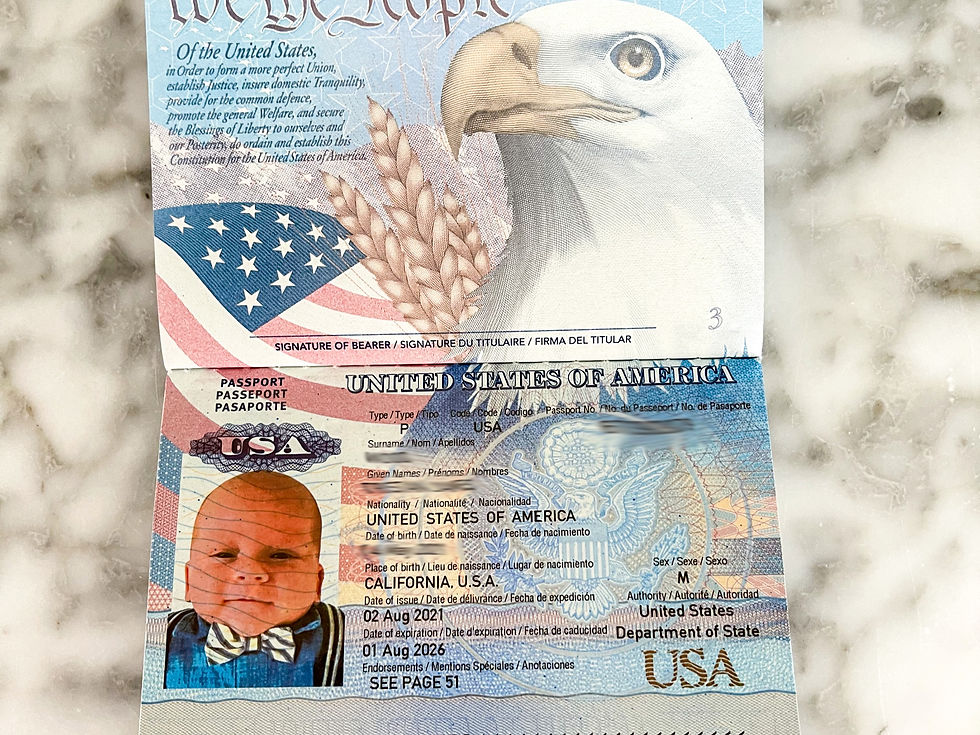
Each year, more than 3 million babies born in the United States receive citizenship automatically.
This process requires no application or approval—citizenship is simply recorded on a birth certificate.
If birthright citizenship were restricted, experts warn of far-reaching effects:
- Some children could become stateless, lacking citizenship in any country
- Families could face increased risk of deportation or legal uncertainty
- Long-term demographic shifts could expand the population of undocumented residents
Estimates suggest that limiting birthright citizenship could add millions of unauthorized individuals in the coming decades.
For many immigrant families, the issue is immediate and personal. Some parents have already altered their behavior—avoiding medical care or public exposure—due to fears about their children’s legal status.
Political and Legislative Dimensions
The legal battle also reflects broader political dynamics.
Efforts to restrict birthright citizenship have circulated in Congress for years but have not advanced significantly.
If the Supreme Court rules narrowly, Congress could still attempt to change the law—though legislative gridlock remains a major obstacle.
Justice Brett Kavanaugh has noted that difficulties in passing legislation have pushed presidents to rely more heavily on executive actions, intensifying legal conflicts like this one.
What Comes Next: A Decision with Lasting Consequences
The Supreme Court is expected to issue its ruling by late June or early July 2026.
Several outcomes are possible:
- Uphold the executive order: A major shift in constitutional interpretation
- Strike it down on constitutional grounds: Reinforce existing precedent
- Invalidate it based on federal law: Avoid broader constitutional questions
Each path carries different implications for immigration policy, legal doctrine, and social cohesion.
Conclusion: A Defining Moment for American Identity
The birthright citizenship case is not just a legal dispute—it is a test of how the United States defines membership, equality, and belonging.
For more than 150 years, the 14th Amendment has provided a clear and inclusive standard: citizenship by birth. The current challenge asks whether that principle should endure unchanged or be reinterpreted for a new era.
Whatever the Court decides, the ruling will shape not only immigration policy but also the lived reality of millions of people—and the meaning of citizenship itself.