



SCOTUS Birthright Citizenship: A Constitutional Reckoning in Motion
A Defining Legal Battle Reaches the Supreme Court
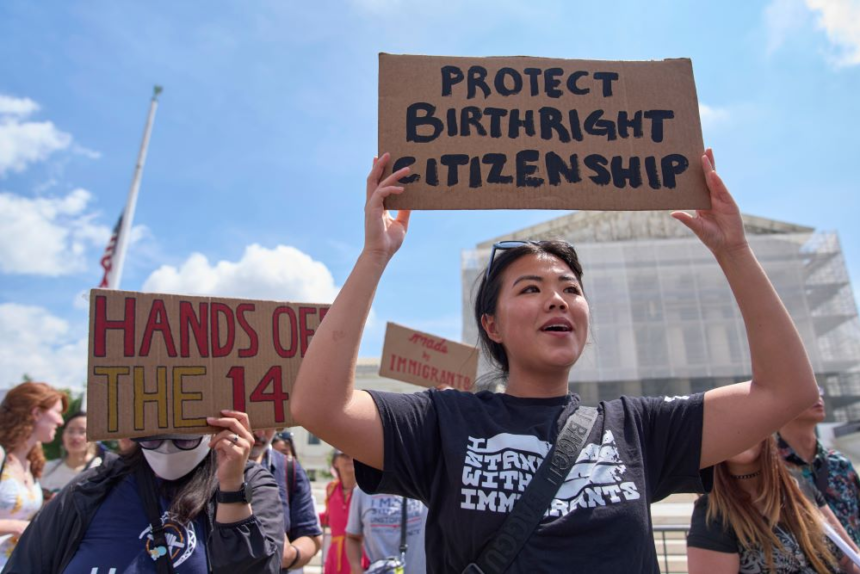
Few constitutional questions carry the weight, history, and societal consequence of birthright citizenship. Now, that issue is squarely before the highest court in the United States. The U.S. Supreme Court is preparing to hear arguments in a landmark case challenging an executive order aimed at ending automatic citizenship for certain children born on American soil.
- A Defining Legal Battle Reaches the Supreme Court
- The Constitutional Foundation: What Is Birthright Citizenship?
- The Executive Order and Its Scope
- A Broader Coalition Steps In
- The Case Before the Court: Trump v. Barbara
- What the Supreme Court Will Consider
- The Stakes: Legal, Social, and Political Impact
- A Court at a Crossroads
- What Comes Next
- Conclusion: Redefining Citizenship in the 21st Century
At the center of this legal confrontation is a policy signed on President Donald Trump’s first day back in office. The order declares that children born in the United States to parents without permanent legal status would no longer automatically receive citizenship—a direct challenge to a long-standing interpretation of the Constitution.
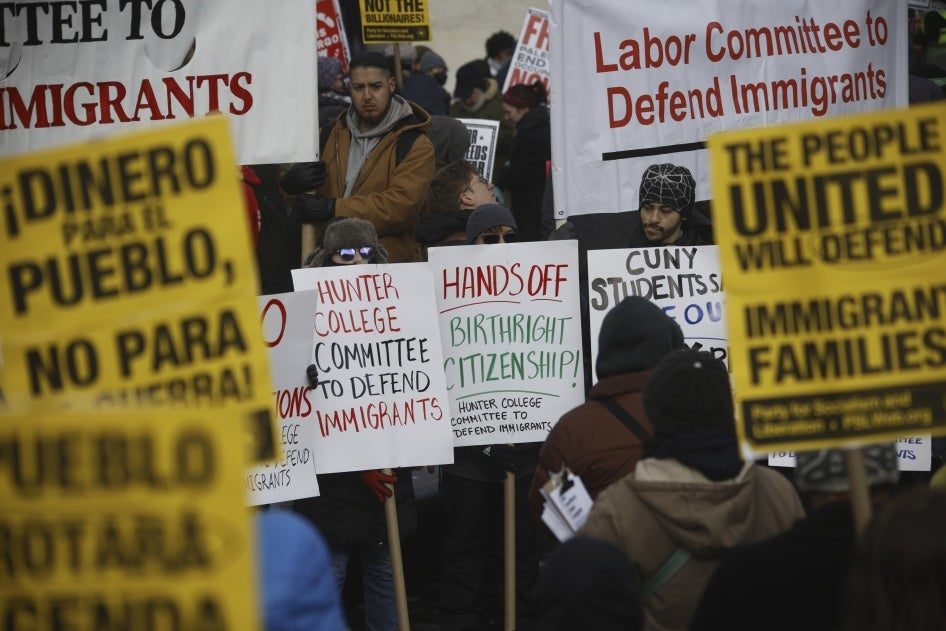
The implications are profound. Legal experts, advocacy groups, and religious institutions have mobilized around the case, recognizing it as one of the most consequential constitutional disputes in decades.
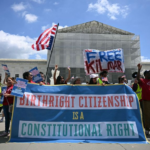

The Constitutional Foundation: What Is Birthright Citizenship?
Birthright citizenship in the United States is rooted in the 14th Amendment, ratified in 1868. The amendment guarantees that:
All persons born or naturalized in the United States, and subject to the jurisdiction thereof, are citizens of the United States.
For over a century, this clause has been widely interpreted to mean that nearly anyone born on U.S. soil automatically acquires citizenship, regardless of their parents’ immigration status.


The current case challenges that interpretation directly. The Trump administration argues that the phrase “subject to the jurisdiction thereof” excludes children of undocumented immigrants or those without permanent legal status. Opponents counter that such a reading contradicts both historical precedent and constitutional intent.
The Executive Order and Its Scope
The executive order at issue seeks to redefine who qualifies for citizenship at birth. If implemented, it would deny automatic citizenship to children born to parents who do not hold permanent legal status.
According to legal advocates, the scale of impact is significant. The American Civil Liberties Union (ACLU), which is leading the legal challenge, estimates that approximately 5 million U.S.-born children could be affected over the next 20 years.
Cody Wofsy, deputy director of the ACLU Immigrants’ Rights Project, described the policy in stark terms:
“deeply illegal, unconstitutional and morally wrong.”
The ACLU has filed a class-action lawsuit representing all children targeted by the executive order, arguing that it violates both constitutional guarantees and established legal precedent.
A Broader Coalition Steps In
The legal battle has drawn attention far beyond civil rights organizations. Religious groups have also entered the debate, underscoring the ethical and humanitarian stakes.
U.S. Catholic bishops, for example, filed a brief supporting birthright citizenship ahead of the Supreme Court hearing. Their argument centers on a critical risk:
Removing birthright citizenship would “increase the susceptibility of children to statelessness.”
Statelessness—a condition in which individuals are not recognized as citizens by any country—can lead to severe limitations on rights, including access to education, healthcare, and legal protections.
This intervention reflects a broader concern that the issue is not merely legal, but also moral and humanitarian.
The Case Before the Court: Trump v. Barbara
The Supreme Court is set to hear oral arguments in the case titled Trump v. Barbara, scheduled for April 1, 2026. It is widely regarded as one of the most significant cases of the Court’s current term.
All lower courts that have reviewed the executive order so far have ruled it unconstitutional. However, the administration maintains that those rulings are based on a “fundamental misunderstanding of the Constitution.”
Opponents of the policy warn that the stakes extend far beyond future births. They argue:
The administration “is asking for nothing less than a remaking of our Nation’s constitutional foundations” — one that “would cast a shadow over the citizenship of millions upon millions of Americans, going back generations.”
What the Supreme Court Will Consider
The justices will confront several core constitutional questions:
1. Interpretation of the 14th Amendment
Does the phrase “subject to the jurisdiction thereof” exclude certain categories of children born in the U.S.?
2. Executive Authority
Can a president alter the scope of constitutional citizenship through executive action, or is a constitutional amendment required?
3. Precedent and Stability
How should the Court weigh over a century of legal interpretation affirming birthright citizenship?
These questions place the Court at the intersection of constitutional text, historical interpretation, and modern immigration policy.
The Stakes: Legal, Social, and Political Impact
A Shift in Constitutional Norms
If the Court upholds the executive order, it would represent a fundamental reinterpretation of the 14th Amendment—potentially altering a core principle of American identity.
Immigration Policy Transformation
The ruling could reshape immigration enforcement and policy for decades, influencing debates on border control, residency rights, and national identity.
Societal Consequences
Millions of children could face uncertainty regarding their legal status. The prospect of statelessness or limited rights introduces complex humanitarian challenges.
Political Reverberations
Regardless of the outcome, the decision is likely to intensify political polarization around immigration and constitutional interpretation.
A Court at a Crossroads
The Supreme Court’s current term has already featured significant rulings on constitutional rights and federal authority. On March 31, 2026, the Court issued decisions in other high-profile cases, underscoring its active role in shaping national policy.
But the birthright citizenship case stands apart in both scale and consequence. It is not simply a policy dispute—it is a question about the meaning of citizenship itself.
What Comes Next
Oral arguments will provide the first public indication of how the justices are approaching the issue. Observers will closely analyze the questions posed during the session for clues about the Court’s eventual ruling.
A decision is expected later in the term. Whatever the outcome, it will likely define constitutional law and immigration policy for a generation.
Conclusion: Redefining Citizenship in the 21st Century
The Supreme Court’s examination of birthright citizenship marks a pivotal moment in American legal history. At stake is not only the interpretation of a constitutional clause but also the broader definition of who belongs.
The case forces a fundamental question: Is citizenship a birthright guaranteed by the Constitution, or a status that can be reinterpreted by shifting political priorities?
As the justices deliberate, the nation—and the world—will be watching closely.