


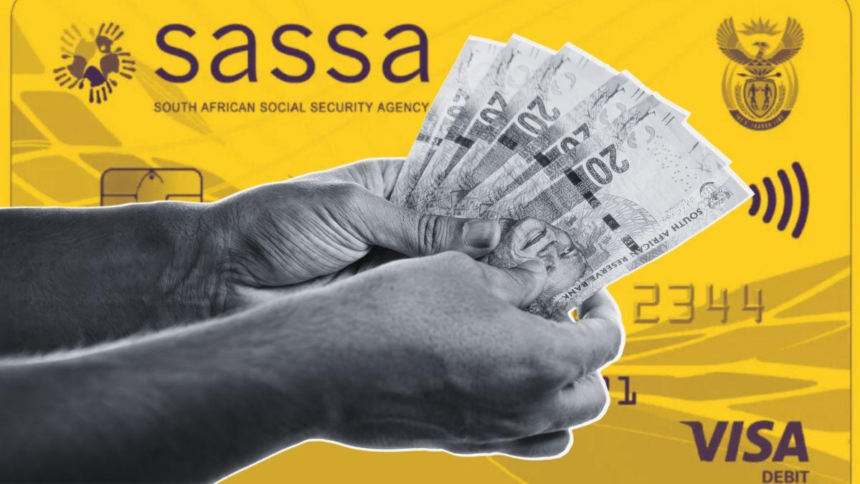
SASSA CPS: The Long Legal Battle That Redefined Public Contracts in South Africa
A Constitutional Reckoning Years in the Making
The story of SASSA CPS is not a single court ruling or financial dispute—it is a prolonged legal and institutional saga that has reshaped how South Africa views public service contracts, accountability, and the role of private companies in delivering essential government functions.
- A Constitutional Reckoning Years in the Making
- The Origin: A Contract That Should Never Have Stood
- Twelve Years, Twelve Court Appearances
- The Central Question: Can You Profit from an Unlawful Contract?
- The Financial Reality: A Hollow Victory?
- Additional Claims: A Much Larger Financial Dispute
- A Broader Principle: Public Service Is Not Just Business
- The Human Dimension: Millions Depend on the System
- Implications for South Africa’s Public-Private Partnerships
- What Happens Next?
- Conclusion: A Case That Redefined Accountability
At its core lies the relationship between the South African Social Security Agency (SASSA) and Cash Paymaster Services (CPS), a private contractor once responsible for distributing social grants to millions of South Africans. What began as a nationwide service agreement in 2012 eventually evolved into one of the most scrutinized legal battles in the country’s constitutional history.
Now, more than a decade later, the Constitutional Court has delivered a decisive ruling: CPS must repay over R81 million in profits earned from an unlawful contract.
The Origin: A Contract That Should Never Have Stood
The roots of the SASSA CPS case trace back to a tender awarded in 2012, granting CPS the responsibility of managing social grant payments across all nine provinces.
However, in 2014, the Constitutional Court declared this contract constitutionally invalid due to irregularities in how it was awarded.
Despite this finding, the court made a critical decision: it allowed CPS to continue operating temporarily.
Why?
To prevent a catastrophic disruption in social grant payments to millions of vulnerable citizens.
This decision created a complex legal tension:
- The contract was unlawful
- Yet the services were essential
- And the contractor continued operating under judicial supervision
This balance between legality and practicality would define the case for years to come.
Twelve Years, Twelve Court Appearances
The dispute did not end with the 2014 ruling. Instead, it triggered a series of legal proceedings that stretched over more than a decade.
By 2026:
- The matter had appeared in court 12 times
- Multiple issues remained unresolved, particularly around profits earned during the contract period
- Questions persisted about accountability, financial transparency, and restitution
Justice Steven Majiedt described the case as a “never-ending saga”, reflecting both its complexity and the fatigue among the parties involved.
The Central Question: Can You Profit from an Unlawful Contract?
The final legal battle focused on a fundamental issue:
Should CPS be allowed to keep profits earned under a contract that was declared unlawful?
The Constitutional Court’s answer was clear: No.
Even though CPS had delivered services, the court ruled that:
- It had effectively performed a public function
- It operated within a constitutional framework
- It therefore carried constitutional obligations, not just commercial ones
As a result, the court ordered CPS to repay R81,286,177 in profit to SASSA.
This was not merely a financial ruling—it was a statement of principle.
The Financial Reality: A Hollow Victory?
While the ruling appears decisive, the financial reality complicates the outcome.
CPS is no longer an active company. It has been in liquidation since 2020, meaning its ability to repay the money is highly uncertain.
The Liquidation Snapshot
According to reports:
- Assets: Approximately R51 million
- Proven claims: Around R778 million
- Additional SARS claim: About R401 million (under dispute)
This creates a stark imbalance:
- Liabilities far exceed assets
- Creditors, including SASSA, may receive only partial repayment—or nothing at all
In practical terms, SASSA must now claim the R81 million as a creditor in an insolvency process where recovery is uncertain.
Additional Claims: A Much Larger Financial Dispute
The R81 million repayment is only one part of a broader financial conflict between SASSA and CPS.
SASSA is also pursuing:
- R633 million in previously proven claims
- R75 million for services allegedly not rendered
These figures significantly exceed the court-ordered repayment and highlight the scale of the dispute.
At the same time, CPS has its own claim against SASSA:
- A potential R358 million related to pricing adjustments during contract extensions
If successful, this could further complicate the financial landscape.
A Broader Principle: Public Service Is Not Just Business
Beyond the numbers, the ruling establishes a critical legal precedent.
The Constitutional Court emphasized that:
- Private companies performing public functions are not ordinary contractors
- They operate within a constitutional space
- Their actions are subject to public accountability and scrutiny
This distinction matters.
In typical commercial disputes, a contractor may retain profits even if a contract is later invalidated. But in this case, the court treated CPS differently because:
- It was effectively acting as an “organ of state”
- It handled public funds
- It served vulnerable beneficiaries
The message is precise:
Profit cannot be justified if it arises from an unlawful public contract.
The Human Dimension: Millions Depend on the System
While the legal and financial aspects dominate headlines, the underlying issue remains deeply human.
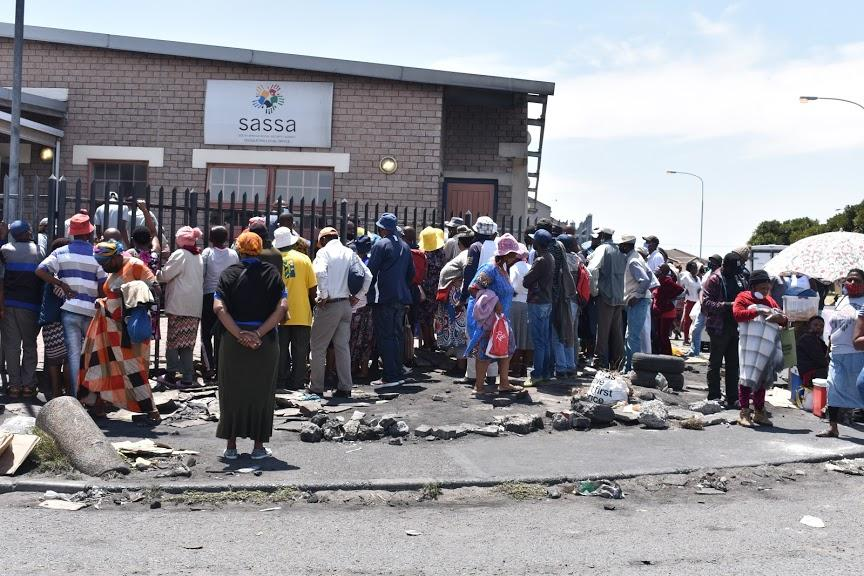
SASSA administers social grants to millions of South Africans, including:
- Pensioners
- People with disabilities
- Vulnerable households
Separate data shows that over 1.1 million beneficiaries have deductions made from their grants for services such as funeral policies, with monthly deductions exceeding R165 million.
This underscores the scale and sensitivity of the system CPS once managed.
Any disruption or mismanagement in this ecosystem directly affects livelihoods.
Implications for South Africa’s Public-Private Partnerships
The SASSA CPS case carries implications far beyond social grants.
It sets a precedent for:
- Public-private partnerships (PPPs)
- Outsourcing of government services
- State-owned enterprise (SOE) contracts
Key takeaways for future contractors include:
- Compliance with procurement laws is non-negotiable
- Profits may be subject to retrospective scrutiny
- Constitutional accountability applies when performing public functions
In effect, the ruling tightens the legal framework around how private entities engage with the state.
What Happens Next?
Despite the court’s clarity, several uncertainties remain:
- Will SASSA recover any of the R81 million?
- How will ongoing claims between CPS and SASSA be resolved?
- Will further litigation arise from related disputes?
The liquidation process will ultimately determine the financial outcome, but the legal chapter appears to be closing.
Conclusion: A Case That Redefined Accountability
The SASSA CPS saga is more than a dispute over money—it is a defining moment in South Africa’s constitutional and administrative law.
After years of litigation, the Constitutional Court has drawn a firm line:
- Public contracts must be lawful
- Public funds must be protected
- And private contractors performing public roles must meet constitutional standards
Even if the financial recovery remains uncertain, the ruling establishes a durable principle:
In the realm of public service, legality and accountability outweigh profit.