


Bihar’s Political Turning Point: Why Nitish Kumar Resigned and Samrat Choudhary Became the New Chief Minister
A Historic Shift in Bihar Leadership
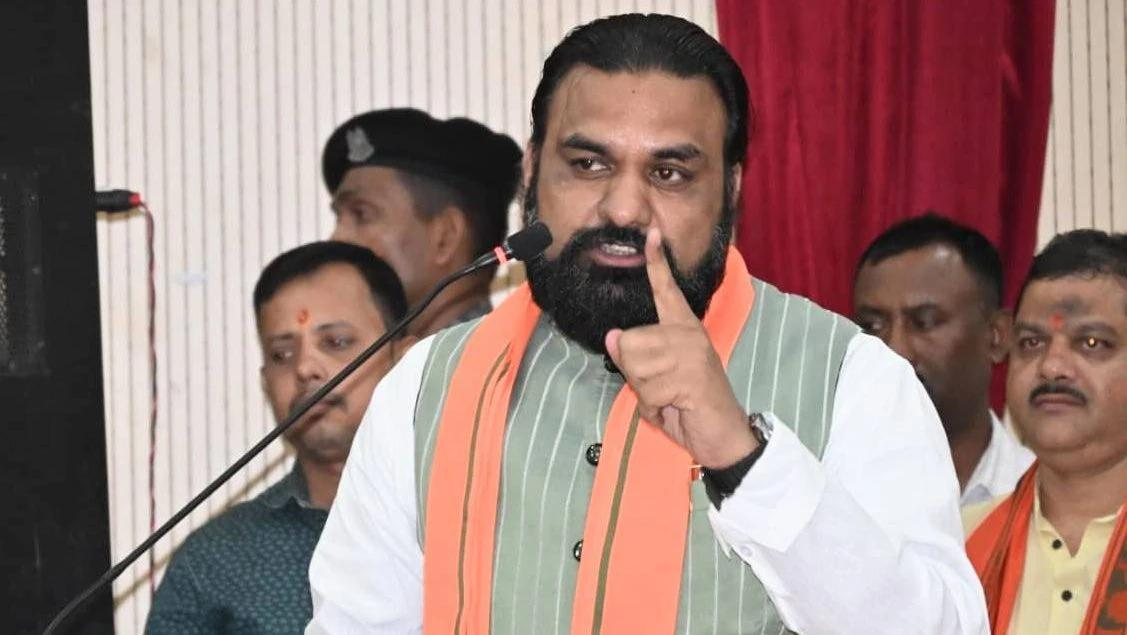
Bihar has entered a decisive new phase in its political history. Samrat Choudhary is set to become the state’s new Chief Minister, marking the first time a leader from the Bharatiya Janata Party (BJP) has taken the top post. This transition follows the resignation of Nitish Kumar, a figure who dominated Bihar politics for nearly two decades.
The change is not merely administrative. It represents a structural shift in power, strategy, and political messaging within Bihar’s ruling coalition, the National Democratic Alliance (NDA).
Why Did Nitish Kumar Resign?
The resignation of Nitish Kumar comes after a long tenure characterized by governance stability and coalition management. His statement clarifies that the decision was planned rather than forced.
He wrote:
“We have done a lot of work for the people of Bihar. For so many days, we have continuously served the people. We had decided that we would now leave the post of Chief Minister… Now the new government will look after the work here. The new government will have my full cooperation and guidance.”
This signals a voluntary transition, aligned with internal political calculations rather than crisis.
Key Reasons Behind the Resignation
1. Planned Leadership Transition
After serving a record 10th term following the 2025 assembly elections, Nitish Kumar appears to have chosen a structured exit, allowing a generational shift within the NDA.
2. BJP’s Strategic Assertion
The BJP emerged as the single largest force within the alliance, strengthening its claim to leadership. Elevating Samrat Choudhary reflects this internal power balance.
3. Future Political Role
There were growing indications that Nitish Kumar might step back from state-level leadership, potentially exploring a different role in national politics.
Who Is Samrat Choudhary?
Samrat Choudhary, aged 57, is a seasoned political figure whose career spans multiple parties and decades.
Background and Early Political Roots
- Born in 1968 into a politically influential family
- Son of Shakuni Choudhary, a six-time MLA
- Early association with the Rashtriya Janata Dal (RJD)
- Became Agriculture Minister in 1999 under Rabri Devi
His political grounding was deeply shaped by social justice politics and caste-based mobilization.
From RJD to BJP: A Strategic Political Evolution
Samrat Choudhary’s journey is defined by strategic realignments.
Key Turning Points
RJD Phase (1990s–2014)
- Built his base within the Kushwaha (Koeri) OBC community
- Elected MLA from Parbatta multiple times
- Served as a strong opposition voice
Shift to JD(U) (2014)
- Broke away from RJD with 13 MLAs
- Joined Janata Dal (United)
- Became Urban Development and Housing Minister under Jitan Ram Manjhi
Entry into BJP (2017–2018)
- Joined BJP and quickly rose through ranks
- Appointed state vice president
- Became a key strategist for OBC outreach
Rise Within BJP: From Strategist to Chief Minister
Choudhary’s ascent within BJP was rapid and calculated.
Milestones
- Panchayati Raj Minister (2021)
- Opposition leader during coalition shifts (2022)
- BJP State President (2023)
- Deputy Chief Minister (2024)
His strong connection with the Kushwaha (Koeri) community made him central to BJP’s caste-based electoral strategy.
The “Turban Vow”
In 2022, he made a symbolic commitment:
He would not remove his saffron turban (muretha) until Nitish Kumar was removed from power.
This gesture became a defining political statement—transforming into reality with his elevation in 2026.
The Political Significance of His Appointment
First BJP Chief Minister of Bihar
This is a landmark moment. Bihar, historically led by coalition figures, now sees a BJP leader directly in control of the state government.
Strengthening OBC Representation
Choudhary belongs to the Kushwaha (Koeri) community, a significant OBC bloc. His appointment is widely viewed as an effort to consolidate backward-class support.
Transition from Coalition Dependency
For years, BJP operated as a junior partner in Bihar. This shift indicates a move toward independent leadership within the alliance framework.
What This Means for Bihar’s Governance
Bihar stands at a crossroads between stability and transformation.
The Legacy of Nitish Kumar
Under Nitish Kumar:
- Law and order improved
- Public services expanded
- Governance structures stabilized
However, structural challenges remain:
- Low per capita income
- Limited industrial base
- High migration for jobs
Key Challenges Facing the New CM
1. Economic Transformation
Bihar’s growth has not translated into large-scale employment. Expanding industries like:
- textiles
- food processing
- light manufacturing
will be critical.
2. Human Capital Development
While access to education has increased, learning outcomes remain weak. Bridging the gap between education and employability is essential.
3. Urbanization and Infrastructure
Bihar has one of the lowest urbanization levels in India. Developing secondary cities will be crucial for economic expansion.
4. Managing Caste Dynamics
Balancing expectations across:
- OBC communities
- upper castes
- minority groups
will define political stability.
Coalition Dynamics and Political Reality
Even with BJP leadership, governance will still involve coordination with allies like JD(U). This creates:
- Stability through partnership
- Constraints due to competing voter bases
Decision-making may require careful political calibration rather than aggressive reform.
Samrat Choudhary’s First Message
Choudhary framed his new role as both responsibility and mission:
“This is not merely a position for me, but a sacred opportunity to serve the people of Bihar… I pledge to live up to the expectations of one and all with complete dedication, commitment, and integrity.”
He also acknowledged Nitish Kumar’s contributions and aligned his vision with broader national development goals.
A New Political Era Begins
The transition from Nitish Kumar to Samrat Choudhary represents more than a leadership change—it marks a shift in Bihar’s political identity.
From:
- coalition-driven governance
to - BJP-led strategic positioning
From:
- administrative stability
to - expectations of structural transformation
The coming years will determine whether this shift delivers economic progress, social balance, and long-term political stability.
Conclusion
Bihar’s political landscape has undergone a significant reset. Nitish Kumar’s resignation closes a long chapter of governance, while Samrat Choudhary’s rise signals a new phase driven by BJP leadership and OBC-centric strategy.
The transition is orderly but consequential. The real test now lies in execution—whether the new administration can move beyond stability and deliver measurable transformation across Bihar’s economy and society.


