




Sam Kieth: The Visionary Who Redefined Comic Book Storytelling
The comic book industry has lost one of its most distinctive creative forces. Sam Kieth—the artist and writer behind The Maxx and a foundational contributor to The Sandman—has died at the age of 63. His passing marks not just the loss of a creator, but the end of a singular artistic voice that reshaped how comics could look, feel, and think.
- A Sudden Farewell to a Unique Talent
- Origins of a Creative Outlier
- The Maxx: A Defining Creation of the 1990s
- A Style That Could Not Be Imitated
- Beyond The Maxx: A Wide-Ranging Career
- Industry Reaction: A Wave of Tributes
- Personal Life and Final Years
- The Legacy of Sam Kieth
- Conclusion: An Artist Who Changed the Medium
A Sudden Farewell to a Unique Talent
Sam Kieth died on March 15, 2026, following complications related to Lewy body dementia, a progressive illness that affects cognitive function, reasoning, and independence. News of his death began circulating days later, prompting an outpouring of tributes from across the comic book world.
Among the most personal was a statement from longtime friend and fellow artist Kelley Jones, who reflected on both Kieth’s professional and personal impact:
“Sam Kieth, my old friend since 16 and comic art genius has passed away. He was instrumental in bringing me to DC and changing the course of my career. He also introduced me to my wife ( a cute little blond he described her as) and changed the course of my life.”
The statement underscores a recurring theme in tributes: Kieth’s influence extended far beyond the page.
Origins of a Creative Outlier
Born on January 11, 1963, in Grand Rapids, Michigan, Kieth emerged during a transformative era in comics. Early in his career, he gained recognition for his work on major characters like Hulk and Wolverine, where his unconventional style immediately stood out.
He played a crucial role in helping launch The Sandman alongside Neil Gaiman at DC Comics, contributing to a series that would later be regarded as one of the most influential works in modern comics.


However, Kieth was never confined by mainstream expectations. His artistic instincts pushed him toward something more experimental—something uniquely his own.
The Maxx: A Defining Creation of the 1990s
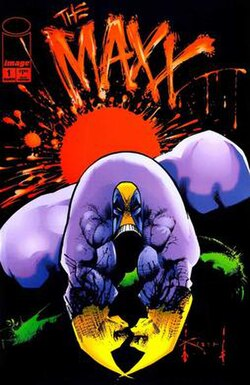
In 1993, Kieth created The Maxx under Image Comics—a project that would come to define his legacy.
At a time when Image Comics was largely associated with high-energy superhero titles, The Maxx diverged sharply. It blended elements of superhero fiction with psychological drama, surreal fantasy, and dark humor. Themes of trauma, identity, and alternate realities were central to its narrative.
Running for 35 issues, the series carved out a distinct niche and became one of the most memorable creator-driven titles of its era. Its success extended beyond print, leading to an animated adaptation on MTV’s Liquid Television, further amplifying its cultural reach.



A Style That Could Not Be Imitated
Kieth’s work was instantly recognizable. His art featured exaggerated anatomy, elastic forms, and a raw, almost chaotic energy that broke away from traditional comic aesthetics.
Where many artists aimed for precision and consistency, Kieth embraced distortion and emotional intensity. Panels often felt alive—unstable, dreamlike, and deeply expressive.
This stylistic boldness influenced a generation of artists. Tributes following his death repeatedly emphasized how different his work looked compared to everything else in the industry.
Beyond The Maxx: A Wide-Ranging Career
While The Maxx remains his most iconic creation, Kieth’s career spanned a wide range of projects across major publishers.
His credits include:
- Work on Marvel Comics Presents
- Contributions to Batman: Secrets
- Titles such as Batman/Lobo: Deadly Serious and Lobo: Highway to Hell
- Creator-owned projects like Zero Girl
- Work on Arkham Asylum: Madness
His versatility allowed him to move fluidly between mainstream superhero narratives and deeply personal, experimental storytelling.
In recognition of his contributions, Kieth received the Inkpot Award from Comic-Con International in 2013—an acknowledgment of both his influence and longevity in the field.
Industry Reaction: A Wave of Tributes
Following confirmation of his passing, artists, writers, and fans across the comic book community shared their reactions.
Greg Capullo described him as:
“A unique voice snuffed out too soon.”
Others highlighted how transformative The Maxx was upon release, calling it a “revelation” and placing Kieth among the most important creators of their generation.
These responses reveal a broader consensus: Kieth was not just admired—he was formative. His work expanded what comics could express, both visually and thematically.
Personal Life and Final Years
Sam Kieth is survived by his wife, Kathy Kieth, with whom he shared a 43-year marriage. Despite the challenges posed by Lewy body dementia in his final years, his legacy remained firmly intact within the creative communities he influenced.
The Legacy of Sam Kieth
Sam Kieth’s career cannot be reduced to a single title or achievement. His significance lies in how he redefined the boundaries of comic storytelling.
He demonstrated that comics could be:
- Visually unconventional
- Emotionally complex
- Narratively experimental
At a time when the industry often leaned toward formula, Kieth chose unpredictability. That decision not only set him apart—it helped reshape the medium itself.
Conclusion: An Artist Who Changed the Medium
The death of Sam Kieth represents more than the loss of a celebrated creator. It marks the passing of an artist who challenged norms and expanded the language of comics.
From The Sandman to The Maxx, his work continues to resonate—both as a product of its time and as a blueprint for future innovation.
His influence will persist in every artist who chooses to take risks, distort expectations, and tell stories that refuse to fit neatly within established lines.