Rosalynn Carter Net Worth, Relationships, Age/Birthdate & Birthday
Overview of Rosalynn Carter — net worth, relationships, age/birthdate, and birthday.
 loveness92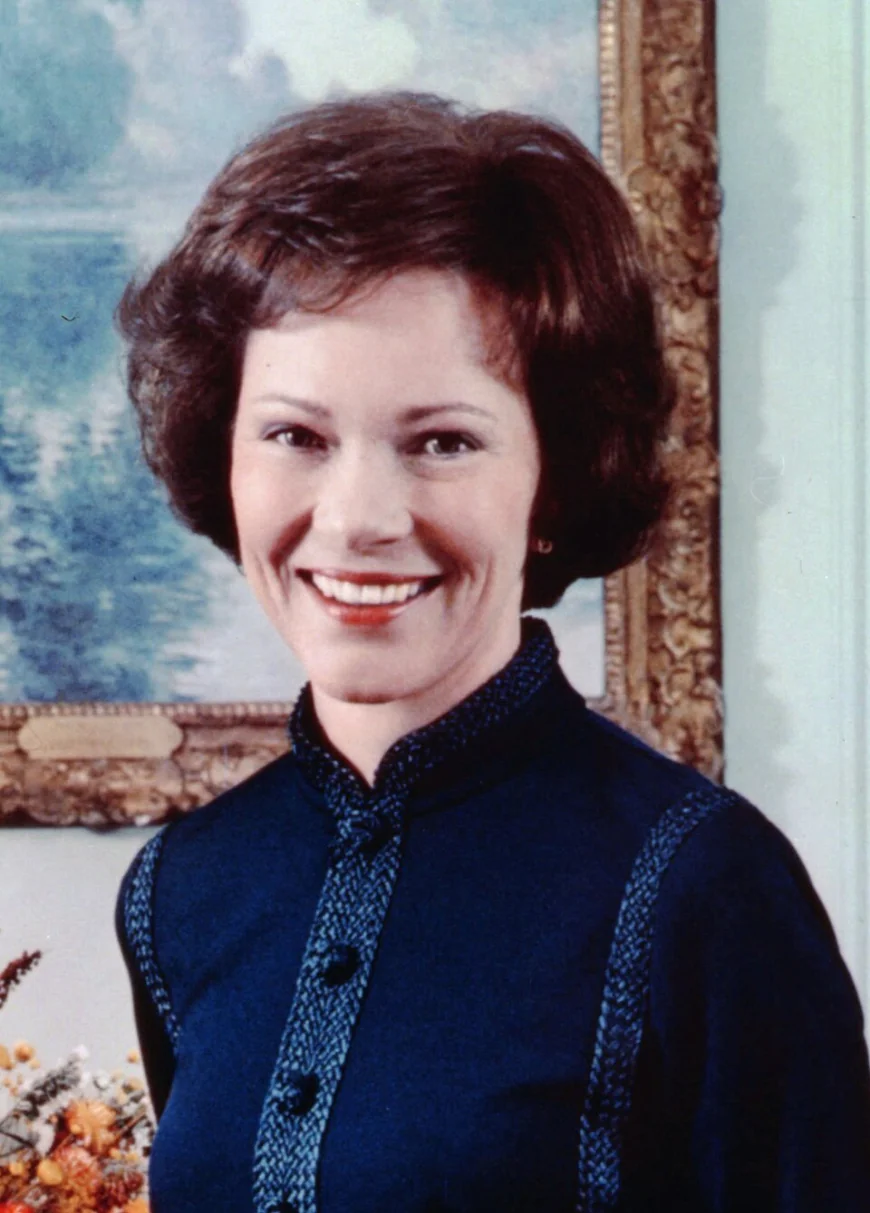
Rosalynn Carter — born Eleanor Rosalynn Smith on August 18, 1927 — lived a life that bridged humble beginnings, political influence, and unrelenting humanitarian commitment. Her birthday, August 18, 1927, marked the starting point of a journey that reshaped the role of First Lady and defined modern expectations for public service through compassion and advocacy.
From Small-Town Roots to a National Spotlight
Rosalynn grew up in the rural community of Plains, Georgia, the eldest of four children born to Wilburn Edgar Smith, a mechanic and farmer, and Alllethea “Allie” Murray Smith. When her father died when she was a teenager, she took on early responsibility — helping her mother care for the home and her siblings.
Excelling academically, she graduated as valedictorian from Plains High School in 1944 and went on to attend Georgia Southwestern College, completing her studies in 1946.
In a twist of fate that would shape 20th-century American history, Rosalynn met Jimmy Carter (then a naval cadet) through mutual friends. After a period of correspondence and courtship, the two married on July 7, 1946. Their union would span 77 years — one of the longest-lasting marriages in U.S. presidential history.
Redefining What a First Lady Could Be
As her husband rose through political ranks — from Georgia state politics to the presidency — Rosalynn transformed the role of First Lady into something more than ceremonial. When Jimmy Carter became governor of Georgia in 1971, she emerged as First Lady of Georgia, and later served as First Lady of the United States from 1977 to 1981.
Rather than maintain a traditional, behind-the-scenes profile, she became an outspoken advocate and trusted policy adviser. She held regular meetings with Jimmy Carter, advised on both domestic and foreign affairs, reviewed his speeches, and even attended Cabinet meetings — unprecedented for a presidential spouse.
In 1977 she became the honorary chair of the President's Commission on Mental Health, making mental health one of her signature causes. Her advocacy contributed to the passage of the 1980 Mental Health Systems Act — a landmark effort to improve mental-health care and rights nationwide.
During her time in the White House, she also preserved a sense of modesty and frugality: serving simple meals, avoiding designer extravagance, and sponsoring cultural events like poetry and jazz festivals.
A Lifelong Mission for Compassion and Change
After the White House years ended in 1981, Rosalynn’s public service and activism only deepened. In 1982, she and Jimmy Carter co-founded The Carter Center — a global nonprofit dedicated to human rights, public health, democracy, and conflict resolution.
She also established the Rosalynn Carter Institute for Caregiving in 1987, focusing on caregiver support and mental-health advocacy — extending her influence far beyond politics.
Across decades, she authored influential books including her memoir First Lady from Plains (1984), and guides like Helping Someone with Mental Illness: A Compassionate Guide for Family, Friends, and Caregivers — resources that reflect her deep empathy and hands-on advocacy for mental health and caregiving.
Love, Family & Partnership — The Heart of Her Life
Rosalynn and Jimmy Carter’s marriage, beginning July 7, 1946, endured through decades of public service, global recognition, and personal challenges.
They raised four children — John William (“Jack”), James Earl III (“Chip”), Donnel Jeffrey (“Jeff”), and Amy Lynn — building their home in the small Georgia town where both were born.
Their partnership came to define a different ideal: that power, influence, and compassion could — and should — go hand in hand. As one observer put it, for Rosalynn and Jimmy Carter, “good name and honor are worth more than all the gold and jewels ever mined.”
Estimating Her Net Worth — A Life Measured in Legacy, Not Luxury
Determining an exact net worth for Rosalynn Carter is complicated by the fact that much of her legacy rests in philanthropy, public service, and nonprofit work rather than traditional commercial enterprise or celebrity-driven revenue. Public records and biographical sources do not substantiate a clear figure for her net worth.
Her lifestyle suggests modesty over opulence. According to recent reporting, the home she shared with Jimmy Carter — their modest ranch house in Plains, Georgia — was valued at roughly US$240,000 in 2023.
Moreover, publicly available biographical profiles from major sources such as Britannica — updated just weeks before her death — emphasize her humanitarian and advocacy-based work rather than assets or wealth.
Given this, most credible accounts describe Rosalynn as “richer than most” not in terms of monetary fortune, but in moral standing, influence, and the enduring impact of her work for mental health, human rights, and caregiving.
The Final Chapter — A Legacy Beyond Titles
Rosalynn Carter died on November 19, 2023. Long after leaving the White House, she remained deeply engaged through The Carter Center and her caregiving advocacy.
Her name lives on in institutions, statutes, caregiving programs, and in the memories of countless individuals impacted by her compassion. She proved that a First Lady — indeed, any individual of influence — could choose empathy over elitism, advocacy over apathy.
Her life-story resonates as more than a tale of political proximity: it is the story of a woman who turned status into service, and privilege into purpose.
Why Rosalynn Carter’s Story Still Matters
-
Her birthday and upbringing ground her in a small-town America that shaped her values of humility, hard work, and service.
-
Her marriage and family life demonstrate the power of partnership, patience, and shared conviction across decades.
-
Her public role redefined what it means to be First Lady — transforming a ceremonial title into a platform for real policy impact.
-
Her long work in mental-health advocacy and caregiving created sustainable institutions and changed public perception of mental illness and care work.
-
Her modest lifestyle and unquantified “wealth” remind us that influence and legacy often matter far more than bank balances.