




Rosalía: The Artist Redefining Global Pop Through Tradition and Innovation
In the evolving landscape of global music, few artists have managed to disrupt conventions and expand cultural boundaries as effectively as Rosalía. Known for blending traditional Spanish flamenco with contemporary pop, reggaeton, and experimental sounds, Rosalía has become a defining voice of her generation—one whose influence extends far beyond music into fashion, culture, and digital communities.
- From Flamenco Roots to Global Recognition
- The Sound That Changed Everything
- Awards, Recognition, and the BRITs Spotlight
- The Cultural Phenomenon: From Berghain to Reddit
- Albums That Define an Era
- Fashion, Identity, and the “LUX” Aesthetic
- Touring and Global Reach
- Education and Artistic Discipline
- Cultural Impact and Industry Implications
- What Comes Next?
- Conclusion
This feature examines her rise, artistic identity, major works, and the broader cultural impact that continues to shape how audiences search, discuss, and engage with her globally.

From Flamenco Roots to Global Recognition
Rosalía Vila Tobella was born in Sant Esteve Sesrovires, Spain. Her artistic foundation is deeply rooted in flamenco, a genre known for its emotional intensity and technical precision. She formally studied music at the Catalonia College of Music, where she specialized in flamenco performance.
This academic grounding is essential to understanding her work. Unlike many contemporary pop artists, Rosalía’s rise was not accidental or purely commercial—it was built on disciplined training and a clear artistic direction.


Her early project, Los Ángeles, introduced her as a serious flamenco artist. However, it was her breakthrough album El Mal Querer that reframed her identity entirely, merging traditional Spanish storytelling with modern production techniques.
The Sound That Changed Everything
Reinventing Flamenco for a Digital Era
Rosalía’s music is often categorized as genre-defying. While rooted in flamenco, her work incorporates elements of:
- Urban Latin rhythms
- Experimental pop
- Electronic production
- Hip-hop influences
Her album Motomami further expanded this sonic palette, reinforcing her ability to innovate while maintaining cultural authenticity.
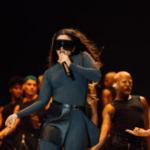
Songs like “Malamente,” “Pienso en tu mirá,” and “Saoko” illustrate this hybrid approach—combining minimalistic beats with deeply expressive vocals.


Why People Search for “Rosalía Songs”
Search interest around “Rosalía songs” reflects both curiosity and discovery. Her catalog appeals to multiple audiences:
- Traditional music enthusiasts drawn to flamenco
- Global pop listeners seeking fresh sounds
- Younger audiences engaging through streaming and social media
Her songs are not just tracks—they function as cultural artifacts, each tied to a visual aesthetic and narrative concept.
Awards, Recognition, and the BRITs Spotlight
Rosalía’s international acclaim has been reinforced by major award recognitions, including appearances at the BRIT Awards.
Her presence in global award circuits signifies a shift in the industry—non-English artists are no longer niche but central to mainstream success. Rosalía’s achievements underscore this transition, positioning her alongside the most influential global performers.
The Cultural Phenomenon: From Berghain to Reddit
The “Berghain” Conversation
Searches linking Rosalía with Berghain reflect her association with avant-garde and underground culture. While not traditionally a club artist, her experimental sound and aesthetic align with spaces known for pushing artistic boundaries.
This crossover appeal—between mainstream fame and underground credibility—is rare and strategically significant.
Reddit and Fan-Driven Narratives
On platforms like Reddit, discussions about Rosalía range from:
- Album interpretations
- Live performance reviews
- Fashion and visual symbolism
- Cultural debates about authenticity
This level of engagement demonstrates a participatory fan culture, where listeners actively analyze and reinterpret her work rather than passively consume it.
Albums That Define an Era
El Mal Querer: Concept Meets Tradition
A conceptual album inspired by a medieval Spanish novel, it established Rosalía as both a storyteller and innovator. Each track functions as a chapter, combining narrative depth with sonic experimentation.
Motomami: Expansion Without Limits
With Motomami, Rosalía moved beyond flamenco-centered identity into a broader artistic space. The album’s eclectic sound—from stripped-down ballads to high-energy tracks—demonstrates her willingness to challenge expectations.
Why “Rosalía Album” Trends Matter
Search trends around “Rosalía album” often spike during releases, reflecting her ability to generate anticipation and conversation. Her albums are events, not just collections of songs.
Fashion, Identity, and the “LUX” Aesthetic
Search queries like “Rosalía LUX” point to her evolving visual identity. Rosalía’s fashion choices—often bold, futuristic, and culturally layered—play a central role in her brand.
She operates at the intersection of:
- High fashion
- Streetwear
- Traditional Spanish influences
This visual strategy enhances her music, creating a cohesive artistic universe that extends beyond sound.
Touring and Global Reach
Interest in “Rosalía tour” highlights her status as a global performer. Her live shows are known for:
- Minimalist yet striking stage design
- Strong choreographic elements
- Vocal authenticity
Unlike heavily produced performances, Rosalía often emphasizes raw vocal delivery, reinforcing her musical credibility.
Education and Artistic Discipline
Searches around “Rosalía education” reveal a key aspect of her success—formal training. Her time at the Catalonia College of Music provided:
- Technical vocal mastery
- Deep understanding of flamenco traditions
- Exposure to diverse musical styles
This foundation distinguishes her from many contemporary artists, positioning her as both a performer and a scholar of her craft.
Cultural Impact and Industry Implications
Redefining Language Barriers
Rosalía’s success challenges the dominance of English-language music. Her Spanish-language songs have achieved global reach without compromise, demonstrating a shift in audience openness.
Bridging Tradition and Innovation
She represents a model for artists seeking to modernize traditional genres without diluting their essence. This balance is particularly relevant in a globalized music industry.
Influence on Emerging Artists
A new generation of musicians now draws inspiration from her approach—blending heritage with experimentation.
What Comes Next?
Rosalía’s trajectory suggests continued evolution rather than repetition. Future developments may include:
- Further genre experimentation
- Expanded collaborations across industries
- Increased influence in fashion and visual arts
Her ability to remain unpredictable is, arguably, her most valuable asset.
Conclusion
Rosalía is not simply a successful singer-songwriter—she is a cultural force redefining how music, identity, and innovation intersect in a globalized world. From flamenco roots to international acclaim, her journey reflects both discipline and daring creativity.
As search trends—from “Rosalía songs” to “Rosalía tour” and “Rosalía album”—continue to rise, they signal more than popularity. They point to an artist who has fundamentally altered the conversation around modern music.