


Ronaldinho at 46: The Enduring Magic of Football’s Greatest Showman
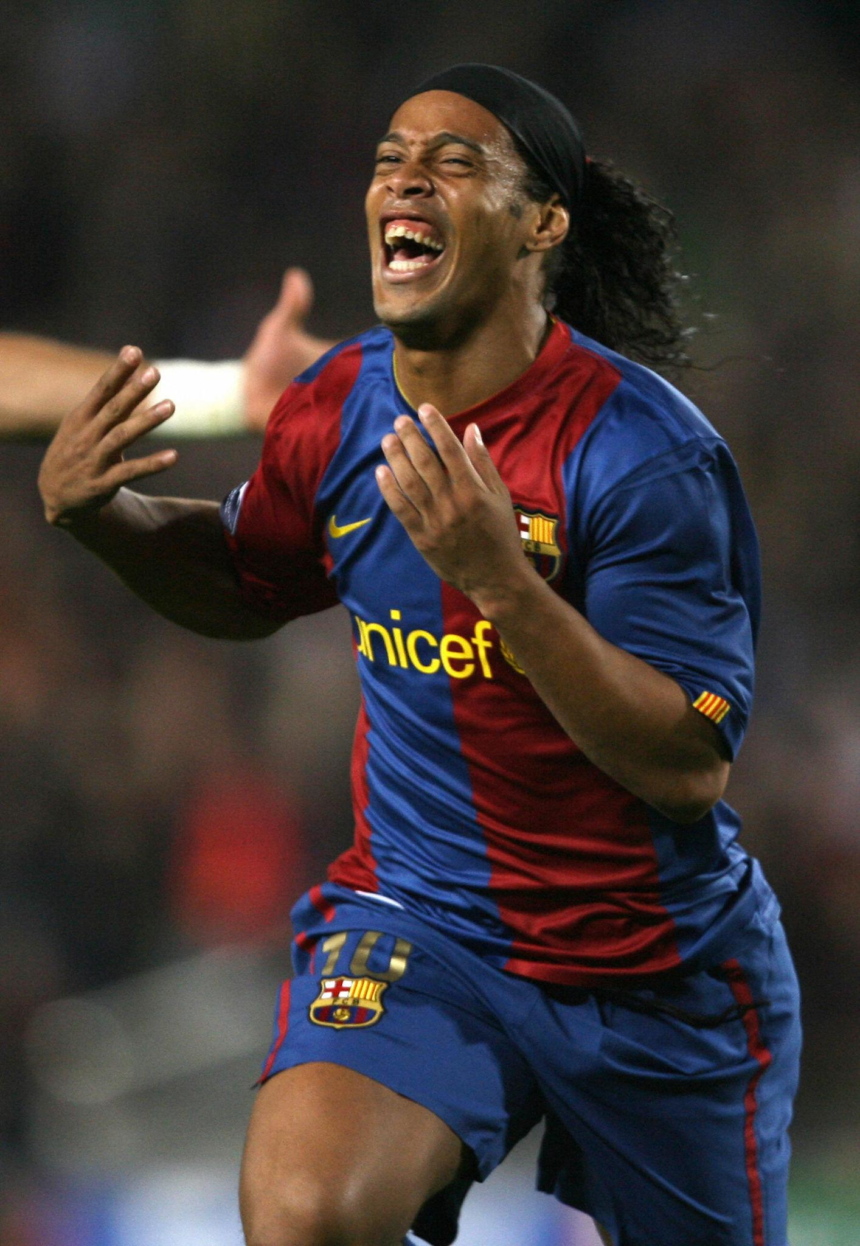
On March 21, the football world pauses for a familiar ritual: celebrating Ronaldinho. At 46, the Brazilian icon remains less a retired player than a permanent reference point for joy in football. His name is still invoked wherever creativity, flair, and spontaneity intersect with elite performance.
This is not nostalgia alone. It is recognition of a player who reshaped how the sport is experienced—by teammates, opponents, and spectators alike.
A Career That “Finished the Game” Early
Few players have assembled a résumé as complete, as early, and as effortlessly as Ronaldinho. By the age of 26, he had already secured football’s most prestigious honors:
- FIFA World Cup (2002) with the Brazil national team
- Copa América (1999)
- Ballon d’Or (2005)
- UEFA Champions League (2006)
Later, he added the Copa Libertadores in 2013, reinforcing a rare dual-hemisphere dominance.
This combination places him among a select group of players to win the World Cup, Champions League, and Ballon d’Or—an elite historical bracket that underscores both his impact and efficiency.
Yet, statistics alone do not explain Ronaldinho. They only outline the framework of a much broader phenomenon.


From Paris to Barcelona: The Making of a Global Icon
Ronaldinho’s European journey began at Paris Saint-Germain, where he played from 2001 to 2003, registering 77 appearances, 25 goals, and 19 assists. Even then, his style—unpredictable, expressive—stood apart.
It was at FC Barcelona, however, that his legend crystallized. Between 2003 and 2008:
- 207 matches
- 94 goals
- 70 assists
These numbers only hint at his influence. Barcelona’s identity shifted during this period, moving toward a more expressive, technically dominant model—one that Ronaldinho embodied.
A defining moment came at the Santiago Bernabéu, where, after a masterclass performance, even rival supporters applauded him. It remains one of football’s clearest demonstrations of universal respect.

He later continued his European career at AC Milan (2008–2011), where his creativity persisted, even as his physical peak began to taper.
“Joga Bonito”: More Than a Style
Ronaldinho’s football was often described as Joga Bonito—“the beautiful game.” In practical terms, this meant:
- Elasticos and no-look passes executed with minimal effort
- Improvisation under pressure
- A constant prioritization of enjoyment
He once summarized his philosophy succinctly:
“What was difficult for you was easy for me.”
This approach did more than entertain—it redefined expectations. Efficiency and aesthetics, often seen as competing priorities, became complementary in his game.
He proved that dominance could coexist with expression.
A Player Beyond Metrics
Modern football discourse is heavily data-driven: expected goals, pressing intensity, positional maps. Ronaldinho resists this framework.
He was not optimized; he was intuitive.
Observers did not rise to applaud only goals, but moments—an unexpected flick, a disguised pass, a piece of improvisation that disrupted the logic of the game.
This is why tributes continue to emphasize emotion as much as achievement:
- PSG described him as “a magician”
- La Liga highlighted “the endless smile”
- Brazilian football authorities stated:
“Football took on a whole new face when he stepped onto the pitch and the whole world stopped to watch.”
Such language reflects something beyond performance—an experiential impact.
The Universal Appeal of Ronaldinho
Ronaldinho’s appeal cuts across typical football divisions:
- Club loyalties
- National rivalries
- Generational preferences
He is one of the few players equally admired by fans of competing teams. His style disarmed rivalry; his personality reinforced it.
The defining visual remains his smile—a constant presence that signaled enjoyment rather than tension. It became, in many ways, his most recognizable attribute.
Influence on Modern Football Culture
Ronaldinho’s influence persists in several dimensions:
1. Player Development
A generation of players—particularly in attacking roles—cite him as a formative influence. His emphasis on creativity over rigidity continues to shape youth training philosophies.
2. Football Branding
The global popularity of skill-based football content, street football aesthetics, and freestyle culture can be traced, in part, to his visibility in the early 2000s.
3. Tactical Freedom
While modern systems are structured, elite teams increasingly allow creative players defined zones of improvisation—a conceptual space Ronaldinho occupied naturally.
A Career of Paradox
There remains a persistent narrative: Ronaldinho achieved everything, yet never fully maximized his potential.
This paradox is central to his legacy.
He prioritized enjoyment over longevity, spontaneity over discipline. And yet, he still reached the summit of the sport. It raises a broader question within football analysis: how much of greatness is defined by optimization versus expression?
Ronaldinho represents the latter.
Conclusion: The Permanent Reference Point
At 46, Ronaldinho is no longer active on the pitch, but his relevance has not diminished. His career is revisited not merely for historical completeness, but for perspective.
He demonstrated that football could be both effective and beautiful, competitive and joyful.
In an era increasingly defined by structure and analytics, his legacy serves as a reminder of the game’s original appeal: unpredictability, creativity, and emotion.
Or, more simply, as many still describe it—magic.