


Roberto De Zerbi: The High-Risk Visionary Set to Reshape Tottenham
A Defining Moment in North London
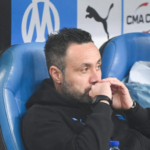
Few managerial appointments in recent football history have generated as much debate, urgency, and intrigue as the expected arrival of Roberto De Zerbi at Tottenham Hotspur.
- A Defining Moment in North London
- The Career Arc: From Midfielder to Tactical Innovator
- The Tottenham Situation: Crisis Meets Philosophy
- The Tactical Blueprint: What De Zerbi Brings
- Immediate Challenges: Survival vs Identity
- The Controversy Factor: A Divisive Appointment
- The Squad Question: Transformation Ahead?
- Strengths vs Risks: A Strategic Trade-Off
- What This Means for the Premier League
- Conclusion: A Gamble with Long-Term Consequences
As of late March 2026, the Italian tactician has agreed to take charge of Tottenham on a five-year contract, stepping into one of the most volatile situations in the Premier League.
The stakes are unusually high: Spurs sit 17th in the table, just one point above the relegation zone, with only a handful of matches remaining.
This is not a routine managerial change—it is a rescue mission with long-term implications.
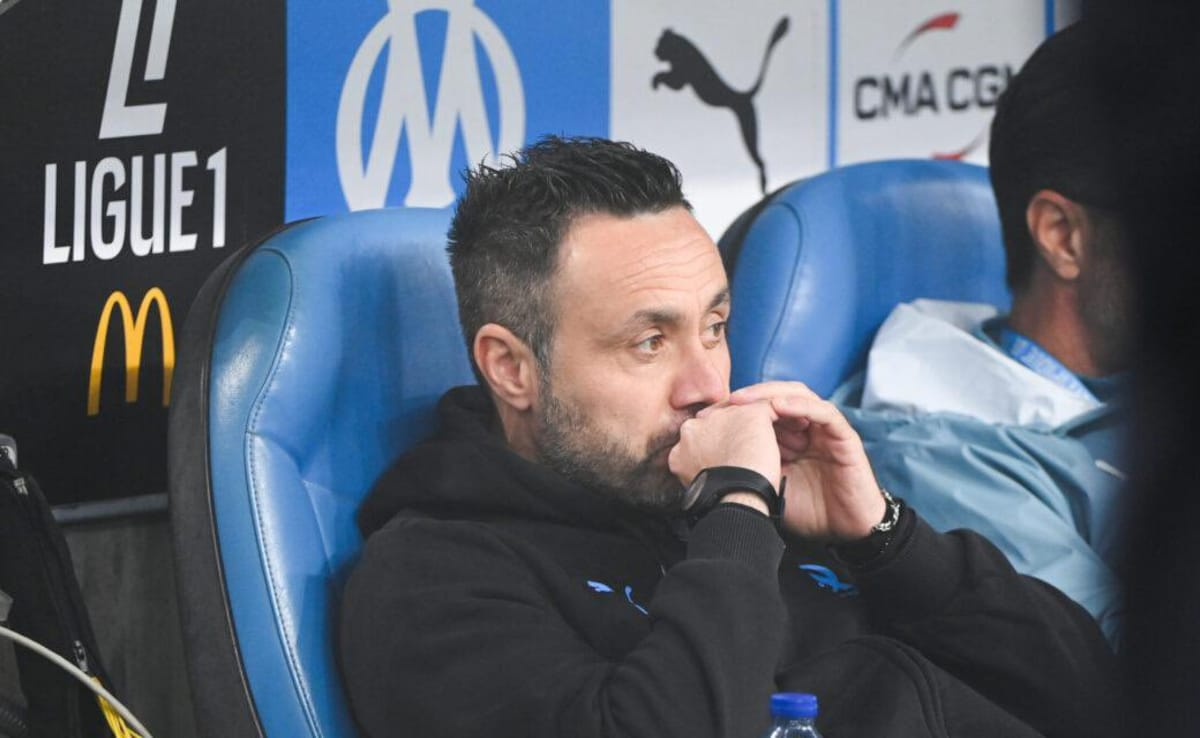
The Career Arc: From Midfielder to Tactical Innovator
Born on 6 June 1979 in Brescia, Italy, De Zerbi’s football journey began as an attacking midfielder. His playing career spanned clubs like Napoli, Foggia, and CFR Cluj before transitioning into coaching.
His managerial evolution is marked by distinct phases:


- Early learning at Darfo Boario and Foggia
- Short but difficult spell at Palermo
- Tactical recognition at Benevento despite relegation
- Breakthrough success with Sassuolo’s attacking football
- Silverware with Shakhtar Donetsk (Ukrainian Super Cup 2021)
- Global recognition at Brighton
- A mixed but impactful tenure at Marseille
At Brighton, De Zerbi achieved something historic—qualifying the club for European competition for the first time.
That period cemented his reputation as one of Europe’s most progressive coaches.
The Tottenham Situation: Crisis Meets Philosophy
De Zerbi’s arrival comes after a chaotic sequence of managerial changes:
- Ange Postecoglou dismissed despite European success
- Thomas Frank removed amid poor results
- Igor Tudor lasting just 44 days
Tottenham will become their fourth manager in 10 months, highlighting systemic instability.



The club’s objective is immediate survival. However, the board’s decision to appoint De Zerbi reflects a longer-term vision: to build a possession-based, progressive identity rather than rely on short-term fixes.
The Tactical Blueprint: What De Zerbi Brings
De Zerbi’s philosophy is both admired and polarizing. His teams are built on:
1. Structured Possession Play
- Short build-up sequences starting from the goalkeeper
- Controlled progression through midfield
- Emphasis on technical security under pressure
2. Positional Flexibility
- Preferred system: 4-2-3-1
- Fluid transitions into shapes like 1–2–3–5 in attack
- Full-backs pushing high to stretch opposition lines
3. High-Risk Build-Up
- Encourages players to receive the ball in tight spaces near their own goal
- Uses the goalkeeper as an auxiliary defender
4. Aggressive Pressing
- High pressing off the ball
- Aimed at forcing turnovers in advanced positions
His approach has earned praise from elite figures like Pep Guardiola, who described him as “one of the most influential managers in the last 20 years.”
However, this same philosophy can expose teams defensively—particularly in high-pressure survival scenarios like Tottenham’s current situation.
Immediate Challenges: Survival vs Identity
De Zerbi’s first objective is clear: avoid relegation.
His debut fixture is scheduled away at Sunderland, followed by a home clash against his former club, Brighton & Hove Albion.
Key tactical challenges include:
- Stabilizing a defensively fragile squad
- Adapting his possession-heavy system to a relegation battle
- Managing player confidence in a struggling dressing room
Analysts suggest that while his philosophy is long-term, survival may require short-term pragmatism—something not traditionally associated with his style.
The Controversy Factor: A Divisive Appointment
De Zerbi’s appointment is not universally welcomed.
Several Tottenham supporter groups have publicly opposed the move due to his support of Mason Greenwood during their time at Marseille.
His comments describing Greenwood as a “good guy” who had “paid a heavy price” have drawn criticism and raised concerns about the club’s values.
Fan organizations have warned that the appointment could:
- Undermine trust between supporters and the club
- Affect match attendance
- Create reputational challenges for Tottenham
This adds a non-football dimension to De Zerbi’s already complex task.
The Squad Question: Transformation Ahead?
Looking beyond survival, De Zerbi is expected to reshape Tottenham’s squad significantly.
Tactical discussions suggest:
- Preference for ball-playing goalkeepers
- Reinforcement in midfield to support possession play
- Potential reliance on young talents like Lucas Bergvall
- Interest in experienced players familiar with his system
There is also speculation about bold attacking options, including links to Pierre-Emerick Aubameyang as part of a transitional setup.
The broader objective: align the squad with his technical and positional demands.
Strengths vs Risks: A Strategic Trade-Off
Strengths
- Proven ability to develop young players
- Clear tactical identity
- Experience in multiple leagues
- Track record of overachievement with smaller clubs
Risks
- High-risk playing style under pressure
- Short average tenure (often under 18 months)
- Potential friction with club hierarchies
- Ongoing off-field controversies
Former players like Rio Ferdinand have even questioned whether Tottenham is the right environment for him, citing structural instability at the club.
What This Means for the Premier League
De Zerbi’s arrival could influence broader tactical trends in English football:
- Reinforcement of possession-based systems
- Increased emphasis on build-up from the back
- Greater acceptance of high-risk, high-reward strategies
If successful, Tottenham could transition from a reactive team to one of the league’s most system-driven sides.
If not, it may serve as a cautionary example of philosophy clashing with context.
Conclusion: A Gamble with Long-Term Consequences
The appointment of Roberto De Zerbi represents a calculated gamble.
Tottenham are not just hiring a manager—they are committing to a footballing ideology. The question is whether that ideology can survive the immediate pressure of a relegation battle.
Success would redefine Spurs’ identity and validate the club’s long-term vision. Failure could deepen instability and reinforce doubts about strategic direction.
Either way, De Zerbi’s tenure is set to become one of the most closely watched managerial experiments in modern football.