


Rassie Erasmus: Inside the Mind of Rugby’s Most Calculated Architect
The Strategist Behind a Dominant Era
Few figures in modern rugby command as much influence—and scrutiny—as Rassie Erasmus. As the driving force behind the South Africa national rugby union team, Erasmus has redefined what it means to lead at the highest level of the sport.
- The Strategist Behind a Dominant Era
- A Coaching Philosophy Built on Analysis and Detail
- The Human Side: Intensity Balanced with Approachability
- Building a Winning Machine: Results That Define an Era
- Managing Crisis: Injuries, Depth, and Tactical Flexibility
- Tactical Identity: Power, Precision, and Adaptation
- Debates and Future Planning: The “B-Team” Question
- The Cultural Impact: Redefining Modern Coaching
- Conclusion: A Legacy Still in Motion
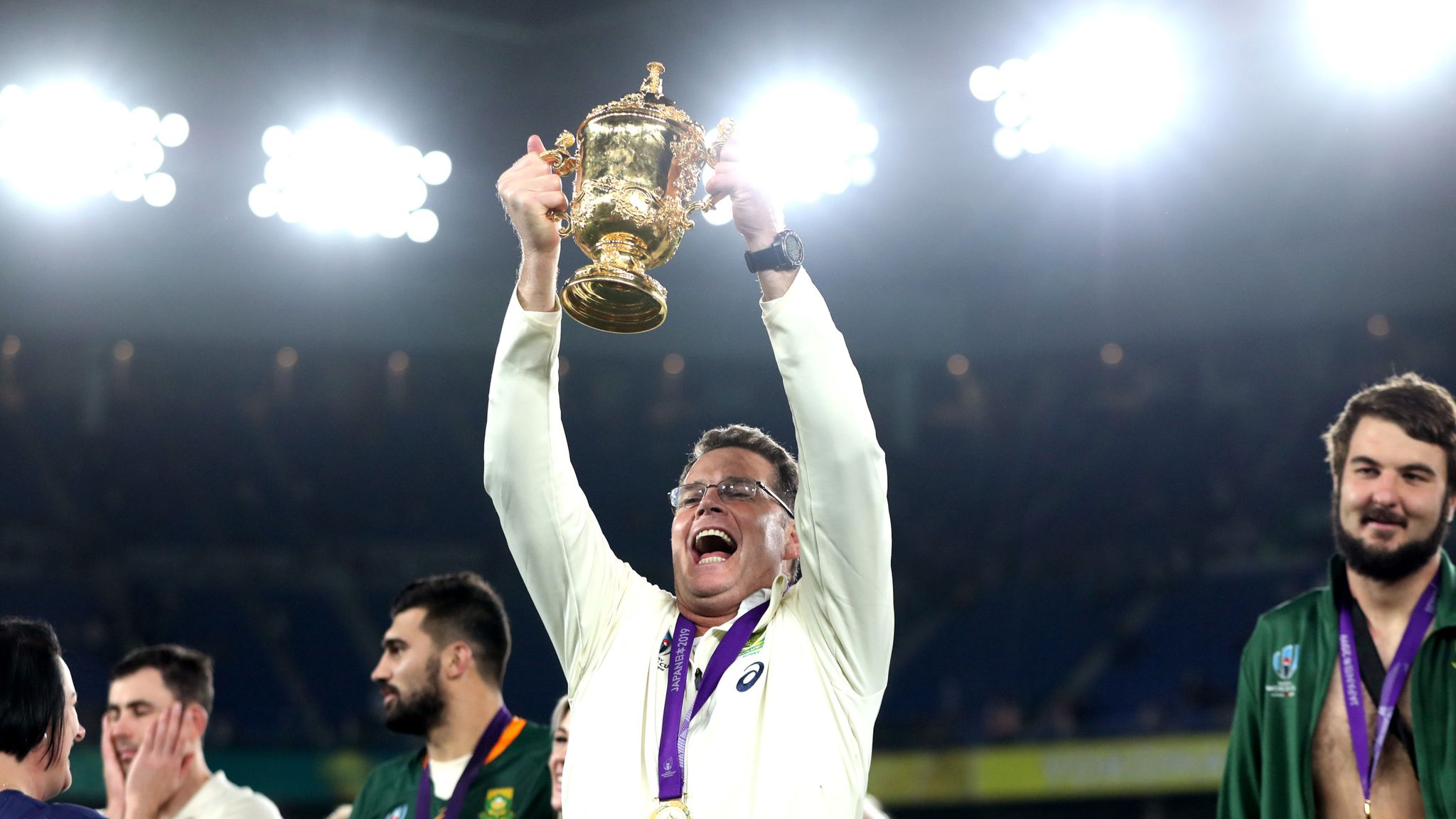
From back-to-back Rugby World Cup triumphs in 2019 and 2023 to sustained dominance in competitions like the Rugby Championship, his tenure has been marked by precision, adaptability, and an uncompromising analytical approach. But beyond the results lies a deeper story—one of methodical planning, human management, and a coaching philosophy that balances intensity with approachability.
This article examines Erasmus not just as a coach, but as a system builder shaping the future of South African rugby.


A Coaching Philosophy Built on Analysis and Detail
At the core of Erasmus’ success is a highly analytical mindset. According to former Springbok prop Steven Kitshoff, Erasmus approaches opposition analysis with exceptional depth.
“It would be a deep dive for him. I think he is very analytical,” Kitshoff explained, noting that Erasmus studies opponents with long-term preparation in mind, often months before facing them.


This analytical ecosystem is not a solo effort. It involves a network of coaches and specialists, including:
- Felix Jones
- Mzwandile Stick
- Daan Human
Communication flows continuously among this group, with each focusing on specific technical areas such as scrums, defensive shapes, and tactical patterns.
Kitshoff emphasized that even during seemingly relaxed moments—like watching matches casually—analysis is ongoing.
“They’re watching, definitely with a beer in hand… but they’re not robots.”
This duality—relaxed observation combined with rigorous evaluation—defines Erasmus’ approach.


The Human Side: Intensity Balanced with Approachability
While Erasmus is widely known for his intensity, players consistently highlight another dimension: accessibility.
Springbok prop Trevor Nyakane described a coach who is both demanding and relatable:
“As intense as coach Ras can be, he can actually be very fun as well. He can be a calming person.”
Nyakane’s insight challenges the stereotype of elite-level coaches as distant authority figures. Instead, Erasmus fosters an environment where players feel comfortable engaging directly with him.
“There are certain coaches you see them walking your way… and you go the other way, whereas with Rassie, it’s not like that,” Nyakane noted.
However, this approachability does not dilute discipline. Erasmus is known for his ability to “switch on” intensity when required:
“He knows when to turn it up… but he also knows how to just completely turn it off.”
This balance between pressure and personality is central to the Springboks’ cohesion.
Building a Winning Machine: Results That Define an Era
Erasmus’ tenure is measured not just in philosophy but in tangible success. Under his leadership, the Springboks have achieved:
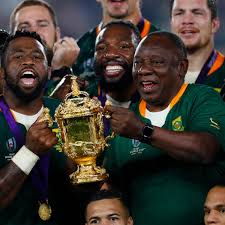
- Rugby World Cup victories in 2019 (Japan) and 2023 (France)
- A 2–1 series win over the British & Irish Lions in 2021
- Rugby Championship titles in 2024 and 2025
These achievements have established South Africa as a dominant force in international rugby.
Crucially, this success is not reliant on a single generation of players. Erasmus has built depth across positions, ensuring continuity even amid injuries and squad transitions.
Managing Crisis: Injuries, Depth, and Tactical Flexibility
The 2026 season presents new challenges, particularly in the second row. The injury to RG Snyman—a long-term ACL setback—has disrupted squad planning.
Erasmus acknowledged concerns about depth:
“My honest opinion is that we are thin at lock, if you look at our lock depth, age bracket, and the number of caps that we have there.”
Compounding the issue is uncertainty around Lood de Jager, who is recovering from hip surgery.
Despite this, Erasmus’ system allows for adaptability:
- Established players like Eben Etzebeth provide stability
- Emerging talents such as Jean Kleyn and Salmaan Moerat offer depth
- Versatile forwards like Pieter-Steph du Toit can shift roles when needed
This layered squad structure reflects a long-term planning philosophy rather than reactive decision-making.
Tactical Identity: Power, Precision, and Adaptation
Erasmus has refined a distinctly South African rugby identity while modernizing its execution.
Key characteristics include:
1. Forward Dominance
The Springboks’ pack remains central to their strategy, emphasizing physicality and set-piece control.
2. Tactical Kicking and Territory
Erasmus prioritizes territorial pressure, forcing opponents into defensive errors.
3. Analytical Game Management
Every phase is informed by data-driven insights, from scrum positioning to defensive spacing.
4. Role Flexibility
Players are developed to perform multiple roles, allowing seamless tactical adjustments during matches.
This approach has proven effective against diverse playing styles, from northern hemisphere structured systems to southern hemisphere tempo-based rugby.
Debates and Future Planning: The “B-Team” Question
As the Springboks prepare for a demanding 2026 schedule—including Nations Championship fixtures against Italy, France, and Ireland—questions have emerged about squad rotation.
Former Springbok Schalk Burger dismissed speculation that Erasmus would field a weakened side:
“I don’t think we will do that,” he stated, emphasizing the team’s focus on winning silverware rather than experimentation.
This reflects a broader strategic mindset: maintaining competitive standards while managing player workloads ahead of the 2027 Rugby World Cup.
The Cultural Impact: Redefining Modern Coaching
Erasmus’ influence extends beyond results. He has reshaped perceptions of leadership in professional rugby by combining:
- Data-driven analysis
- Emotional intelligence
- Collaborative coaching structures
Players are not just participants but contributors—expected to understand opposition patterns and tactical nuances.
Nyakane highlighted this expectation:
“You just don’t watch a game. You try and pick up a couple of things.”
This culture of shared responsibility has elevated the overall rugby IQ within the squad.
Conclusion: A Legacy Still in Motion
Rassie Erasmus is not merely managing a team—he is engineering a system designed for sustained excellence.
His ability to integrate analytical rigor with human connection has produced one of the most successful periods in Springbok history. Even as challenges emerge—injuries, evolving competitions, and future World Cup planning—the foundations he has built remain robust.
The next phase of his tenure will test whether this system can continue to evolve. But if recent history is any indication, Erasmus is already several steps ahead.