

A Royal Farewell in Virginia: Inside Queen Camilla’s Final Day on a U.S. Horse Farm
A Personal Passion Meets Diplomatic Symbolism
On April 30, 2026, Queen Camilla concluded the final chapter of her four-day state visit to the United States with a deeply personal and symbolic engagement—an intimate visit to Smitten Farm in The Plains, Virginia. The stop, centered on her lifelong affinity for horses, offered a fitting and reflective close to a high-profile diplomatic tour that spanned Washington, D.C., New York City, and Virginia.
Describing the visit as “a lovely way to finish off this trip,” the Queen’s final public appearance underscored not only her personal passions but also the cultural and industry ties linking the United Kingdom and the United States through horse racing and breeding.
A Visit Rooted in Lifelong Passion
For Queen Camilla, the visit was more than ceremonial—it was deeply personal. A keen horse lover since childhood, she has long maintained close ties to the equestrian world, serving as patron to several horse-related charities and continuing the legacy of Queen Elizabeth II’s renowned racing and breeding program.
At Smitten Farm, the Queen immersed herself in the daily realities of American thoroughbred breeding. She toured the stables, met mares and foals, and engaged with breeders and industry experts working to advance horse welfare and racing safety.
“You have to go with the ups and downs,” she remarked about owning and breeding racehorses, adding candidly, “there are many more downs than there are ups.”
Her presence highlighted the shared traditions between British and American horse racing cultures—an observation echoed by farm manager Hunter Marek, who noted the similarities between the two nations’ equestrian industries.
Engaging with Industry Leaders and Advocates
The visit extended beyond a simple farm tour. Queen Camilla used the occasion to connect with key figures and organizations shaping the future of horse racing.
She met with representatives from the Horseracing Integrity and Safety Authority, an organization dedicated to improving safety standards for both horses and jockeys through research and international collaboration.
In addition, the Queen engaged with the Thoroughbred Transition Project, an initiative that provides retired or injured racehorses with new opportunities in disciplines such as jumping, eventing, and trail riding.
These discussions reflected a broader emphasis on animal welfare and sustainability within the sport—issues that have become increasingly central to modern horse racing.
Moments of Warmth and Connection
Despite the formal context, the visit was marked by moments of warmth and spontaneity. Upon arrival, the Queen was presented with flowers by Violet Marek, the young daughter of the farm’s manager, setting a welcoming tone for the day.
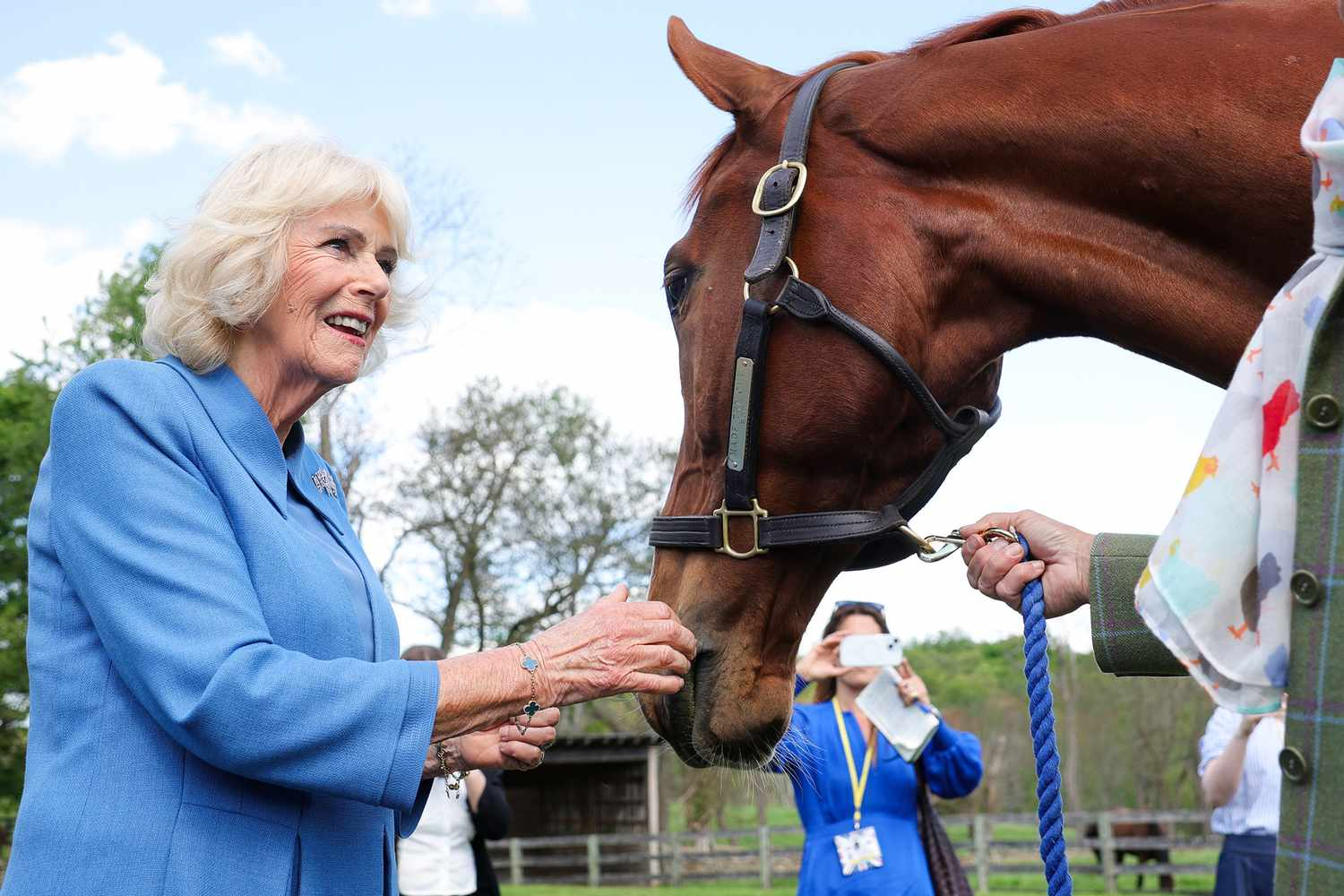
She later fed a carrot to a horse named Blind Date and spent time gently interacting with the animals—simple gestures that resonated with her longstanding connection to horses.
Hunter Marek described the experience as “very exciting,” noting that while extensive preparations had gone into the visit, the atmosphere remained “very natural.”
The Queen also received a thoughtful gift—a first edition 1952 map of Virginia horse farms—symbolizing the region’s deep-rooted equestrian heritage.
A Broader Diplomatic Context
While the visit to Smitten Farm carried personal significance, it also formed part of a broader diplomatic mission. The state visit, which began on April 27, 2026, marked King Charles III’s first official trip to the United States as monarch and coincided with celebrations of America’s 250th anniversary of independence.
Throughout the four-day tour, the royal couple engaged in a wide range of activities—from a historic address to Congress and a White House state dinner to cultural events in New York City and commemorations at the National September 11 Memorial.
Their final day in Virginia included a visit to Arlington National Cemetery, a community block party, and separate engagements highlighting both environmental and cultural ties.
Against this backdrop, Queen Camilla’s visit to the horse farm offered a quieter, more personal counterpoint to the high-level diplomacy that defined much of the trip.
Bridging Two Equestrian Worlds
One of the most notable aspects of the visit was its emphasis on transatlantic collaboration within the horse racing industry. By engaging with breeders, conservationists, and regulatory bodies, the Queen highlighted opportunities for partnership between the U.K. and U.S. sectors.
The shared heritage of thoroughbred racing—deeply embedded in both nations’ cultures—provides a natural platform for cooperation, particularly in areas such as animal welfare, safety standards, and sustainable breeding practices.
Lisa Lazarus, CEO of the Horseracing Integrity and Safety Authority, described the visit as “really extraordinary,” adding that stakeholders were “delighted and flattered” that the Queen chose to spotlight the industry in her final engagement.
A Legacy Continued
Although Queen Camilla no longer rides horses—a decision she has attributed to age—her connection to the equestrian world remains strong. She continues to co-own racehorses inherited from Queen Elizabeth II and stays actively engaged through modern technology, even monitoring foals being born via a mobile app.
Her visit to Smitten Farm reinforced this enduring bond, while also honoring the legacy of the late Queen, who famously shared her passion for horses and visited Virginia multiple times during her reign.
A Fitting End to a Landmark Visit
As the royal couple prepared to depart the United States—King Charles continuing on to Bermuda—the final image of Queen Camilla feeding a horse in the Virginia countryside offered a poignant conclusion to a multifaceted state visit.
It was a moment that encapsulated both continuity and change: a modern monarchy engaging in global diplomacy while remaining rooted in personal passions and longstanding traditions.
In choosing a horse farm as her final stop, Queen Camilla not only highlighted a shared cultural heritage but also left a lasting impression of authenticity—an understated yet powerful gesture at the close of a significant diplomatic journey.


