

Project Hail Mary: Ryan Gosling Powers a Rare Original Sci-Fi Breakthrough
A High-Stakes Gamble That Paid Off
At a time when Hollywood is heavily reliant on sequels and established franchises, Project Hail Mary has emerged as a notable exception—an original science-fiction film that is not only commercially successful but also culturally resonant.
- Project Hail Mary: Ryan Gosling Powers a Rare Original Sci-Fi Breakthrough
- Reframing Sci-Fi: Original Storytelling in a Franchise Era
- From Page to Screen: The Andy Weir Effect
- Directors Who Thrive on the “Impossible”
- Ryan Gosling’s Performance: Humor Meets Isolation
- A $200 Million Bet on Original Cinema
- Critical Reception: Praise, Skepticism, and Debate
- Industry Implications: A Turning Point for Amazon MGM
- What Comes Next?
- Conclusion: A Rare Alignment of Risk and Reward
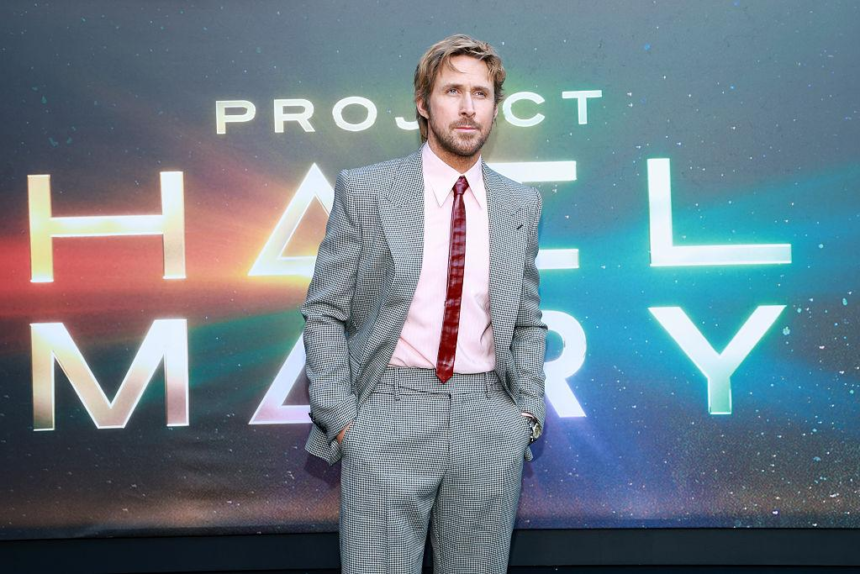
Starring Ryan Gosling, the film has delivered a major win for Amazon MGM Studios, becoming the company’s strongest box office performer to date. With an estimated $80.5 million opening weekend in North America and a global debut of $140.9 million, the film has quickly positioned itself as 2026’s biggest box office launch so far.
This performance is particularly significant given the studio’s recent struggles, where titles like After the Hunt, Mercy, and Crime 101 underperformed. Project Hail Mary has effectively reversed that trend—offering both financial validation and strategic momentum.
Reframing Sci-Fi: Original Storytelling in a Franchise Era
The success of Project Hail Mary is not just about revenue—it reflects a broader shift in audience appetite.
According to Amazon MGM’s film leadership, the film supports a clear strategy: investing in “big, bold entertaining commercial films.” The emphasis is on originality, a space that has become increasingly rare in modern cinema.
Notably, the film joins an exclusive category. It is one of only two non-sequel, non-franchise films in the past decade to surpass $70 million in its opening weekend, alongside Oppenheimer.

This places it in a distinct performance bracket—suggesting that, under the right conditions, original storytelling can still command large-scale audience attention.
From Page to Screen: The Andy Weir Effect
The film is adapted from the bestselling novel by Andy Weir, the same author behind The Martian. The project had strong backing from the outset—Amazon MGM acquired the rights before the book was even published, signaling early confidence in its potential.
The narrative centers on Ryland Grace, a former molecular biologist and reluctant hero tasked with saving Earth from extinction. The story blends scientific rigor with emotional depth, particularly through Grace’s unexpected bond with an alien entity known as “Rocky”—a faceless, rock-based life form that communicates through sound.
This unconventional dynamic—part survival story, part interstellar friendship—forms the emotional core of the film.


Directors Who Thrive on the “Impossible”
Helmed by Phil Lord and Christopher Miller, the film reflects a creative philosophy built on transforming unlikely concepts into compelling narratives.
Known for projects like 21 Jump Street and The Lego Movie, the duo approached Project Hail Mary as both a technical and narrative challenge. The central difficulty was clear: how to make audiences emotionally invest in an alien that has no face, cannot survive in Earth’s atmosphere, and communicates in non-human ways.
Their solution involved a mix of practical puppetry and performance chemistry, notably pairing Gosling with puppeteer James Ortiz to bring “Rocky” to life. This choice avoided over-reliance on CGI and created a more tangible, emotionally engaging interaction.
Ryan Gosling’s Performance: Humor Meets Isolation
Gosling’s dual role as lead actor and producer shaped the tone of the film significantly. His portrayal balances isolation, humor, and vulnerability—key elements in a story where much of the narrative unfolds in deep space with limited human interaction.
In discussing his involvement, Gosling emphasized the importance of tonal balance:
“That’s part of the reason why I wanted to produce [this film], because I felt like I needed to create an environment where these things could co-exist.”
That balance—between scientific seriousness and comedic improvisation—becomes a defining feature of the film. Directors allowed space for spontaneity, including improvised scenes and creative problem-solving on set.
One notable example involved Gosling requesting a “scene partner” during early filming. The temporary solution—a mop dressed as a character, humorously named “Moppy Ringwald”—illustrates the experimental, flexible approach that shaped the production.
A $200 Million Bet on Original Cinema
With a production budget approaching $195–200 million, Project Hail Mary represents a significant financial risk—especially for a non-franchise property.
Historically, budgets of this scale are reserved for established intellectual properties. However, Amazon MGM’s decision to back this project signals a willingness to challenge industry norms.
The results suggest that such risks can be justified when supported by:
- Strong source material
- Established creative talent
- Global star power
- Clear audience positioning
As AMC CEO Adam Aron noted:
“This is clearly the biggest bet that Amazon has made, and our expectation is that they’ve hit it out of the park.”
Critical Reception: Praise, Skepticism, and Debate
The film has generated a range of critical responses, reinforcing its complexity.
- Some reviewers describe it as a “mind-stretching sci-fi” that is “zippily entertaining.”
- Others highlight its humor and emotional depth, calling it “witty, wise and preposterously entertaining.”
- More critical perspectives argue it feels “generic” or derivative of films like Interstellar.
Despite this divide, there is consistent agreement on one point: Gosling’s performance anchors the film effectively, maintaining audience engagement even when the narrative fluctuates.
Industry Implications: A Turning Point for Amazon MGM
The film’s success arrives at a critical moment for Amazon MGM Studios. Following its acquisition of MGM, the company has been under pressure to demonstrate theatrical viability—not just streaming dominance.
Project Hail Mary offers a clear signal that:
- Amazon can compete in theatrical distribution
- Original films can still generate blockbuster returns
- Strategic investment in storytelling can yield both critical and commercial outcomes
It also reinforces the viability of hybrid creative models—combining literary adaptation, star-driven production, and experimental filmmaking techniques.
What Comes Next?
The immediate question is whether this success can be replicated.
Amazon MGM has several projects in the pipeline, including Masters of the Universe. However, Project Hail Mary sets a high benchmark—not just financially, but creatively.
More broadly, the film contributes to an ongoing industry conversation: can originality coexist with blockbuster economics?
Early indicators suggest that the answer is yes—but only under specific conditions.
Conclusion: A Rare Alignment of Risk and Reward
Project Hail Mary stands out as a case study in modern filmmaking—a project where creative ambition, financial risk, and audience demand aligned effectively.
It demonstrates that:
- Original concepts can still achieve large-scale success
- Star power remains a critical driver
- Innovation in storytelling and production can differentiate a film in a crowded market
In a landscape dominated by sequels, reboots, and cinematic universes, Project Hail Mary offers something less predictable—and, arguably, more valuable.