




PNG Gas: India’s Accelerated Shift from LPG to Piped Fuel
A Policy Turning Point in Household Energy
India’s energy landscape is undergoing a decisive transition. In a move that directly affects millions of households, the government has mandated a shift from liquefied petroleum gas (LPG) to piped natural gas (PNG) wherever infrastructure exists. The directive is not merely advisory—it introduces a strict compliance timeline and a clear consequence: households that do not switch to PNG within three months of notification risk losing LPG supply altogether.
- A Policy Turning Point in Household Energy
- Why PNG Is Being Prioritized Now
- The New Rule: A Three-Month Deadline
- Infrastructure Push: Removing Bottlenecks
- The Role of PNG in Energy Security
- Incentives and Market Adaptation
- Challenges on the Ground
- A Behavioral Shift for Households
- Looking Ahead: A New Energy Framework
This policy signals more than a change in cooking fuel. It represents a structural adjustment in how energy is distributed, consumed, and managed across urban and semi-urban India.
Why PNG Is Being Prioritized Now
The urgency behind the push stems from mounting pressure on LPG supplies. Ongoing geopolitical tensions in West Asia have disrupted global energy flows, directly impacting India’s ability to secure sufficient LPG imports. Domestic production currently meets only about 50–60% of consumption needs , leaving the country exposed to external shocks.
Against this backdrop, PNG emerges as a strategic alternative. Unlike LPG cylinders, which require periodic booking and delivery, PNG is supplied continuously through pipelines. This not only improves convenience for consumers but also reduces logistical strain on distribution systems.
The government’s approach is therefore twofold: ease immediate supply pressure and build long-term resilience through infrastructure expansion.

The New Rule: A Three-Month Deadline
Under the order issued by the Ministry of Petroleum and Natural Gas on March 24, 2026, households located in areas with PNG availability must apply for a connection within three months of notification. Failure to do so will result in the cessation of LPG supply.
The directive explicitly states that LPG supply “shall cease after three months” for non-compliant households . However, there is a safeguard: if it is technically infeasible to provide a PNG connection, households can continue receiving LPG, provided a no-objection certificate (NOC) is issued by the authorized entity.
This conditional exemption ensures that the policy remains practical, particularly in areas where infrastructure limitations persist.
Infrastructure Push: Removing Bottlenecks
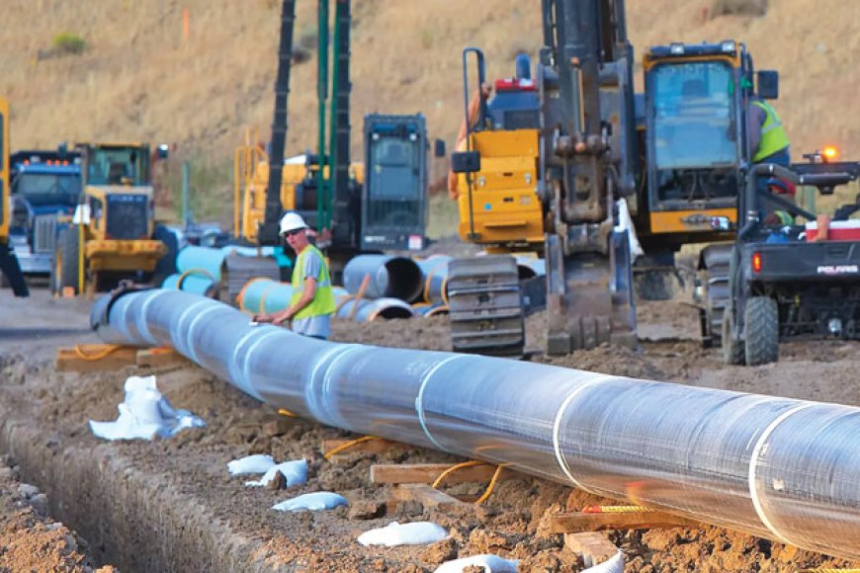
To support this transition, the government has introduced sweeping reforms aimed at accelerating pipeline development. These measures address long-standing challenges such as land access, bureaucratic delays, and regulatory complexity.



Key changes include:
- Time-bound approvals: Permissions for pipeline installation must be granted within strict deadlines, ranging from 10 to 60 days depending on project scale
- Deemed approvals: If authorities fail to respond within the stipulated timeframe, approvals are automatically granted
- Fast-track residential connectivity: Permissions in housing areas must be issued within three days, with last-mile connections delivered within 48 hours
- Simplified compliance: Reduced documentation requirements and standardized procedures
These reforms aim to eliminate administrative friction and enable rapid expansion of city gas distribution (CGD) networks.
The Role of PNG in Energy Security
At a strategic level, the transition to PNG reflects a broader shift toward energy diversification. By reducing reliance on LPG—particularly imported LPG—India can better manage supply disruptions and price volatility.
Officials have emphasized that the policy will free up LPG supplies from regions with pipeline connectivity, allowing redistribution to underserved areas. This reallocation is critical for maintaining equitable access to cooking fuel across the country.
Additionally, PNG offers operational advantages:
- Continuous supply without refill dependency
- Lower risk of storage-related hazards
- Potential cost efficiency over time
These factors contribute to its positioning as a long-term solution rather than a temporary substitute.
Incentives and Market Adaptation
To encourage adoption, authorities and city gas distributors have introduced incentives, including:
- Waiving security deposits and registration fees
- Offering limited free gas credits (up to ₹500 in some cases)
Commercial establishments have also received increased LPG allocations during the transition phase, helping them adapt without immediate disruption.
Meanwhile, regulatory oversight has been strengthened. The Petroleum and Natural Gas Regulatory Board (PNGRB) has been designated as the nodal agency to monitor implementation, track approvals, and ensure compliance.
Challenges on the Ground
Despite the policy’s clarity, execution remains complex. One of the primary challenges is last-mile connectivity, particularly in densely populated or infrastructurally constrained urban areas.
Officials have acknowledged that urban planning limitations and legacy infrastructure can slow pipeline deployment. However, the current reforms are designed to address these barriers through expedited approvals and dispute resolution mechanisms.
Notably, the government estimates that up to 1.5 million new PNG connections could be added within a short timeframe if these bottlenecks are effectively resolved .
A Behavioral Shift for Households
For consumers, the transition to PNG represents a shift in daily routines. The familiar process of booking LPG cylinders is replaced by a continuous supply model, fundamentally changing how households interact with their energy source.
While the convenience is evident, the mandatory nature of the transition may generate resistance in some segments. The policy’s success will depend not only on infrastructure readiness but also on public acceptance and awareness.
Looking Ahead: A New Energy Framework
The PNG push marks a significant step toward modernizing India’s energy infrastructure. By aligning policy, infrastructure, and market incentives, the government is attempting to create a more resilient and efficient system.
In the near term, the focus will remain on rapid network expansion and ensuring compliance with the new mandate. Over the longer term, the transition could pave the way for broader adoption of cleaner and more sustainable energy solutions.
What is clear is that the shift from LPG to PNG is no longer optional in many parts of India—it is becoming the default model for urban energy consumption.