




Open AI RAM: How One Company Helped Drive—and Cool—A Global Memory Crisis
For much of 2024 and 2025, the global technology industry was gripped by a severe memory shortage. Prices for RAM—particularly high-performance DDR5 modules—rose dramatically, reshaping everything from gaming PCs to enterprise infrastructure.
- Open AI RAM: How One Company Helped Drive—and Cool—A Global Memory Crisis
- The AI Boom That Consumed Global Memory Supply
- The “Phantom Demand” Effect: When Intentions Move Markets
- A Sudden Reversal: Why RAM Prices Are Now Falling
- What the Price Drop Looks Like in Practice
- Industry-Wide Consequences: Beyond Just RAM
- The Structural Issue: AI vs. Consumer Supply
- A Market Still on Edge
- Conclusion: A Case Study in AI’s Real-World Impact
At the center of this surge was the rapid expansion of artificial intelligence systems, led in part by OpenAI. Its aggressive infrastructure ambitions, combined with broader industry demand, helped create a supply shock that many described as unprecedented.
Now, in early 2026, the narrative is shifting. Prices are stabilizing—and in some cases falling—raising a critical question: did OpenAI unintentionally trigger both the rise and the cooling of the RAM market?



The AI Boom That Consumed Global Memory Supply
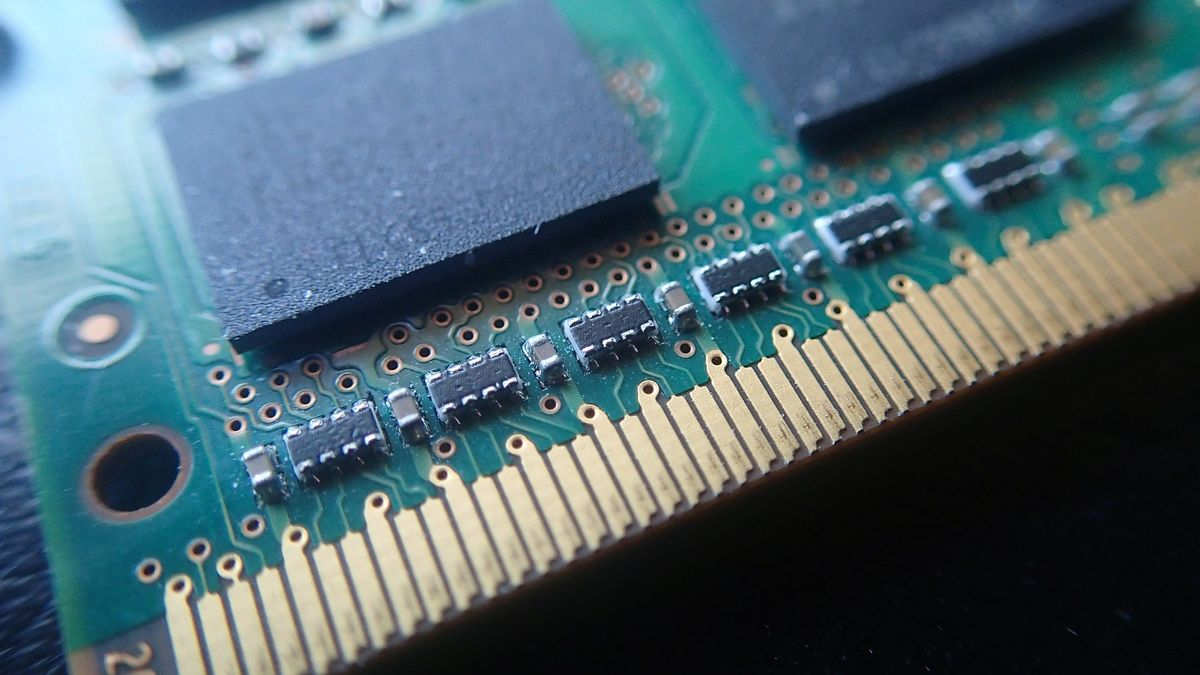
The roots of the crisis lie in the explosive growth of AI infrastructure. Large language models, generative systems, and data center expansion require vast amounts of memory, particularly DRAM.
According to industry reports, OpenAI’s planned infrastructure—especially its Stargate data center initiative—was expected to consume as much as 40% of global DRAM supply, equivalent to roughly 900,000 wafers per month .

This level of demand had immediate consequences:
- DRAM prices surged by 200% to 400% during the shortage period
- Some DDR5 kits jumped from around $190 to $700 within months
- Overall RAM prices rose by as much as 700% year-over-year, according to market estimates
The supply chain struggled to keep up. Major manufacturers like Samsung, SK Hynix, and Micron—who collectively control over 90% of the RAM market—shifted production toward high-margin AI memory such as High Bandwidth Memory (HBM), further squeezing consumer supply .
The “Phantom Demand” Effect: When Intentions Move Markets
A critical factor in the price surge was not just actual demand—but perceived demand.
Reports indicate that OpenAI entered into letters of intent (LOIs) with memory manufacturers rather than binding purchase contracts. These agreements signaled massive future demand, prompting suppliers and markets to react as if the orders were guaranteed .
This had cascading effects:
- Suppliers adjusted pricing upward in anticipation
- Retailers reduced transparency or halted listings
- Smaller manufacturers struggled to secure supply
As one widely circulated claim suggested, “No RAM actually changed hands. But the market treated them as real.”
In essence, expectations alone were enough to distort the global memory market.
A Sudden Reversal: Why RAM Prices Are Now Falling
By early 2026, the trajectory changed. Several developments combined to reduce pressure on the memory market.
1. OpenAI Slows Its Spending
OpenAI began scaling back some of its most ambitious projects:
- A multi-billion-dollar Stargate expansion faced delays or cancellation
- The company moved to control costs amid projections of $115 billion in spending by 2029
As a result, anticipated demand for memory chips dropped sharply.
2. Deals That Never Fully Materialized
Because many agreements were non-binding, the expected purchasing volume did not translate into real consumption. This reduced pressure on suppliers and allowed inventory to stabilize.
3. Breakthroughs in AI Efficiency
A significant technological shift came from Google’s TurboQuant, a compression method that claims to reduce memory usage for AI models by up to 6x .
While analysts caution against overestimating its immediate impact, the signal is clear: AI may become less memory-intensive over time.
What the Price Drop Looks Like in Practice
The effects are already visible in the market:
- DDR5 memory kits have dropped by $60–$100 from peak prices
- A 32GB DDR5 kit declined from around $490 to $370
- Some individual modules have seen reductions of up to $40
However, prices remain significantly higher than historical norms. For example, a kit that once cost under $100 still sells for several hundred dollars.
Industry-Wide Consequences: Beyond Just RAM
The RAM crisis—and its partial resolution—has broader implications across the technology ecosystem.
Consumer Electronics
- Smartphone prices are expected to rise by up to 8% due to component costs
- Manufacturers are considering reducing memory in devices, potentially affecting performance
PC and Gaming Market
- Entry-level laptops may become economically unviable due to memory costs
- PC shipments are projected to decline by up to 10–11% globally
Semiconductor Industry
- Memory manufacturers experienced rapid stock fluctuations tied to AI demand
- Production strategies shifted toward enterprise and AI-focused components
The Structural Issue: AI vs. Consumer Supply
The deeper issue is structural. The AI boom has fundamentally changed how semiconductor capacity is allocated.
Instead of serving consumer markets first, manufacturers are prioritizing:
- Data centers
- AI accelerators
- High-margin enterprise contracts
This reallocation creates ongoing tension between innovation and accessibility.
A Market Still on Edge
Despite the recent cooling, analysts remain cautious. The RAM market is highly concentrated, with a few dominant players capable of rapidly adjusting supply and pricing.
As one analyst noted, if OpenAI and similar companies continue to scale back investments, “the price of memory will alleviate… and that will be good for the consumer electronics industry” .
However, the opposite is also true: a renewed surge in AI demand could quickly reverse the trend.
Conclusion: A Case Study in AI’s Real-World Impact
The “Open AI RAM” story illustrates a broader reality about the modern tech economy. AI is not just software—it is deeply tied to physical infrastructure, supply chains, and global markets.
OpenAI did not act alone, but its scale and influence amplified both the rise and the correction of RAM prices. Through a combination of ambitious planning, non-binding agreements, and subsequent spending cuts, it became a central force in one of the most volatile hardware cycles in recent memory.
The key takeaway is straightforward:
AI’s growth is no longer abstract—it directly shapes the cost and availability of everyday technology.