

NYT Connections May 11: Puzzle #1065 Delivered Sneaky Twists and Clever Wordplay
The New York Times’ wildly popular word game Connections continued its winning streak on May 11, 2026, with Puzzle #1065 offering players another mentally demanding blend of logic, pop culture, and linguistic creativity. The daily challenge quickly became a talking point across puzzle communities as players debated the trickiest categories, celebrated perfect streaks, and dissected the puzzle’s cleverly hidden patterns.
Released as part of the expanding New York Times Games ecosystem, Connections has evolved into more than a simple vocabulary exercise. It has become a social ritual for millions of players who share results, compare solving strategies, and analyze the increasingly sophisticated categories created by the NYT editorial team.
Puzzle #1065 stood out for its balance between accessibility and misdirection, rewarding observant players while frustrating those who overlooked subtle connections hidden in plain sight.
How NYT Connections Works
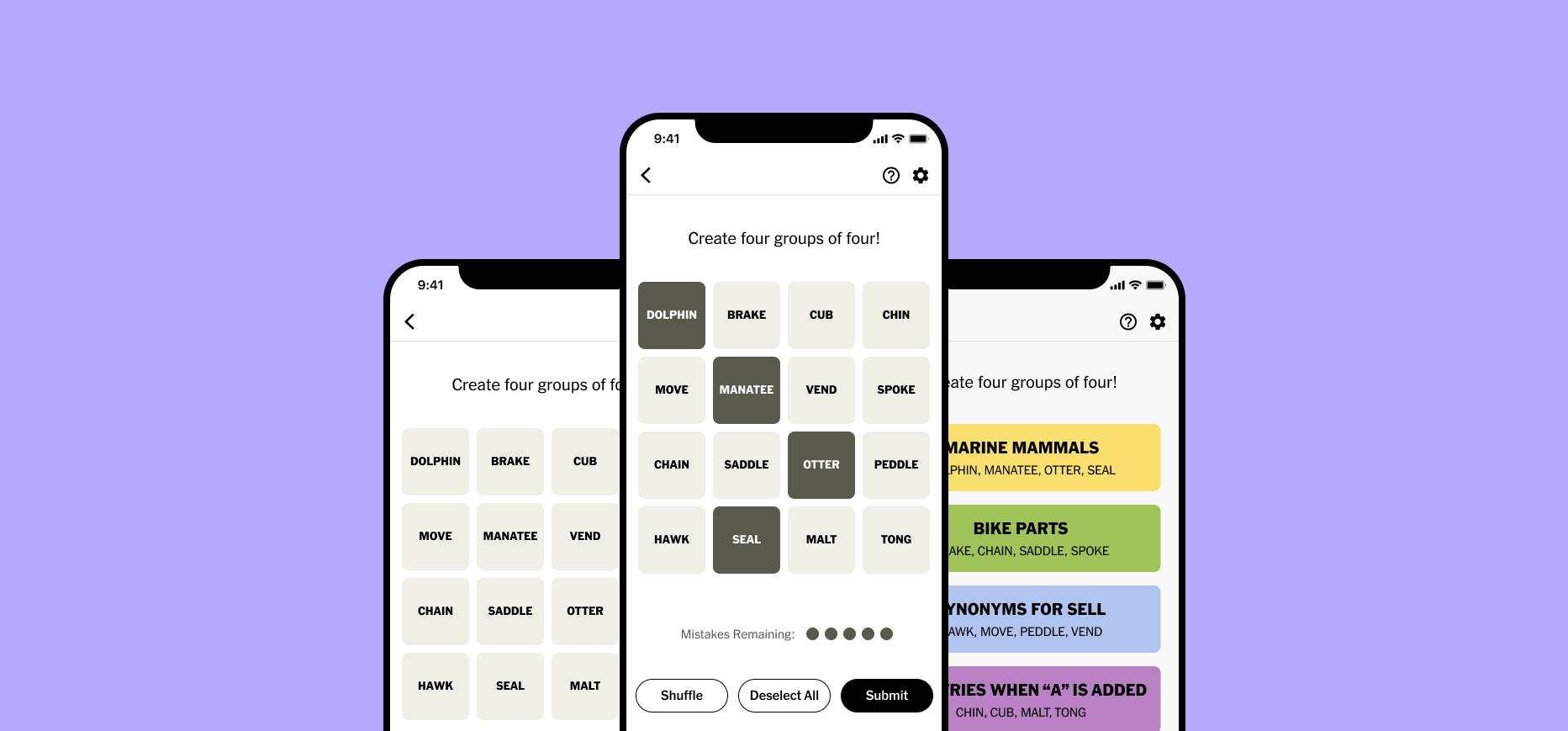
For newcomers, Connections presents players with a grid of 16 words. The goal is to organize those words into four groups of four that share a hidden relationship. Some categories are straightforward, while others rely on wordplay, cultural references, or layered meanings.
Each category is color-coded by difficulty:
- Yellow — easiest
- Green — moderate
- Blue — difficult
- Purple — hardest
Players are given only four mistakes before the game ends, adding pressure to every guess. The challenge resets daily at midnight in each player’s local time zone, making it a recurring global event.
Puzzle #1065: The Full Word Grid
The May 11 puzzle featured the following 16 words:
- COLOR
- CREEP
- SHANDY
- KARMA
- KNIVES OUT
- SLIP
- PYRAMID
- RHYME
- STEAL
- CHINATOWN
- KEYED
- SNEAK
- SEVEN
- PONZI
- ELEGY
- VERTIGO
At first glance, the list appeared intentionally chaotic. Some words suggested motion, others hinted at movies, while several seemed impossible to connect logically. That confusion is exactly what makes Connections so addictive.
The Four Categories Explained
Yellow Category — Ways to Move Stealthily
The easiest category of the day involved actions associated with sneaking around quietly:
- CREEP
- SLIP
- SNEAK
- STEAL
Many players identified this group early because of the familiar phrasing attached to these verbs, particularly expressions like “sneak in” or “slip in.” According to puzzle discussions online, this category served as the anchor that helped solvers begin organizing the rest of the grid.
Green Category — Kinds of Schemes
The second category introduced a more abstract connection:
- COLOR
- PONZI
- PYRAMID
- RHYME
Here, the challenge came from interpreting “scheme” in multiple ways. While “Ponzi” and “Pyramid” clearly relate to fraudulent operations, “Color scheme” and “Rhyme scheme” required players to shift into different conceptual territory.
This category generated mixed reactions from the community. Many players quickly recognized the financial scams, but “RHYME” often disrupted otherwise obvious guesses.
Blue Category — Detective Movies
Film lovers enjoyed one of the puzzle’s most celebrated categories:
- CHINATOWN
- KNIVES OUT
- SEVEN
- VERTIGO
This cinematic grouping connected four iconic detective or mystery films spanning decades of movie history.
- Chinatown (1974) remains one of the most respected neo-noir films ever made.
- Vertigo (1958), directed by Alfred Hitchcock, is considered a psychological thriller masterpiece.
- Seven (1995) brought dark crime storytelling into the modern era.
- Knives Out (2019) revived classic ensemble mystery storytelling for contemporary audiences.
The category resonated strongly with movie fans and sparked widespread discussion online about favorite detective films and mystery genres.
Purple Category — Body Parts Hidden Inside Words
As expected, the purple category delivered the puzzle’s most difficult twist:
- ELEGY → LEG
- KARMA → ARM
- KEYED → EYE
- SHANDY → HAND
This “word-within-a-word” mechanic forced players to look beyond surface meanings and focus on letter placement. According to community reactions, SHANDY proved particularly deceptive, with many players staring at the word for extended periods before spotting “HAND.”
The category demonstrated the NYT editors’ growing preference for layered linguistic puzzles that reward careful visual analysis as much as vocabulary knowledge.
Why Puzzle #1065 Felt Especially Satisfying
Many daily Connections puzzles lean heavily toward either trivia or pure wordplay. Puzzle #1065 succeeded because it blended multiple solving styles:
- straightforward vocabulary recognition
- thematic reasoning
- pop culture familiarity
- hidden structural patterns
The puzzle also avoided becoming unfairly obscure. Even the hardest category contained solvable logic once players identified the central mechanic.
This balance led many fans to describe the puzzle as “tricky but fair,” a phrase frequently repeated across puzzle forums and social media discussions.
The Social Phenomenon Behind Connections
Since launching in 2023, Connections has grown into one of the New York Times’ most successful digital games alongside Wordle, Strands, and Spelling Bee.
Part of the game’s appeal comes from its shareable colored-grid format, which allows players to compare outcomes without immediately revealing answers. The puzzle has become a daily social activity among coworkers, families, and online communities.
Communities on Reddit, Discord, Threads, and X remain highly active every morning as players exchange hints, frustrations, and victory celebrations. Puzzle #1065 generated particularly lively discussions because of the deceptive “schemes” category and the difficult purple twist.
The Cognitive Appeal of Connections
Experts and educators increasingly point to word categorization games as useful mental exercises. Connections encourages several important cognitive skills:
- pattern recognition
- semantic association
- flexible thinking
- vocabulary expansion
- visual analysis
Unlike fast-paced puzzle games, Connections operates without timers or reflex pressure, making it accessible across age groups.
Teachers have even begun incorporating the game into classroom activities to encourage lateral thinking and collaborative problem-solving. Players often encounter unfamiliar words or concepts and learn through deduction and discussion.
Puzzle Trends in May 2026
Recent Connections puzzles have showcased an increasingly sophisticated mix of themes, ranging from pop culture and cinema to subtle linguistic constructions.
May 2026 puzzles, in particular, appear to be emphasizing:
- hidden-word mechanics
- multi-meaning categories
- cultural references
- layered semantic groupings
Puzzle #1065 reflected this broader trend by combining detective-film knowledge with hidden anatomy clues and conceptual “schemes.”
The NYT editorial team continues refining the formula to keep longtime players engaged without making puzzles inaccessible to newcomers.
Looking Ahead
As Connections continues growing globally, the challenge for editors will be maintaining freshness while preserving the game’s approachable design. Puzzle #1065 demonstrated that the formula still has enormous creative potential.
Whether players solved the puzzle perfectly or needed several attempts, May 11’s challenge delivered another memorable entry in the expanding Connections phenomenon.
For devoted solvers chasing streaks, tomorrow’s grid represents another opportunity to prove their pattern-recognition skills — and another chance for the purple category to humble everyone again.


