




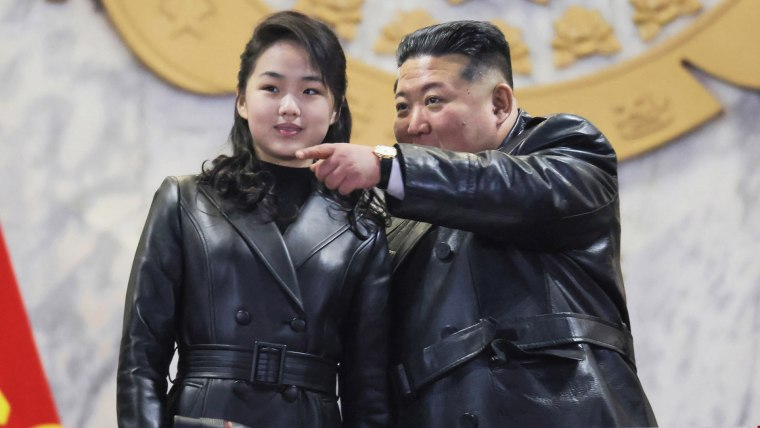
North Korea at a Crossroads: Power, Succession, and a Possible New Era
A Leadership Question Reshaping Global Attention
Few countries command as much geopolitical intrigue and opacity as North Korea. For decades, its leadership has remained tightly controlled within the ruling Kim family, creating one of the world’s most enduring dynastic political systems.
- A Leadership Question Reshaping Global Attention
- The Emergence of a Successor Narrative
- Understanding the Intelligence Assessment
- A Break from Tradition: The Prospect of a Female Leader
- The Role of Symbolism in North Korean Politics
- Skepticism and Strategic Ambiguity
- Broader Implications for Global Politics
- The Road Ahead: A Carefully Managed Transition?
- Conclusion: A Subtle but Significant Shift
Now, new intelligence assessments emerging from South Korea are reframing how observers understand the future of power in Pyongyang. At the center of this shift is an unexpected figure: the teenage daughter of leader Kim Jong Un.
According to lawmakers briefed by South Korea’s National Intelligence Service (NIS), there is “credible intelligence” suggesting that Kim’s daughter—believed to be named Kim Ju Ae—is being positioned as his eventual successor.
This development, if confirmed over time, would mark a historic shift—not just for North Korea, but for global perceptions of leadership within one of the most rigidly controlled political systems in the world.


The Emergence of a Successor Narrative
From Public Appearances to Strategic Signaling
The process unfolding in North Korea appears deliberate rather than incidental. Intelligence briefings highlight that Kim Ju Ae’s growing visibility is part of a structured effort to build her political profile.
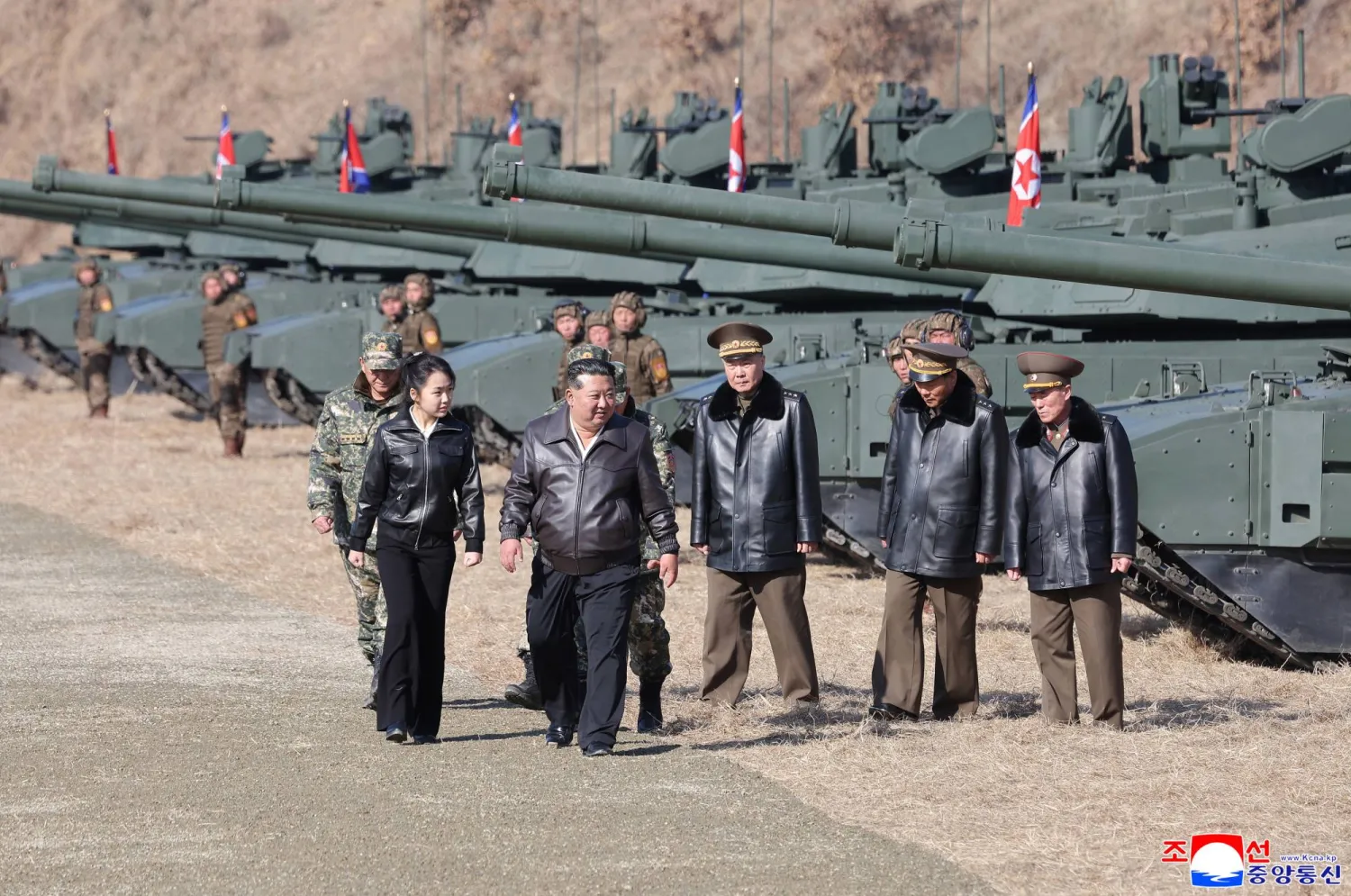
Over the past several years, she has increasingly appeared alongside her father at high-profile events, including military demonstrations and national ceremonies. These appearances have intensified in 2026, particularly with images showing her actively participating in military-related activities—such as driving a tank and handling firearms.



South Korean intelligence officials interpret these displays as intentional symbolism. The imagery is designed to emphasize her “military aptitude” and to counter skepticism about the viability of a female leader in a traditionally male-dominated system.
This strategy mirrors earlier patterns used in the grooming of Kim Jong Un himself, who was similarly showcased in military contexts before assuming power.
Understanding the Intelligence Assessment
What “Credible Intelligence” Suggests
The NIS has clarified that its conclusions are not speculative but based on what it describes as “credible intelligence” gathered through analysis and observation.



This distinction is important. In intelligence terminology, such phrasing indicates a degree of confidence supported by multiple data points—though not necessarily definitive confirmation.
During a closed-door parliamentary briefing, officials suggested that Kim Ju Ae may already be treated as a central figure within the leadership structure. Some lawmakers even indicated that she could be considered the de facto second-most prominent individual in North Korea’s hierarchy.
Separately, intelligence officials also addressed speculation surrounding Kim Yo Jong, long viewed as a powerful political figure. According to the briefing, she does not appear to hold independent authority that would challenge the emerging succession narrative.
A Break from Tradition: The Prospect of a Female Leader
Historical Context of North Korean Leadership
Since its establishment in 1948, North Korea has been ruled exclusively by male members of the Kim dynasty:
- Kim Il Sung (1948–1994)
- Kim Jong Il (1994–2011)
- Kim Jong Un (2011–present)
The possibility of a female successor therefore represents a significant departure from precedent.
However, analysts remain divided. Some argue that North Korea’s deeply patriarchal structure would resist such a transition. Others suggest that the regime’s emphasis on dynastic continuity may outweigh traditional gender norms—particularly if the leadership frames the successor within the broader mythology of the Kim family.
The Role of Symbolism in North Korean Politics
Why Military Imagery Matters
To understand the significance of recent developments, it is essential to examine how political messaging functions in North Korea.
Public appearances—especially those involving military hardware—serve as carefully orchestrated signals rather than casual events. When Kim Ju Ae is shown driving a tank or attending weapons tests, the imagery is not incidental. It is designed to:
- Establish credibility within the military establishment
- Reinforce her association with national defense
- Align her public image with that of previous leaders
Lawmakers briefed by intelligence officials noted that these events are meant to “reduce skepticism about a woman successor” and build a narrative of competence and authority.
This reflects a broader strategy of gradual normalization—introducing the idea of her leadership through repeated exposure.
Skepticism and Strategic Ambiguity
Why Some Experts Urge Caution
Despite the intelligence assessments, not all analysts are convinced that a formal succession decision has been made.
Several factors contribute to this uncertainty:
- Kim Jong Un’s age: At approximately 42, he is considered relatively young to formally designate a successor.
- Controlled information environment: North Korea’s state media has not officially confirmed personal details about Kim Ju Ae, including her name or status.
- Interpretation of symbolism: Some experts argue that public appearances alone are insufficient evidence of a finalized succession plan.
This ambiguity may itself be strategic. By allowing speculation without confirmation, the regime maintains flexibility while gradually shaping internal and external perceptions.
Broader Implications for Global Politics
What This Means for the World
If Kim Ju Ae is indeed being prepared as a successor, the implications extend far beyond North Korea.
1. Continuity of the Kim Dynasty
A fourth-generation leadership would reinforce the durability of North Korea’s dynastic system, signaling long-term stability—or entrenchment—of its current political structure.
2. Shifts in Gender Dynamics
A female leader in North Korea would challenge longstanding assumptions about leadership norms within the country and could reshape its internal political narrative.
3. Regional Security Considerations
Neighboring countries, particularly South Korea, Japan, and the United States, would need to reassess their strategic outlook based on a new leadership trajectory.
4. Messaging to Domestic Audiences
Internally, the regime’s portrayal of Kim Ju Ae may aim to secure loyalty among elites and the military, ensuring a smoother eventual transition.
The Road Ahead: A Carefully Managed Transition?
North Korea’s political system is built on control, symbolism, and continuity. The emergence of Kim Ju Ae within this framework suggests that succession planning—whether imminent or long-term—is already underway.
What remains uncertain is the timeline. Will her role continue to expand gradually, or will there be a more definitive moment of designation?
For now, the available evidence points to a deliberate process: one that blends tradition with adaptation, and secrecy with calculated visibility.
Conclusion: A Subtle but Significant Shift
North Korea rarely signals change openly. Yet the increasing prominence of Kim Jong Un’s daughter represents one of the most notable developments in recent years.
Whether this evolves into a confirmed succession or remains part of a broader strategic narrative, it underscores a fundamental reality: even in the world’s most closed political systems, leadership dynamics are constantly evolving.
The story of North Korea today is not just about its present leadership—but about the future being quietly shaped in full view.