





Niall Horan’s London Pub Regret: When a Dream Feature Becomes a Social Dilemma
A Celebrity Home Upgrade That Backfired
For many homeowners, the idea of installing a private pub sounds like the ultimate luxury—an indulgent feature that blends entertainment, comfort, and exclusivity. But for Niall Horan, that dream has taken an unexpected turn.
- A Celebrity Home Upgrade That Backfired
- The £10 Million Property and Its Bold Concept
- Why the Idea Didn’t Work in Practice
- Managing the Fallout: A Practical Exit Strategy
- A Shift in Lifestyle and Priorities
- Entertainment Expectations—And Boundaries
- Health Concerns and Lifestyle Reassessment
- Cultural Insight: The Allure—and Risk—of Home Luxury Features
- What Comes Next?
- Conclusion: When Luxury Meets Reality
The former One Direction star recently revealed that one of the most ambitious features in his lavish London property—a fully built pub in the basement—has become what he calls “the worst idea I have ever had.”
His candid admission offers a rare glimpse into the realities of celebrity living, where even luxury upgrades can introduce unforeseen complications.
The £10 Million Property and Its Bold Concept
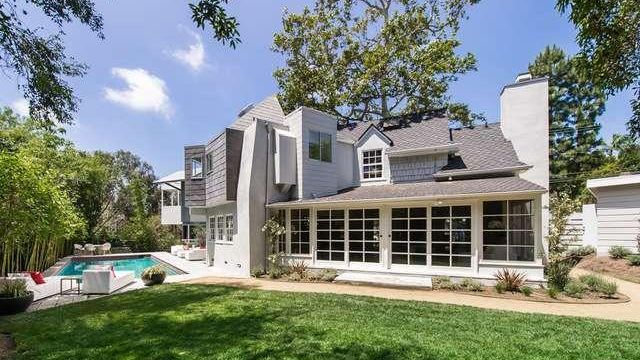
Horan’s London residence, reportedly valued at around £10 million (€11.5 million), represents a significant investment in both lifestyle and privacy. The property includes a distinctive feature: not just a casual bar setup, but a full-scale pub built into the basement.
Speaking during an appearance on Jimmy Kimmel Live!, Horan emphasized the scale of the project:


“We built a pub in the basement… I mean a pub — not a bar — and it has to be the worst idea I have ever had.”
The distinction is important. A bar suggests a private, controlled space. A pub, however, evokes a communal environment—something far more social, and as Horan discovered, far harder to manage.
Why the Idea Didn’t Work in Practice
The 11pm Problem
At the core of the issue is a uniquely London-specific dynamic: strict pub closing times.
Unlike nightlife hubs with late operating hours, pubs in London typically close around 11pm. According to Horan, this creates a predictable behavioral pattern among partygoers:
“Pubs in London shut at 11pm… and everyone goes, ‘I wonder where we’re going next…’”
The result is a steady flow of guests relocating to his home pub once public venues shut down. What was intended as a private luxury has effectively turned into an after-hours hotspot.



An Open Invitation—Whether Intended or Not
The basement pub has inadvertently positioned Horan’s home as a default continuation point for nights out. As he explained:
“So all of a sudden I have a house full of people.”
This situation illustrates a broader principle in residential design: certain features can unintentionally alter how a space is socially perceived and used.
In Horan’s case, the presence of a pub—rather than a discreet bar—signals openness, accessibility, and continuation of nightlife.
Managing the Fallout: A Practical Exit Strategy
Faced with recurring late-night gatherings, Horan has developed a pragmatic system for regaining control of his space.
He described a simple but effective method:
- Turning off the music
- Switching on the lights
- Escorting guests out through a side entrance
“It’s pretty tough to get people to leave… I’m pretty good at it, turn the music off and turn the lights off.”
This routine reflects a shift from host to crowd manager—an unintended role that underscores the challenges of maintaining privacy in a highly social environment.
A Shift in Lifestyle and Priorities
The regret is also tied to a broader change in Horan’s personal life.
When the pub was built, he described himself as “a single bachelor in an apartment in London.” At that stage, a lively, social home environment aligned with his lifestyle.
However, his circumstances have evolved. Horan now shares the property with his girlfriend, Amelia Woolley, with whom he has been in a relationship since 2020.
The transition from bachelor life to a more settled domestic setup has altered the value of such a feature. Quiet evenings at home have replaced spontaneous late-night gatherings, making the pub less of an asset and more of a liability.
Entertainment Expectations—And Boundaries
Despite the presence of a piano in the basement pub, Horan has also drawn a clear boundary regarding expectations of impromptu performances.
“It’s the last thing I need after I’ve had a few drinks.”
This comment highlights another dimension of celebrity life: the assumption that public figures remain “on” even in private settings. The home pub, while informal, can blur the line between personal time and public entertainment.
Health Concerns and Lifestyle Reassessment
The timing of Horan’s reflections also coincides with broader personal considerations, including his health.
He has recently spoken about ongoing joint issues, suggesting he may require double hip replacement surgery in the future due to genetic factors.
Such developments reinforce the shift toward a more measured lifestyle—one less compatible with late-night social gatherings and the demands of hosting large groups.
Cultural Insight: The Allure—and Risk—of Home Luxury Features
Horan’s experience offers a broader cultural takeaway.
High-end home features—such as private cinemas, gyms, or in this case, a pub—are often marketed as lifestyle enhancements. However, they can:
- Redefine how a space is used socially
- Attract more activity than anticipated
- Blur boundaries between private and public life
In urban environments like London, where nightlife patterns are structured by closing times, these dynamics become even more pronounced.
What Comes Next?
Despite his regret, there is no indication that Horan plans to remove the pub. Instead, the focus appears to be on managing its impact and adapting to changing circumstances.
At the same time, his professional life remains active. He is preparing to release his fourth solo album, Dinner Party, later this summer and is scheduled to headline a major show at Dublin’s 3Arena.
The contrast between his evolving personal life and ongoing career highlights a familiar tension for public figures: balancing visibility with privacy.
Conclusion: When Luxury Meets Reality
Niall Horan’s London home pub was conceived as a symbol of success and personal enjoyment. In practice, it has become a case study in unintended consequences.
What began as a creative, high-end addition has evolved into a logistical and social challenge—one shaped by local culture, lifestyle changes, and the realities of celebrity.
His candid reflection underscores a simple but often overlooked point: even the most appealing ideas can carry hidden costs.