


Nashville vs América CONCACAF: A Tactical Stalemate Sets Up High-Stakes Decider
A Quarterfinal Balanced on Fine Margins
The CONCACAF Champions Cup quarterfinal between Nashville SC and Club América has evolved into a tightly poised contest, defined not by fireworks but by discipline, structure, and strategic restraint.
- A Quarterfinal Balanced on Fine Margins
- A Cagey First Leg: Control Without Breakthrough
- Defensive Solidity: Nashville’s Competitive Edge
- Lessons from the Past: The Inter Miami Blueprint
- América’s Pedigree vs Nashville’s Momentum
- The Away Goals Equation: A Subtle Advantage
- Key Players to Watch in the Decider
- What the Second Leg Represents
- Conclusion: A Tie Defined by Discipline, Decided by Detail
After a 0-0 draw in the first leg at GEODIS Park on April 7, 2026, both teams now shift their focus to the decisive second leg in Mexico City. On the surface, a scoreless draw may suggest a lack of action. In reality, it revealed a carefully contested tactical battle—one that leaves the tie delicately balanced heading into one of the most intimidating venues in world football.
A Cagey First Leg: Control Without Breakthrough
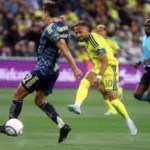
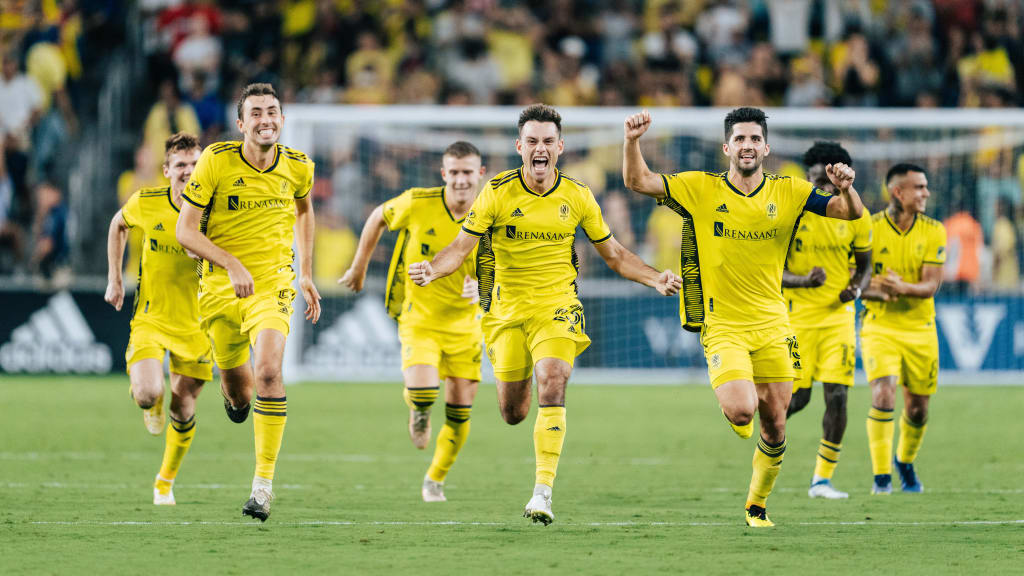
From kickoff, the match reflected the stakes of knockout football. Nashville controlled possession (56.1%) and registered more shot attempts (13 to 8), yet neither side managed to convert their moments into goals.

Despite the statistical edge, Nashville struggled to generate high-quality scoring chances against a well-organized América defense. Head coach B.J. Callaghan acknowledged the difficulty:
“I thought Club América was really organized, not a lot of space in between the lines.”
The match unfolded as a classic two-legged chess match. Both sides prioritized defensive integrity over attacking risk, aware that a single mistake could determine the outcome across 180 minutes.

Goalkeepers were called into action sparingly but decisively. Nashville’s Brian Schwake produced four saves, including key interventions against efforts from Alex Zendejas and Isaías Violante.
At the other end, Rodolfo Cota responded with composure, denying attempts from Hany Mukhtar and others.
The result: a stalemate that felt fair, yet unfinished.
Defensive Solidity: Nashville’s Competitive Edge
While Nashville’s attack has drawn scrutiny—failing to score in consecutive matches—their defensive structure has emerged as a defining strength.



Center-backs Jeisson Palacios and Maxwell Woledzi combined for seven clearances and dominated aerial and physical duels, winning 14 of 19 contested situations in front of goal.
This defensive consistency has been a hallmark of Nashville’s 2026 campaign. Notably, the team has yet to concede multiple goals in any match this season—a statistic that becomes critical in knockout football.
Defender Reed Baker-Whiting summarized the team’s approach:
“Giving ourselves a clean sheet always gives us a really good chance of winning no matter what.”
This philosophy—prioritizing defensive discipline while relying on opportunistic attacking moments—has already proven effective earlier in the tournament.
Lessons from the Past: The Inter Miami Blueprint
Nashville’s current situation is not unfamiliar. In the round of 16, they advanced against Inter Miami under nearly identical circumstances.
After a 0-0 draw at home, Nashville secured a 1-1 result away—eliminating a side led by Lionel Messi on the away goals rule.
Midfielder Matthew Corcoran emphasized the importance of experience:
“One thing I know about this team is we take things from the past and we learn from them.”
This repetition of scenario—scoreless first leg followed by a decisive away fixture—provides Nashville with psychological and tactical “shock absorbers,” as Callaghan previously described. It is a framework they understand, and one they believe can be replicated.
América’s Pedigree vs Nashville’s Momentum
While Nashville brings recent momentum, América carries historical weight.
The Liga MX giants are tied for the most CONCACAF Champions Cup titles in history with seven, underscoring their continental pedigree.
Their experience in high-pressure matches, particularly at the iconic Estadio Azteca, gives them a structural advantage heading into the second leg.
Yet the first leg exposed vulnerabilities. América struggled to impose sustained attacking pressure, particularly in the second half where they failed to register a shot during key stretches.
The result suggests that while América remains formidable, they are not untouchable—especially against a disciplined opponent.
The Away Goals Equation: A Subtle Advantage
Despite the goalless draw, Nashville enters the second leg with a strategic edge.
Under the away goals rule, any scoring draw—1-1, 2-2, or higher—would see Nashville advance to the semifinals.
This shifts the tactical balance:
- América must attack to win or secure a clean-sheet victory
- Nashville can afford patience, knowing a single goal could be decisive
In practical terms, this dynamic often leads to tension. The home team pushes forward, while the away side looks to exploit spaces left behind.
Key Players to Watch in the Decider
Nashville SC
- Hany Mukhtar – Creative focal point capable of unlocking tight defenses
- Sam Surridge – Already with eight goals in all competitions this season
- Brian Schwake – Emerging as a reliable last line of defense
Club América
- Alex Zendejas – One of the few players to test Nashville’s defense consistently
- Raphael Veiga – Creative engine in midfield
- Rodolfo Cota – Experienced presence in goal
What the Second Leg Represents
The return leg on April 14 is more than just a continuation—it is a test of identity.
For Nashville, it is an opportunity to prove that their defensive model and tournament experience can overcome one of North America’s most decorated clubs.
For América, it is about asserting dominance at home and reaffirming their status as continental heavyweights.
The winner will advance to face either Tigres UANL or Seattle Sounders FC in the semifinals, raising the stakes further.
Conclusion: A Tie Defined by Discipline, Decided by Detail
The Nashville vs América quarterfinal has so far been defined by control rather than chaos. The absence of goals has not diminished its intensity; instead, it has amplified the importance of every tactical decision, every defensive action, and every missed opportunity.
With the tie still level, the second leg promises a sharper edge—where margins will shrink further and the cost of error will rise.
For Nashville, one moment could be enough.
For América, anything less than control could be costly.