


Mojtaba Khamenei Net Worth: Inside the Power, Wealth, and Global Financial Network
A Quiet Power Broker at the Center of Global Attention
The name Mojtaba Khamenei has increasingly moved from behind-the-scenes influence to global prominence. As discussions intensify around his role in Iran’s leadership structure—and particularly his emergence as a successor to Ali Khamenei—attention has shifted sharply toward one question: how much wealth does he control?
- A Quiet Power Broker at the Center of Global Attention
- The Core Question: What Is Mojtaba Khamenei’s Net Worth?
- A Global Property Empire: London to Dubai
- Financial Networks and Offshore Structures
- Power Without Office: Influence Beyond Formal Titles
- Sanctions and International Scrutiny
- Wealth vs. Ideology: A Contradiction Under Debate
- Political Implications: Leadership, Legitimacy, and Global Reaction
- What Comes Next: Transparency or Continued Secrecy?
- Conclusion: A Net Worth Defined by Complexity, Not Certainty
Unlike conventional political figures whose financial disclosures are public or regulated, Mojtaba Khamenei’s wealth exists largely in opacity. Estimates vary, documentation is fragmented, and most insights come from investigative reports and intelligence-based analyses. What emerges, however, is a picture of a complex, multi-layered financial network spanning continents, raising significant questions about political power, economic influence, and transparency.
The Core Question: What Is Mojtaba Khamenei’s Net Worth?
There is no confirmed public figure for Mojtaba Khamenei’s net worth. However, multiple reports consistently suggest that:
- His wealth is not precisely known
- He is widely described as a multi-millionaire or potentially controlling assets worth billions
- His financial influence may extend beyond personal wealth into institutional and network-based assets
According to compiled reporting, his financial reach includes international investments, real estate holdings, and business interests, many of which are structured through indirect ownership channels.
Further reporting indicates that he may control or influence assets valued in the billions of dollars, although these figures remain speculative due to the lack of transparent disclosures.

A Global Property Empire: London to Dubai
One of the most frequently cited elements of Mojtaba Khamenei’s wealth is his extensive real estate portfolio.
Key reported holdings include:
- A luxury property in the United Kingdom valued at over $138 million
- Multiple high-value homes in London’s elite neighborhoods, including areas such as Bishops Avenue, often called “Billionaires’ Row”
- Individual London properties reportedly purchased for tens of millions of euros
- A luxury villa in Dubai
- Ownership or stakes in hotels across Europe, including cities such as Frankfurt and Mallorca
This geographic spread—covering the UK, the Gulf, and continental Europe—suggests a diversified real estate investment strategy, typically associated with high-net-worth individuals seeking asset protection and capital growth.
Financial Networks and Offshore Structures
Beyond physical assets, reports point to a complex financial infrastructure supporting these investments.
Core elements of this network:
- Swiss bank accounts, often associated with wealth preservation and privacy
- Use of shell companies and intermediaries to channel funds into global assets
- Financial flows through jurisdictions including:
- United Kingdom
- Switzerland
- Liechtenstein
- United Arab Emirates
These mechanisms are typical of transnational wealth structures designed to:


- Obscure beneficial ownership
- Minimize regulatory exposure
- Facilitate cross-border capital movement
Reports further suggest that funding sources may be linked to Iran’s oil revenues, although such claims remain difficult to independently verify.
Power Without Office: Influence Beyond Formal Titles
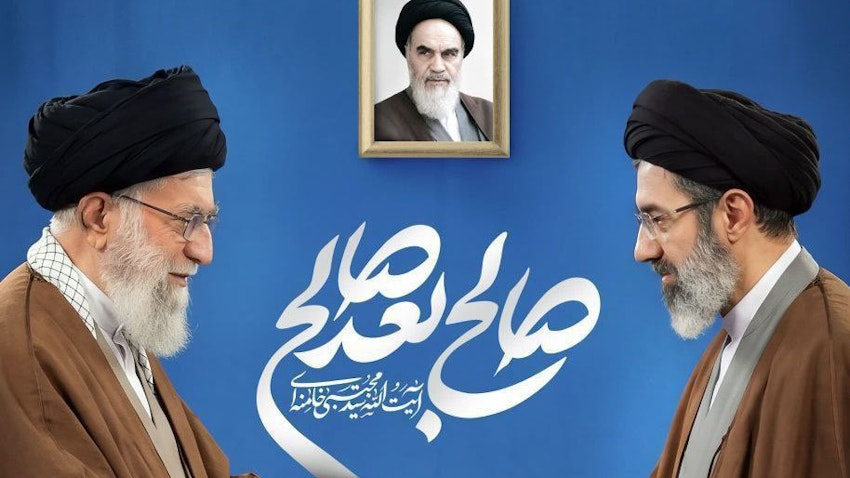
A notable aspect of Mojtaba Khamenei’s profile is that he has never held an official government position. Yet, his influence appears substantial.
He is widely believed to have:
- Close ties with the Islamic Revolutionary Guard Corps
- A role as a behind-the-scenes power broker within Iran’s political system
- Long-standing involvement in strategic decision-making circles
This dynamic—significant influence without formal accountability—has contributed to both his political weight and the scrutiny surrounding his wealth.
Sanctions and International Scrutiny
Mojtaba Khamenei’s financial network has not gone unnoticed globally.
- He was sanctioned by the United States Department of the Treasury in 2019
- His alleged financial activities have been examined in investigative reports by major international outlets
Sanctions typically indicate concerns related to:
- Political influence
- Financial transparency
- Links to state power structures
They also complicate international financial activity, potentially reinforcing the need for indirect ownership structures and offshore channels.
Wealth vs. Ideology: A Contradiction Under Debate
A striking tension emerges when comparing reported wealth with Iran’s ideological positioning.
The Islamic Republic was founded in 1979 on principles emphasizing:
- Social justice
- Economic equality
- Resistance to elite concentration of wealth
Yet, reports of extensive overseas assets linked to individuals close to leadership—including Mojtaba Khamenei—have fueled criticism.
As noted by investigators:
“It’s increasingly clear that those close to Iran’s political leaders have invested heavily in the UK.”
This contrast becomes particularly significant in the context of:
- Economic hardship inside Iran
- Growing public dissatisfaction
- Periodic protests against governance
The perception gap between public austerity narratives and private wealth accumulation remains a central issue in both domestic and international discourse.
Political Implications: Leadership, Legitimacy, and Global Reaction
Mojtaba Khamenei’s potential or actual rise to supreme leadership introduces additional layers to the discussion of his wealth.
Key implications include:
- Internal political shifts toward hereditary-style leadership
- Increased scrutiny of elite wealth within Iran
- Heightened geopolitical tensions
For example, Donald Trump publicly criticized the prospect of his leadership, stating:
“Khamenei’s son is unacceptable to me. We want someone that will bring harmony and peace to Iran.”
Such reactions underscore how financial power, political authority, and international relations intersect in his case.
What Comes Next: Transparency or Continued Secrecy?
Looking ahead, several scenarios are plausible:
- Increased global scrutiny
As leadership responsibilities expand, so will demands for financial transparency. - Expansion of sanctions frameworks
Additional restrictions could target associated entities or financial channels. - Continued opacity
Given existing structures, full disclosure remains unlikely in the near term. - Domestic political pressure
Internal debates around wealth inequality may intensify.
Conclusion: A Net Worth Defined by Complexity, Not Certainty
Mojtaba Khamenei’s net worth cannot be reduced to a single number. Instead, it represents:
- A network of global assets
- A system of financial intermediaries
- A fusion of political influence and economic power
While estimates suggest wealth ranging from millions to potentially billions, the defining feature of his financial profile is not scale alone—but opacity.
In an era where transparency is increasingly demanded of global leaders, the case of Mojtaba Khamenei illustrates how power can operate beyond formal titles and beyond publicly visible wealth, shaping both national governance and international perception.