Introduction: When the Army Enters Civilian Streets
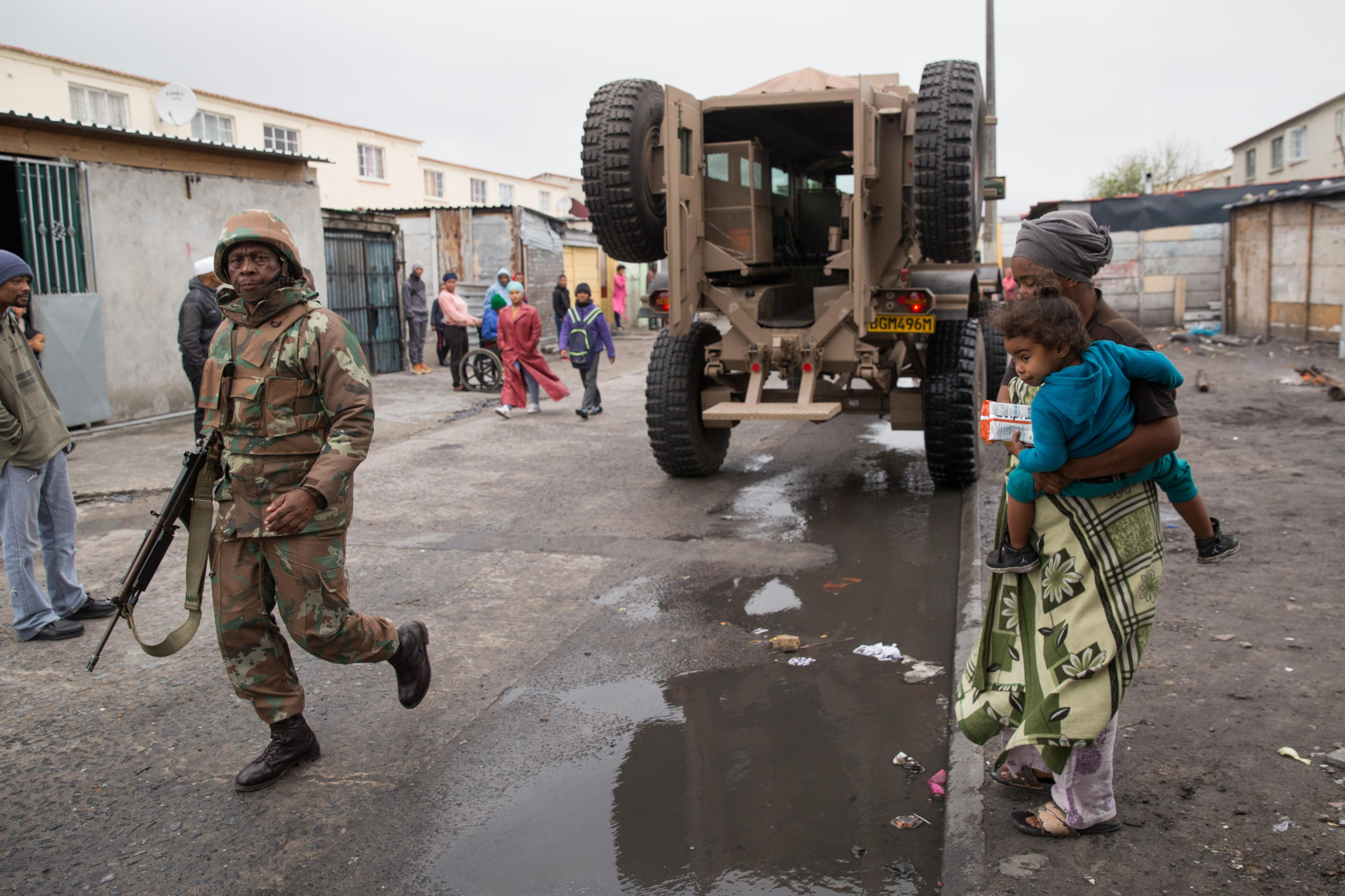
The deployment of the South African National Defence Force (SANDF) into civilian communities marks one of the most consequential security decisions in modern South Africa. Intended as a response to escalating gang violence, illegal mining, and persistent law enforcement challenges, this strategy has triggered a complex national debate.
At its core, military deployment in domestic settings is both a symbol of state intervention and a signal of institutional strain. While it projects authority and urgency, it simultaneously raises questions about sustainability, effectiveness, and long-term governance.
This article adopts an analytical feature format, examining the logic behind SANDF deployment, the realities on the ground, and the broader implications for South Africa’s security landscape.
The Immediate Trigger: Escalating Violence and Political Pressure
The recent deployment follows a surge in violent crime, particularly in the Western Cape. In a single week in April, reports indicated over 50 murders, intensifying pressure on authorities to act decisively.
In response, President Cyril Ramaphosa authorized the use of the military to support the South African Police Service, particularly in gang-affected regions such as Cape Town’s Cape Flats.
The deployment is part of a broader operational framework—often referred to as Operation Prosper—designed to stabilize high-risk areas and reinforce policing capacity.
However, from the outset, expectations and realities began to diverge.
Historical Context: Military Deployment Is Not New
Although often perceived as extraordinary, internal SANDF deployment has precedent. Since the late 1990s, the military has been called upon repeatedly to assist in domestic crises:
- Operation Recoil (1997)
- Operation Slasher (2001)
- Operation Combat (2012)
- Operation Thunder (2018)
- Operation Lockdown (2020, during COVID-19)
These interventions were typically justified by the scale of the threat—whether crime, civil unrest, or public health emergencies. Yet a consistent pattern emerges: short-term stabilization followed by long-term relapse.
Research indicates that while such deployments can temporarily reduce violent crime, their success depends heavily on arrests of key suspects and seizure of illegal firearms.
Absent these outcomes, the impact tends to dissipate quickly.
On the Ground: A Mixed and Contested Reality
Visible Force, Limited Deterrence
The presence of heavily armed soldiers patrolling urban neighborhoods creates a powerful visual deterrent. For many residents, it represents long-awaited intervention.
Yet evidence suggests that gang activity has not been fundamentally disrupted.
- Shootings continue in broad daylight
- Criminal networks remain operational
- Some gangs reportedly mock the deployment
Residents and analysts describe a scenario where “gangsters are unfazed”, highlighting the limited psychological impact of military presence.
Crime Continues Despite Deployment
During the same period as the deployment:
- A triple murder occurred in Gugulethu
- A six-year-old child was shot during gang crossfire
- Multiple arrests were made, but violence persisted
These incidents underscore a critical point: military presence does not equate to systemic disruption of criminal ecosystems.
Structural Limitations: Why the Military Struggles in Policing Roles
1. Training and Operational Doctrine
The SANDF is trained for combat, not community policing. Its operational doctrine emphasizes:
- Offensive tactics
- High-force engagement
- Neutralization of threats
By contrast, policing requires:
- De-escalation techniques
- Negotiation skills
- Community integration
This mismatch creates operational friction and limits effectiveness in civilian environments.
2. Equipment Constraints
Military equipment—such as assault rifles—is designed for battlefield conditions. Unlike police officers, soldiers typically lack:
- Non-lethal tools (e.g., batons, pepper spray)
- Arrest-focused gear
- Community engagement resources
This further restricts their ability to perform nuanced law enforcement tasks.
3. Intelligence Deficiencies
Perhaps the most critical limitation is intelligence.
Critics argue that:
- Gangs often receive advance warning of raids
- Operations lack coordination
- Arrests and seizures are limited
Without intelligence-driven policing, military deployment becomes reactive rather than strategic.
The Deeper Problem: Crime as a Systemic Issue
Military deployment addresses symptoms, not causes.
Gang violence in South Africa is deeply rooted in:
- Socio-economic inequality
- High unemployment
- Historical spatial segregation
- Weak institutional trust
As one analysis notes, gangsterism is “deeply entwined socially, culturally and economically” within affected communities.
This complexity allows gangs to:
- Adapt quickly
- Temporarily retreat during crackdowns
- Resume operations once pressure subsides
Political and Institutional Implications
A Sign of Policing Failure
The reliance on military support reflects underlying challenges within SAPS, including:
- Insufficient personnel
- Weak intelligence capabilities
- Allegations of corruption and infiltration
High-profile controversies—including accusations of criminal networks influencing law enforcement—have further eroded public confidence.
Risk of Normalization
Repeated deployments risk normalizing military presence in civilian life.
This carries significant implications:
- Erosion of constitutional norms
- Increased public anxiety
- Blurring of military and policing roles
Over time, communities may become accustomed to what is effectively a semi-militarized environment.
Short-Term Gains vs Long-Term Consequences
What Deployment Can Achieve
When properly executed, SANDF deployment can:
- Temporarily reduce violence
- Provide psychological reassurance
- Create space for policing reforms
In some areas, community groups have reported short-term declines in violence following joint operations.
What It Cannot Solve
However, deployment alone cannot:
- Dismantle gang networks
- Address socio-economic drivers
- Reform policing institutions
- Eliminate corruption
As one analysis describes, it is “a plaster on gaping wounds”—a temporary fix for a deeply entrenched crisis.
Alternative Approaches: Toward Sustainable Solutions
Experts and community leaders advocate for a more comprehensive strategy:
1. Intelligence-Led Policing
Strengthening investigative capacity and real-time intelligence systems.
2. Community Engagement
Building trust between residents and law enforcement.
3. Socio-Economic Interventions
Investments in:
- Education
- Housing
- Employment opportunities
4. Decentralized Policing Power
Enhancing local and provincial authority to respond quickly to crime hotspots.
Conclusion: A Necessary but Insufficient Measure
The deployment of the South African National Defence Force into domestic crime hotspots reflects both urgency and limitation. It demonstrates the state’s willingness to act decisively, yet also exposes the depth of South Africa’s security challenges.
In the short term, soldiers may reduce violence and restore a measure of stability. But without structural reform—particularly in policing, intelligence, and socio-economic policy—the gains are unlikely to endure.
Ultimately, military deployment is not a solution in itself. It is a stopgap measure, buying time for more comprehensive interventions that must follow.


