Michael Cooper Net Worth, Relationships, Age/Birthdate & Birthday
Overview of Michael Cooper — net worth, relationships, age/birthdate, and birthday.
 loveness92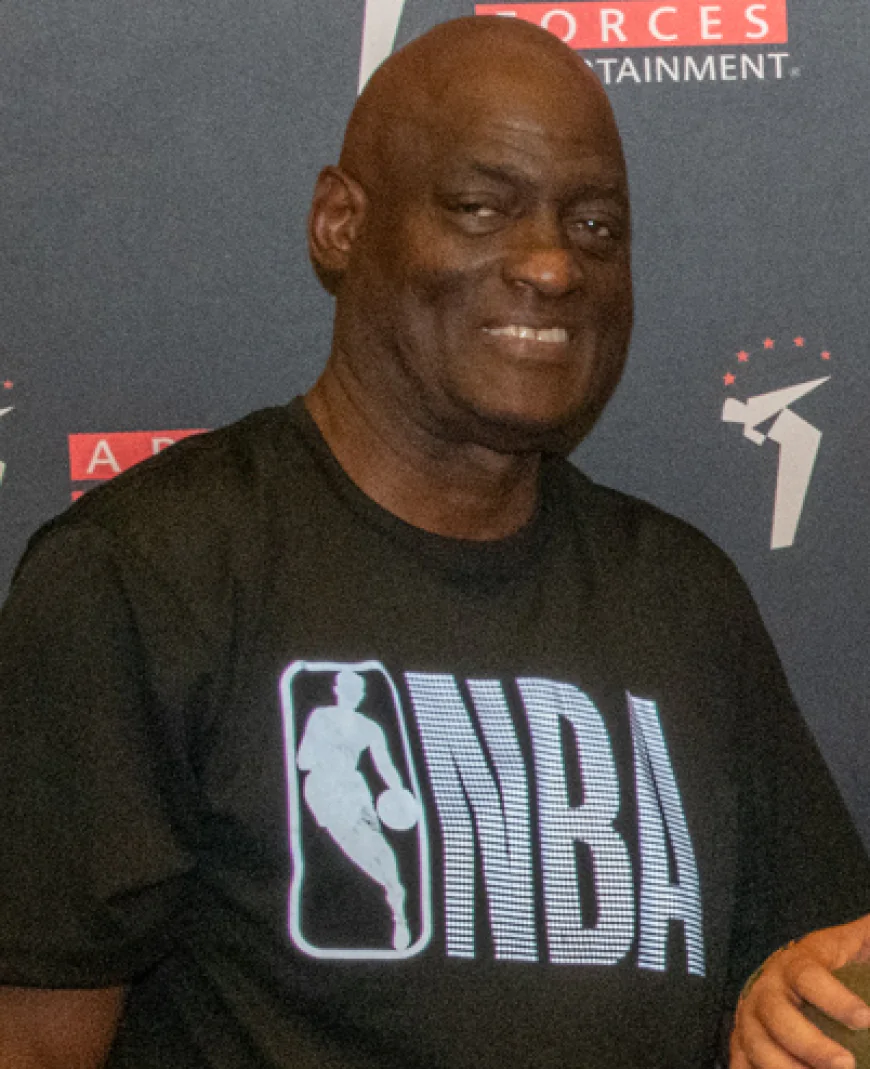
The Relentless Pursuit of Excellence: The Life and Legacy of Michael Cooper
A Los Angeles Kid Who Became “Coop”
Michael Jerome Cooper was born on April 15, 1956 in Los Angeles, California — a birthdate that stands as a milestone for a life defined by grit, discipline, and a defensive mindset.
Growing up in Pasadena, Cooper did not emerge as a basketball prodigy — at least not at first. As he recounted in interviews, he was raised partly by his grandmother, while his mother worked long hours. Early on, his athleticism found outlets in other sports: track and field, high jump, even football — but basketball eventually won out. His slender frame and natural athleticism translated into agility, speed, and a defensive presence often overlooked in more stat-driven assessments.
Cooper’s path to prominence wasn’t immediate. He played college ball first at Pasadena City College, then at the University of New Mexico, where he honed his defensive skills and became a first-team All-Western Athletic Conference pick. In his senior year, his all-around game earned him first-team All-American honors from the United States Basketball Writers Association.
From 60th Pick to Defensive Anchor
Despite his collegiate success, Cooper was selected surprisingly late — 60th overall in the 1978 NBA Draft by the Los Angeles Lakers. Few could have predicted that a third-round pick would become a cornerstone of arguably the most iconic era in Lakers history.
Yet “Coop” quickly proved his value. Standing 6′7″ with long arms and quick feet, he became a defensive specialist — often assigned to shut down the league’s best offensive players, regardless of position. Over a 12-year NBA career (1978–1990), he earned eight All-Defensive Team selections, five of them first-team, and was named the NBA Defensive Player of the Year in 1987.
He wasn’t just defense, though. Cooper grew into a reliable three-point threat and a capable facilitator, helping stretch the floor and keep the Lakers offense dynamic. During the “Showtime” era — alongside legends such as Magic Johnson and Kareem Abdul-Jabbar — Cooper contributed to five NBA championships (1980, 1982, 1985, 1987, 1988).
It’s telling that even rival stars recognized his impact: Larry Bird once called Cooper the toughest defender he ever faced.
A Transition to Leadership — Coaching and Championships
When Cooper retired as a player, his basketball journey was far from over. He briefly played in Italy for one season (1990–91) with Virtus Roma before returning to the U.S. for a front-office role, then shifting to coaching.
In 1999, he became head coach of the Los Angeles Sparks in the WNBA. Under his leadership, the Sparks transformed into a powerhouse, earning a dominant 28–4 record in 2000 and securing back-to-back WNBA championships in 2001 and 2002. Cooper was named WNBA Coach of the Year in 2000.
Cooper's coaching résumé expanded across men’s and women’s basketball — NBA, WNBA, minor leagues, and even high school. His versatility as a coach underscored something essential about his career: whether on defense or playbook, he thrived not under the spotlight, but in crafting the foundation that allowed stars to shine.
Recognition, Legacy — and a Hall of Fame Moment
In 2024, Cooper’s enduring impact was formally recognized when he was elected to the Naismith Memorial Basketball Hall of Fame.
That induction affirmed what many fans and analysts have long known: Cooper redefined the value of a “role player.” He showed that defense, hustle, versatility, and team-first ethos could earn championships and long-term respect — even without gaudy scoring statistics.
Separately, in 2025, the Lakers retired his No. 21 jersey — a symbolic homecoming of sorts, honoring the player whose contributions helped define an era.
Estimating Wealth — The Public Snapshot
Various sources over the years have attempted to estimate Cooper’s net worth. One commonly cited figure puts his net worth at around US$3 million, factoring in playing salaries, coaching contracts, and endorsements.
That sum may appear modest, especially considering his longevity in the game and his participation in multiple championship cycles — both as player and coach. Some less formal sources suggest a higher figure, but lack of transparent data makes such estimates speculative. For now, the publicly accepted figure remains around the $3 million mark.
Family, Challenges, and the Man Behind the Courts
Off the court, Cooper’s personal life has had its share of challenges. In 2014, he was diagnosed with early-stage tongue cancer — a serious scare that required surgery. He successfully battled the illness.
He was married to Wanda Cooper; the couple reportedly divorced. Together, they have children.
As recently as his coaching stints in high school and college basketball, Cooper’s commitment to nurturing young talent demonstrated the same dedication that defined his playing career — hard work, discipline, resilience, mentorship.
Why Michael Cooper Matters — More Than Just Stats
In an era when scoring often dominates headlines and highlights, Michael Cooper represents something different — the value of sacrifice, role clarity, and unglamorous excellence. He helped the Lakers win five titles not by leading the league in scoring, but by embracing the dirty work nobody else wanted.
Then, as a coach, he carried that same philosophy forward — molding teams that won through discipline, defense, and cohesion. That dual legacy, as both a championship-winning player and a title-winning coach across different leagues, makes his story remarkable.
His journey — from a modest upbringing in Pasadena to the Hall of Fame and jersey retirement — is a testament to what consistency, defense-first mentality, and adaptability can achieve. For rising athletes, coaches, and fans alike, Cooper’s career remains a blueprint for sustained relevance and impact — even when never in the spotlight.