


Lionel Messi in Miami: Why Football’s Biggest Name Is Still MLS’s Biggest Business Story
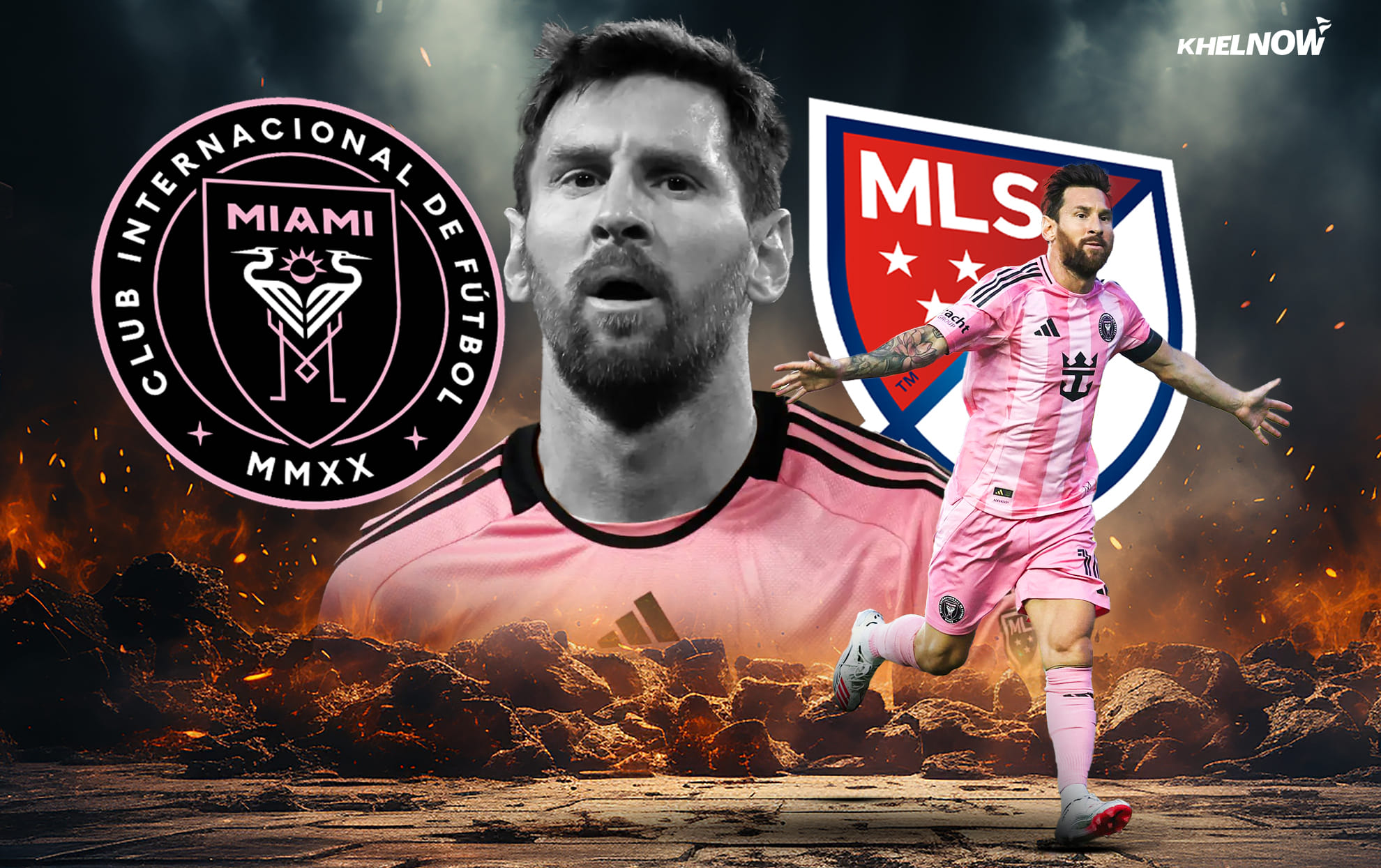
Lionel Messi’s move to Inter Miami was never just a football transfer. It was a cultural event, a commercial gamble, a league-wide marketing accelerant and, above all, a statement that Major League Soccer could compete for the attention of the global game.
Now, in 2026, Messi remains the clearest proof of that strategy. The Argentine football star continues to sit at the top of Major League Soccer’s salary charts, earning an annual base salary of $25 million, approximately Rs 240 crore, according to figures released by the MLS Players Association. His guaranteed overall compensation is listed at $28.3 million, approximately Rs 270 crore, making him not only the highest-paid player in the league but also a figure whose financial profile remains unmatched in American football.
The Contract That Keeps Messi at the Center of MLS
Messi’s latest salary figures reflect the contract extension he signed with Inter Miami in October, a deal that keeps him with the Florida club through the 2028 campaign. That agreement matters far beyond one player’s paycheck.
For Inter Miami, it secures the face of the project. For MLS, it preserves the league’s most powerful global attraction. For sponsors, broadcasters and fans, it provides continuity at a time when Messi’s presence remains one of the sport’s most bankable assets.
The numbers underline the scale of his status. Messi’s base salary has doubled, and his annual earnings remain more than twice as high as those of Son Heung-min, listed as the next-highest paid player in MLS. In a league built around salary structures, roster rules and competitive balance, Messi continues to occupy a category of his own.
More Than Wages: Messi’s Value Is Measured in Influence
A salary of this size invites a simple question: is Messi still worth it?
From a purely sporting standpoint, the answer remains difficult to dispute. Even at 38, Messi is still producing the kind of performances that shape matches, headlines and commercial attention. His recent display for Inter Miami in a 5-3 win over FC Cincinnati showed why his value cannot be reduced to age or salary alone.
In that match, Messi played the full 90 minutes, scored twice and provided one assist. He took six shots, put three on target, struck the woodwork once and recorded four key passes. He also completed 37 of 51 total passes, including 32 accurate passes in the opposition half, while producing two accurate crosses from four attempts. His Sofascore Rating for the game was 9.5 — a reflection of a performance built on both end product and creative control.
That kind of influence is exactly why Inter Miami and MLS continue to build around him. Messi is not merely a marquee name attached to a marketing campaign. He remains a match-winning footballer whose involvement changes the rhythm, quality and visibility of the competition.
The Cincinnati Performance: A Snapshot of Messi’s Ongoing Edge
The win over Cincinnati offered a clear example of Messi’s modern role. He was not just finishing moves; he was constructing them.
His 72 touches showed how often Inter Miami looked to involve him. His 23 carries covered 162 meters, including four progressive carries that moved the ball forward by 54.84 meters. His longest single carry advanced play by 18.15 meters, a reminder that even when he is not sprinting past defenders as he once did in Europe, he still manipulates space with extraordinary precision.
There was also defensive involvement. Messi won one tackle, made one interception and recorded three ball recoveries. In an open, high-scoring match, those numbers matter because they show a player still engaged in more than the final action.
The details also show the trade-off that comes with constant involvement. Messi lost possession 22 times, was dispossessed three times and won three duels while losing six. But for a player asked to create, carry, shoot and decide games, those risks are part of the equation.
A Golden Boot Race With Global Attention
Messi’s scoring form has also pushed him into the heart of the MLS Golden Boot conversation. One performance report placed him on 11 goals and four assists through 12 MLS matches, supported by 35 key passes and 10 big chances created. Another report credited him with 12 goals and four assists in 12 appearances after his brace against Cincinnati, noting that he had caught up with Chicago Fire’s Hugo Cuypers in the Golden Boot race.
The slight difference in reported totals does not change the broader point: Messi is still operating at elite attacking output. He is averaging close to a goal per game, continuing to score from varied areas, and keeping Inter Miami relevant not only in the standings but also in the global football conversation.
His shot profile remains striking. Reports from the season credit him with goals from inside and outside the box, including free-kick goals, while his left foot continues to be his defining weapon. That blend of volume, accuracy and variety is why every Messi match still carries a sense of anticipation.
Why MLS Benefits From Messi’s Financial Dominance
Messi’s salary may look extraordinary, but MLS gains more than goals from his presence. His name travels across markets in ways few athletes can match. He attracts international media coverage, lifts the profile of opponents, increases interest in Inter Miami fixtures and keeps MLS connected to global football audiences.
This is especially important in the United States, where football continues to compete for mainstream attention against long-established sports such as American football, basketball and baseball. Messi gives MLS a figure recognizable even to casual fans. His presence makes league matches easier to market, easier to export and easier to discuss.
For Inter Miami, the benefits are even more direct. The club has become one of the most visible football brands in North America. Its matches are no longer followed only as MLS fixtures; they are followed as Messi events. That distinction has commercial value, and it explains why keeping him through 2028 is strategically significant.
The Son Heung-min Comparison and MLS’s Star Economy
The fact that Messi earns more than twice as much as Son Heung-min, the next-highest paid player in the league, also says something about MLS’s evolving star economy.
MLS has long used major international names to expand its visibility, but Messi’s case is different in scale. His salary is not simply a reward for past achievement. It is a reflection of his ongoing market power and his ability to influence multiple layers of the league’s business model.
Son’s presence shows that MLS is increasingly willing to attract elite global names, but Messi remains the benchmark. He is the player whose commercial pull, sporting legacy and match impact combine most powerfully.
The Bigger Meaning of Messi in Miami
Messi’s Inter Miami chapter has become a late-career case study in how a global superstar can reshape a league’s image. For years, MLS sought credibility by signing well-known players at different stages of their careers. Messi’s arrival elevated that strategy into a new era.
The league is no longer only asking whether global stars can come to the United States. It is now asking what the league can become when one of the greatest players in history remains productive, committed and commercially central.
That is why his contract extension through 2028 matters. It gives MLS time to continue building around his presence. It gives Inter Miami a longer competitive and commercial runway. And it gives fans more years to watch one of football’s defining figures perform in a league still growing its international identity.
What Comes Next for Messi and MLS?
The next stage of Messi’s Miami story will be judged by two questions: can he continue producing at this level, and can Inter Miami convert his presence into sustained team success?
The early signs remain encouraging. He is scoring, creating and influencing games. His salary remains unmatched, but so does his profile. If he continues to deliver decisive performances, the financial debate around him will remain secondary to the broader reality: Messi is still giving MLS what it paid for.
His career is no longer about proving greatness. That argument ended long ago. In Miami, the story is different. It is about longevity, commercial power, competitive relevance and the rare ability of one footballer to make an entire league feel bigger.
Conclusion: Messi Remains MLS’s Defining Attraction
Lionel Messi’s continued dominance of the MLS salary charts is not just a sports finance headline. It is a signal of how much value Inter Miami and MLS still attach to his presence.
At $25 million in base salary and $28.3 million in guaranteed overall compensation, Messi remains the league’s financial outlier. But his recent performances show why he is also much more than that. He is still scoring, still creating, still drawing attention and still shaping the future of football in the United States.
For MLS, Messi is not merely minting money in Miami. He is still making the league matter on a global stage.


