



Melika Foroutan and the Changing Face of European Crime Drama
A Narrative Feature: Performance, Politics, and the Power of Storytelling
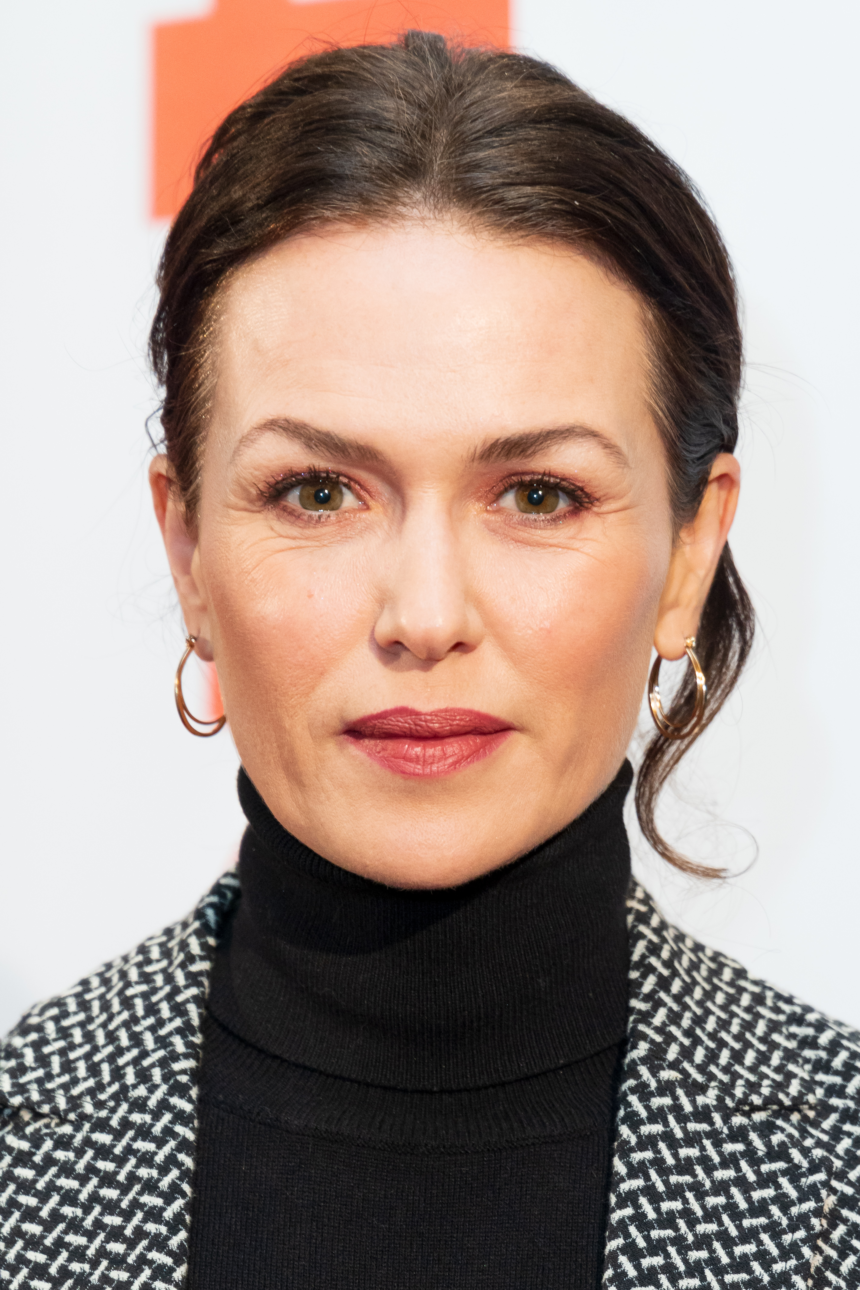
In contemporary European television, few crime dramas carry as much cultural weight as Tatort. Within this long-running franchise, Melika Foroutan has emerged as a defining presence—particularly through her role as investigator Maryam Azadi in the Frankfurt-based episodes. Her recent appearance in the episode “Fackel” illustrates not only her evolving artistic range but also how crime television is increasingly used as a lens to examine deeper societal fractures.
- Melika Foroutan and the Changing Face of European Crime Drama
- The Role That Anchors a Story of Inequality
- A Case That Moves Beyond Crime
- Emotional Core: A Personal Connection
- Visual Language and Symbolism
- Momentum and Recognition
- Cultural Significance: Beyond Entertainment
- The Evolution of a Screen Presence
- What Comes Next?
- Conclusion: A Performance That Reflects Its Time
This is not simply a story about a television actress. It is about how performance, narrative, and social commentary intersect—and how Foroutan stands at that intersection.
The Role That Anchors a Story of Inequality
In Tatort: Fackel, Foroutan reprises her role as Maryam Azadi, working alongside Edin Hasanović, who plays Hamza Kulina. The episode centers on a devastating high-rise fire, a fictional tragedy that exposes systemic inequality, corporate responsibility, and institutional failure.
The narrative begins at a memorial site for victims of the fire—a setting that immediately establishes emotional gravity. From there, the investigation unfolds across multiple layers of power: grieving families seeking justice, corporate actors attempting to evade accountability, and political systems that appear compromised.
The thematic structure is explicit:
contrasts between wealth and poverty, power and vulnerability, truth and manipulation.
Foroutan’s Maryam Azadi operates within this tension. Her performance is restrained but purposeful, serving as a counterbalance to the emotional volatility of the case. Rather than dominating scenes, she stabilizes them—an approach that reflects a broader trend in modern crime drama toward psychologically grounded characters.

A Case That Moves Beyond Crime
The Fackel episode is not structured as a conventional procedural. Instead, it functions as a socio-political narrative disguised as a crime investigation.
At the center of the plot is a catastrophic high-rise fire—visually rendered through a combination of visual effects and controlled studio sequences. The realism of the disaster is enhanced by its setting across real locations in Frankfurt, Eschborn, Offenbach, Oberursel, and Babenhausen, grounding the fictional story in recognizable urban geography.
But the fire itself is only the starting point.
The investigation reveals deeper questions:


- Were cost-saving construction materials used at the expense of safety?
- Did corporate and political actors suppress accountability?
- Who bears responsibility when systemic failure leads to loss of life?
The involvement of a fictional construction materials company, Styvex, introduces a corporate dimension. Its products—designed to improve energy efficiency—raise a critical question:
Was sustainability prioritized over safety?
This ambiguity drives the narrative forward and places characters like Maryam Azadi at the center of a moral rather than purely legal investigation.
Emotional Core: A Personal Connection
The episode intensifies when it becomes clear that the case is not purely professional for Kulina. The woman who ultimately sets herself on fire in protest is revealed to be his childhood sweetheart, linking personal trauma with institutional failure.
In one of the most striking moments, Kulina demands:
“What exactly is the truth? That this is all one big, corrupt mess!”
This line encapsulates the thematic direction of the episode. It is not about solving a crime in isolation; it is about confronting a system where truth is obscured by influence.
Foroutan’s role becomes even more critical in this context. As Azadi, she functions as both investigator and observer—anchoring the narrative as it risks spiraling into emotional chaos.
Visual Language and Symbolism
Director Rick Ostermann employs a distinct visual strategy that reinforces the episode’s themes. High-rise buildings are frequently shot from low angles, making them appear imposing, almost oppressive.
This visual metaphor supports one of the episode’s most striking thematic inversions:
“Above live people who are socially disadvantaged.”
Traditionally, higher floors symbolize privilege. Here, the symbolism is reversed, reflecting a distorted social hierarchy where elevation does not equate to advantage.
Foroutan’s presence within these spaces—whether in modest housing estates or corporate environments—visually reinforces her character’s role as a bridge between different social strata.
Momentum and Recognition
The Frankfurt Tatort team, led by Foroutan and Hasanović, has been operating at an unusually rapid production pace—three episodes within six months. This acceleration signals both audience demand and institutional confidence in the duo.
Their impact has already been formally recognized. The team is set to receive the Grimme Prize for an earlier episode scheduled for broadcast in autumn 2025—one of Germany’s most prestigious television awards.
This recognition positions Foroutan not just as a performer, but as part of a creative unit redefining the expectations of crime television.
Cultural Significance: Beyond Entertainment
What distinguishes Foroutan’s work in Tatort is its alignment with broader cultural discourse. Episodes like Fackel engage with real-world concerns:
- Urban inequality
- Housing conditions
- Corporate accountability
- Environmental trade-offs
These are not abstract themes. They mirror ongoing debates across European cities, where questions of housing, safety, and sustainability remain unresolved.
By embedding these issues within a crime narrative, the series—and by extension Foroutan’s performance—achieves a dual function:
entertainment and critique.
The Evolution of a Screen Presence
Foroutan’s portrayal of Maryam Azadi reflects a broader evolution in television acting. The character is not defined by dramatic outbursts or conventional heroism. Instead, she embodies:
- Analytical restraint
- Ethical complexity
- Emotional intelligence
This aligns with a shift in audience expectations, where credibility and nuance increasingly outweigh spectacle.
Her performance style also complements the structural ambitions of the Frankfurt Tatort episodes, which prioritize layered storytelling over formulaic resolution.
What Comes Next?
Despite the rapid succession of recent episodes, indications suggest a pause before new Frankfurt Tatort installments are released. This gap may serve to recalibrate production while maintaining the narrative quality that has driven recent acclaim.
Looking ahead, several trajectories are likely:
- Continued exploration of socially driven narratives
- Deeper character development for Azadi and Kulina
- Expanded use of real-world parallels in storytelling
Foroutan’s role within this trajectory appears secure. Her presence has become integral to the identity of the Frankfurt series.
Conclusion: A Performance That Reflects Its Time
Melika Foroutan’s work in Tatort: Fackel demonstrates how contemporary television can operate as both narrative art and social commentary. Through a controlled, deliberate performance, she anchors a story that moves beyond crime into the realm of systemic critique.
In doing so, she contributes to a broader transformation within European television—one where the most compelling stories are those that confront uncomfortable truths.