


Trump News Melania: A Sudden Statement That Reignited a Dormant Controversy
A Defining Moment in a Quiet News Cycle
In a political environment dominated by international tensions and domestic policy debates, an unexpected intervention by Melania Trump has abruptly shifted attention back to one of the most controversial unresolved cases in modern American history — the Jeffrey Epstein scandal.
- A Defining Moment in a Quiet News Cycle
- The Statement: Denial, Defense, and a Call to Action
- Immediate Political Reaction and Institutional Response
- Survivors Push Back: A Divided Reception
- The Timing Question: Why Now?
- Historical Context: Social Circles and Legal Disputes
- Broader Implications: Politics, Accountability, and Public Trust
- What Comes Next?
- Conclusion: A Statement That Reopened the Debate
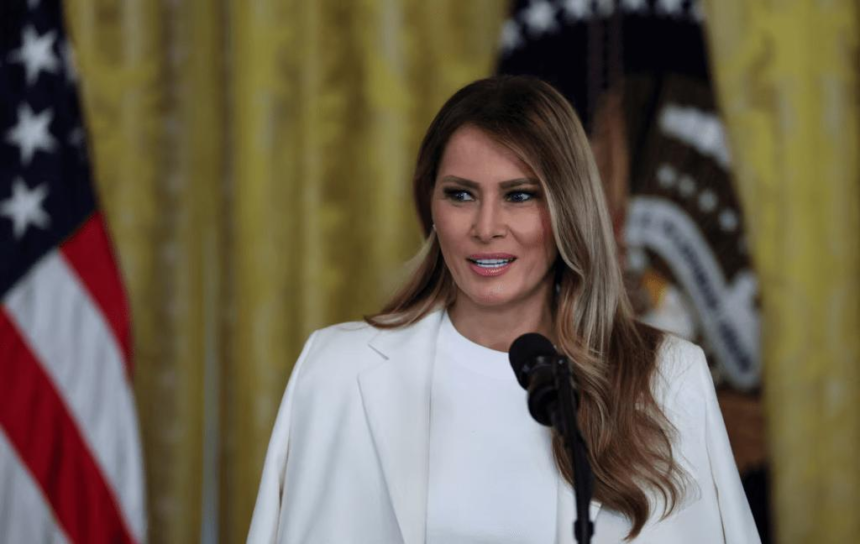
Appearing at the White House without prior notice, the First Lady issued a firm and unequivocal denial of any personal connection to Epstein. Her remarks, however, extended beyond personal defense, calling for renewed congressional scrutiny and public testimony from survivors. The move has triggered widespread political, legal, and social reactions, raising critical questions about accountability, timing, and the evolving narrative surrounding the Epstein case.
The Statement: Denial, Defense, and a Call to Action
Melania Trump’s address was notable both for its content and its tone. Speaking directly to reporters, she dismissed allegations linking her to Epstein as baseless and harmful.

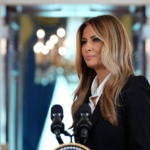
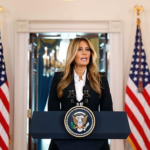
“I have never had any knowledge of Epstein abuse of his victims,” she said. “I was never involved in any capacity. I was not a participant.”
She further rejected claims that Epstein played any role in her relationship with Donald Trump, describing such assertions as “mean-spirited attempts to defame my reputation.”


Addressing documented interactions, including a 2002 email exchange with Ghislaine Maxwell, she characterized the communication as “casual correspondence” and a “polite reply.”
Beyond personal denial, the First Lady introduced a broader proposal: she urged lawmakers to convene congressional hearings that would allow Epstein survivors to testify under oath.
“Each and every woman should have her day to tell her story in public if she wishes,” she stated, emphasizing the need for a permanent public record.
Immediate Political Reaction and Institutional Response
The response from political figures was swift. Robert Garcia, a senior member of the House Oversight Committee, publicly supported the call for hearings and urged immediate action from committee leadership.


However, the broader institutional context complicates the proposal. Survivors have already provided testimony in various formats, including closed-door sessions with congressional committees. Critics argue that additional public hearings may not necessarily advance justice and could instead introduce new risks for those involved.
Survivors Push Back: A Divided Reception
The most consequential reaction came from Epstein survivors themselves. While some acknowledged the First Lady’s statement as a “bold move,” others were sharply critical.
A group of survivors accused her of “shifting the burden onto survivors under politicized conditions to protect those with power.”
They argued that survivors have already taken significant personal risks by coming forward, filing reports, and providing testimony. Forcing them into further public exposure, they said, represents “a deflection of responsibility, not justice.”
Other voices echoed this concern, suggesting that meaningful accountability should focus instead on institutional transparency — particularly the release of remaining investigative files and clarification of decisions made by authorities handling the case.
The Timing Question: Why Now?
Perhaps the most perplexing aspect of the episode is its timing.
The statement arrived without warning, at a moment when the Epstein controversy had largely receded from the forefront of political discourse. Even seasoned political reporters expressed confusion about what prompted the intervention.
Observers noted that the White House had not signaled the topic in advance, and there was no clear triggering event in the public domain.
Adding to the uncertainty, conflicting accounts emerged regarding whether President Donald Trump was aware of the speech beforehand. While he reportedly told one outlet he “did not know about his wife’s statement ahead of time,” other accounts suggested he was aware she would speak but not necessarily about the subject matter.
This ambiguity has fueled speculation about internal coordination and strategic intent.
Historical Context: Social Circles and Legal Disputes
Melania Trump acknowledged that she and her husband occasionally moved within the same social circles as Epstein, particularly in New York and Palm Beach during the early 2000s.
Photographic evidence from that period shows the couple at events alongside Epstein and Maxwell.
However, she maintained that these encounters were incidental and did not constitute a meaningful relationship.
The issue has also been the subject of legal disputes. Publications and authors have previously faced legal challenges over claims about how the Trumps met, including allegations involving Epstein-linked introductions. Several of these claims were later retracted or contested.
Broader Implications: Politics, Accountability, and Public Trust
The renewed attention on Melania Trump’s connection to the Epstein case has implications that extend beyond personal reputation.
At a political level, it reopens scrutiny of how the U.S. justice system handled one of the most high-profile sex trafficking cases in recent history. It also intersects with ongoing debates about transparency, elite accountability, and the treatment of survivors within legal and political processes.
From a communications perspective, the episode underscores the risks and unpredictability of high-profile interventions. While intended to clarify and defend, such statements can also amplify scrutiny and generate new lines of inquiry.
What Comes Next?
The immediate future will likely depend on whether Congress acts on the First Lady’s call for hearings. If lawmakers move forward, the debate will shift toward the structure, scope, and potential consequences of such proceedings.
At the same time, pressure continues to mount for the release of remaining Epstein-related documents, a demand consistently emphasized by survivors and advocacy groups.
For Melania Trump, the statement marks a rare public reentry into a contentious political issue — one that may shape public perception of her role and influence during her husband’s presidency.
Conclusion: A Statement That Reopened the Debate
Melania Trump’s unexpected address has done more than deny allegations; it has reignited a complex and unresolved national conversation.
By combining personal defense with a call for institutional action, the First Lady has placed herself at the center of a debate involving justice, transparency, and political responsibility.
Whether her intervention leads to meaningful change or further controversy remains uncertain. What is clear, however, is that the Epstein case — far from settled — continues to cast a long shadow over American political life.