

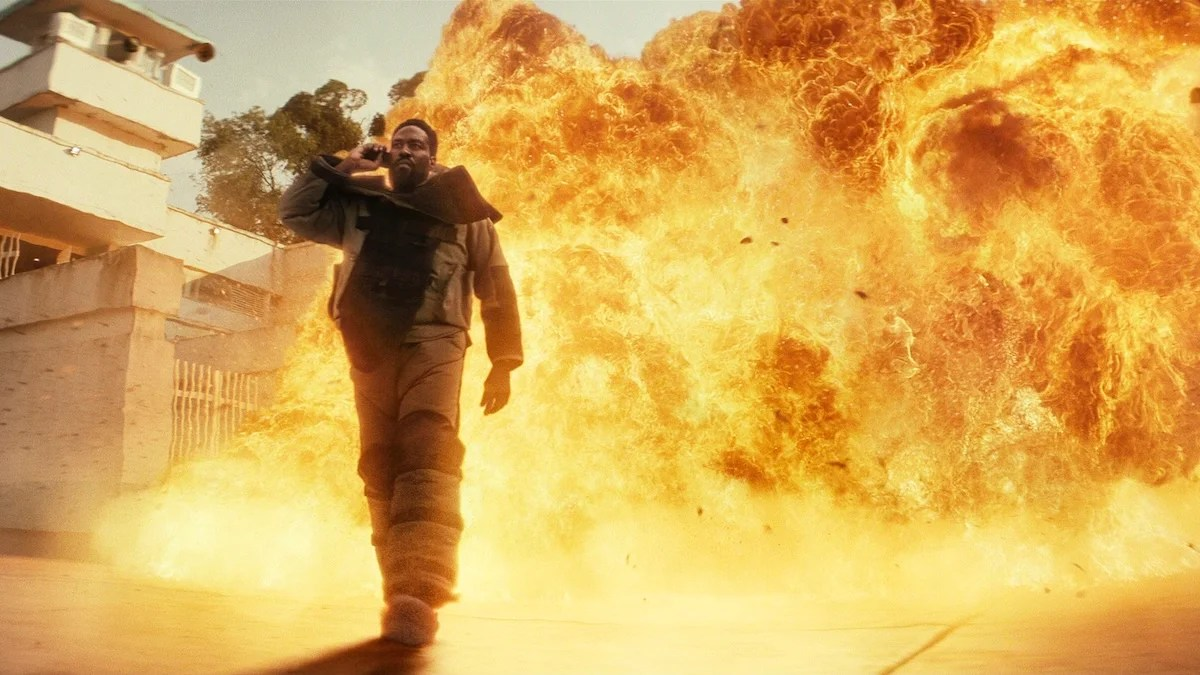
Man on Fire (2026): Inside Netflix’s Explosive Reinvention of a Classic Thriller
A New Flame Ignites: The Return of John Creasy
In 2026, Netflix has reignited one of the most enduring revenge-thriller stories with its ambitious reboot of Man on Fire. Reimagined as a seven-episode series, the project brings fresh intensity to A.J. Quinnell’s 1980 novel while stepping out of the long shadow cast by earlier film adaptations—most notably the 2004 version starring Denzel Washington.
At the center of this modern retelling is Yahya Abdul-Mateen II, stepping into the role of John Creasy—a broken former operative whose quest for redemption collides with a conspiracy far larger than himself. Early reactions suggest the gamble has paid off, with critics calling the show a “must-watch” and awarding it a 63% approval rating on Rotten Tomatoes—already surpassing the 2004 film’s 39% score.
But beyond the numbers, Man on Fire (2026) signals something deeper: a shift in how action thrillers are told in the streaming era.

From Page to Screen: A Story That Refuses to Die
Few stories in the action genre have proven as adaptable as Man on Fire. Originally penned by A.J. Quinnell, the tale has evolved across decades and continents:
- 1987 film: Set in Italy, starring Scott Glenn
- 2004 film: Relocated to Mexico City, with Denzel Washington delivering a defining performance
- 2026 series: Transplanted to Brazil, with a broader political narrative
This latest adaptation, created by Kyle Killen, doesn’t merely retell the story—it reconstructs it. The setting shifts primarily to Rio de Janeiro, offering a vibrant yet volatile backdrop that reflects the show’s heightened stakes and global scope.
The series also draws inspiration from Quinnell’s sequel novel The Perfect Kill, expanding the narrative into a multi-layered conspiracy thriller.
A Darker, Broader Vision
Unlike previous versions that focused heavily on personal revenge, the 2026 series widens its lens.
A Political Conspiracy at the Core
The plot begins with a catastrophic failure: a CIA operation in Mexico City that leaves Creasy’s entire team dead. Haunted by guilt, he spirals into alcoholism and despair.
Years later, he is drawn to Brazil by his former colleague Paul Rayburn, only to be thrust into a deadly mission after a bombing destroys Rayburn’s home. The sole survivor—his daughter Poe—becomes the target of powerful forces attempting to cover up the truth.
What emerges is not just a rescue mission but a deep investigation into corruption reaching the highest levels of government.
A More Complex Hero
Creasy remains the hardened protector audiences recognize, but this version leans heavily into his psychological trauma:
- Former CIA operative with PTSD
- Survivor’s guilt from a failed mission
- Struggling with addiction and isolation
This emotional depth adds a layer of realism rarely explored in traditional action thrillers, transforming Creasy from a vengeance-driven figure into a man seeking redemption.
Performance at the Center: Abdul-Mateen’s High-Stakes Role
Taking over a role immortalized by Denzel Washington is no small feat. Yet early reviews suggest Yahya Abdul-Mateen II brings a distinct identity to the character.
Critics highlight his portrayal as intense and grounded, with a performance that balances vulnerability and brutality. While comparisons to Washington are inevitable, Abdul-Mateen’s version benefits from the extended runtime of a series, allowing for deeper character exploration.
His Creasy is less mythic and more human—capable of both calculated violence and emotional fragility.
A New Dynamic: Creasy and Poe
One of the defining elements of Man on Fire has always been the bond between Creasy and the child he protects. The 2026 series reshapes this relationship:
- Poe Rayburn is a teenager, not a young child
- Creasy chooses to protect her voluntarily, rather than being hired
- Their connection is driven more by duty and loyalty than immediate emotional warmth
This shift changes the emotional tone of the story. While earlier versions emphasized a heartwarming bond, the series leans into tension, mistrust, and gradual connection.
Rio de Janeiro: A Character in Its Own Right
The move to Brazil is more than aesthetic—it’s thematic.
The series juxtaposes:
- Wealthy high-rise districts
- Crime-ridden favelas
- Political instability and corruption
This setting amplifies the stakes and grounds the narrative in a socio-political reality that feels urgent and contemporary.
The environment itself becomes a pressure cooker, shaping every decision Creasy makes.
Critical Reception: A Strong but Divisive Debut
Early reviews position Man on Fire (2026) as a solid, if not flawless, addition to the genre.
What Works
- Strong lead performance
- Expanded narrative scope
- High production value and pacing
- Gritty, modern tone
What Divides Critics
- Comparisons to the 2004 film’s emotional depth
- A more predictable storyline at times
- Less impactful central relationship
Still, the consensus is clear: the series delivers enough intensity and intrigue to keep viewers engaged, particularly those seeking a binge-worthy action thriller.
What Comes Next: A Franchise Reignited
The first season ends with a clear setup for continuation. Creasy survives and is approached with a new mission tied to Mexico City—the site of his original trauma.
While Netflix has not officially confirmed a second season, the narrative trajectory strongly suggests more to come, potentially as early as 2027.
This opens the door for:
- Deeper exploration of Creasy’s past
- Expansion into international espionage
- A more serialized, long-form storytelling approach
Conclusion: Reinvention Over Replication
Man on Fire (2026) doesn’t attempt to replicate the past—it reframes it.
By blending psychological drama, political intrigue, and high-octane action, Netflix has transformed a familiar revenge story into a modern streaming epic. It may not fully eclipse its cinematic predecessors, but it successfully establishes its own identity.
For audiences, the result is clear: a darker, more complex, and globally relevant take on a story that continues to burn brightly decades after its creation.


