

Mahavir Jayanti 2026: A Day of Reflection, Faith, and Timeless Values
As March draws to a close, millions of Jain devotees across the world prepare to observe one of the most spiritually significant festivals in their calendar—Mahavir Jayanti 2026. More than a ceremonial celebration, the occasion serves as a moment of deep reflection on the teachings of Lord Mahavira, whose philosophy of non-violence, truth, and disciplined living continues to resonate in modern society.
- The Historical and Spiritual Context of Mahavir Jayanti
- Mahavir Jayanti 2026: Date and Timings
- A Nationwide Holiday: Social and Economic Impact
- Rituals and Celebrations: How the Day Unfolds
- The Philosophy Behind the Celebration
- A Global Celebration Beyond Borders
- Cultural Relevance in Modern Times
- Looking Ahead: The Future of Mahavir Jayanti Observance
- Conclusion: A Festival Rooted in Timeless Wisdom
This year, the festival falls on Tuesday, March 31, 2026, marking the 2624th birth anniversary of Lord Mahavira, the 24th and last Tirthankara of Jainism.
The Historical and Spiritual Context of Mahavir Jayanti
Mahavir Jayanti commemorates the birth of Lord Mahavira, also known as Vardhamana, who was born in 599 BCE in Kundalagram (present-day Bihar).


His life and teachings laid the philosophical foundation of Jainism, emphasizing five core principles:
- Ahimsa (Non-violence)
- Satya (Truth)
- Aparigraha (Non-attachment)
- Brahmacharya (Celibacy)
- Asteya (Non-stealing)
These principles are not confined to religious practice—they offer a framework for ethical living that remains relevant in contemporary discussions around sustainability, social harmony, and personal discipline.



Mahavir Jayanti 2026: Date and Timings
The observance of Mahavir Jayanti is determined by the lunar calendar, specifically during the Trayodashi Tithi of Shukla Paksha in the Chaitra month.
Key timings for 2026:
- Trayodashi Tithi begins: March 30, 2026 at 07:09 AM
- Trayodashi Tithi ends: March 31, 2026 at 06:55 AM
The festival is observed on March 31, 2026, aligning with the sacred lunar phase.
A Nationwide Holiday: Social and Economic Impact
Mahavir Jayanti is recognized as a gazetted public holiday in India, which has wide-reaching implications across sectors.



- Schools, colleges, and government offices remain closed in many states
- Banks and post offices suspend operations
- Major stock exchanges, including NSE and BSE, halt trading activities
However, observance may vary regionally. For instance, certain states such as Karnataka adjusted the holiday date to March 30, 2026, reflecting administrative flexibility.
This institutional pause underscores the cultural importance of the festival, while also highlighting how religious observances intersect with economic systems.
Rituals and Celebrations: How the Day Unfolds
Mahavir Jayanti is marked by a series of deeply symbolic rituals that reflect devotion and community participation.
1. Temple Visits and Prayers
Devotees begin the day by visiting Jain temples, offering prayers, and reflecting on the teachings of Mahavira.
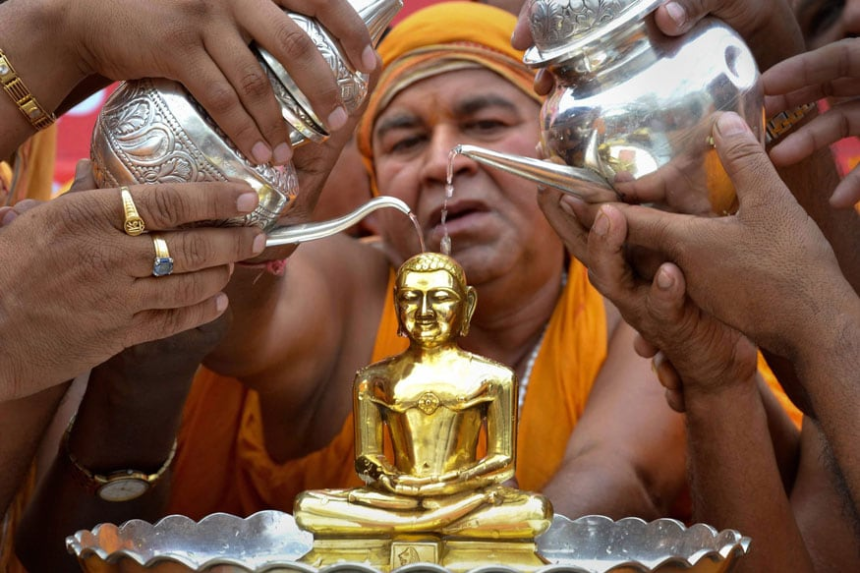
2. Abhisheka Ceremony
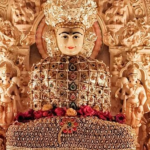
A ceremonial bathing of Mahavira’s idol—known as abhisheka—is performed, symbolizing purification and reverence.
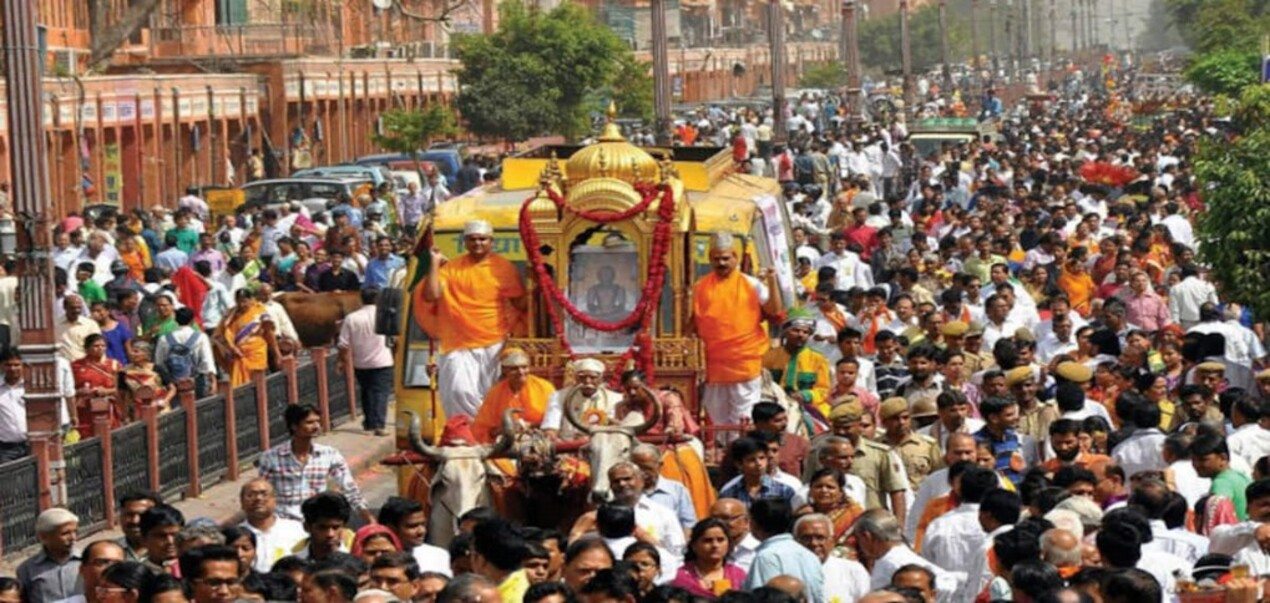
3. Rath Yatra Processions
Colorful processions, or rath yatras, are organized where Mahavira’s idol is carried through streets, accompanied by chants and devotional songs.
4. Acts of Charity
Charity forms a central part of the observance. Devotees distribute food, donate to the needy, and engage in acts of compassion—practices aligned with Mahavira’s teachings.
5. Reflection and Fasting
Many followers observe fasting or maintain a simple diet, using the day for introspection and spiritual discipline.
The Philosophy Behind the Celebration
Mahavir Jayanti is not merely a ritualistic festival—it is a reaffirmation of a moral philosophy.
Lord Mahavira’s teachings emphasize:
- Non-violence as the highest virtue
- Compassion toward all living beings
- Detachment from material excess
- Self-control and mindfulness
One of his most enduring messages states:
“It is better to win over self than to win over a million enemies.”
In a world grappling with conflict, environmental challenges, and social inequality, these principles offer a framework for more sustainable and ethical living.
A Global Celebration Beyond Borders
While Mahavir Jayanti is primarily observed in India, its significance extends globally. Jain communities in countries such as Nepal, the United States, and the United Kingdom actively participate in celebrations.
This global observance reflects the universal relevance of Mahavira’s teachings, transcending geographical and cultural boundaries.
Cultural Relevance in Modern Times
The continued observance of Mahavir Jayanti highlights an important trend: the revival of traditional philosophies in addressing modern challenges.
- Environmental ethics: Non-violence extends to ecological responsibility
- Minimalism: Aparigraha aligns with sustainable consumption
- Mental well-being: Self-discipline and mindfulness support psychological balance
As societies increasingly seek ethical frameworks for development, Mahavira’s teachings are gaining renewed attention.
Looking Ahead: The Future of Mahavir Jayanti Observance
The celebration of Mahavir Jayanti is evolving with time:
- Digital platforms are enabling virtual participation in temple rituals
- Social media amplifies the sharing of teachings and messages
- Younger generations are rediscovering Jain philosophy through modern interpretations
This blend of tradition and technology ensures that the essence of Mahavir Jayanti remains relevant while adapting to contemporary lifestyles.
Conclusion: A Festival Rooted in Timeless Wisdom
Mahavir Jayanti 2026 is more than a religious observance—it is a moment to pause and reflect on values that have endured for centuries. From non-violence and truth to compassion and simplicity, the teachings of Lord Mahavira offer guidance that remains profoundly relevant today.
As devotees gather in temples, participate in processions, and engage in acts of charity, the festival reinforces a universal message: meaningful change begins with individual transformation.