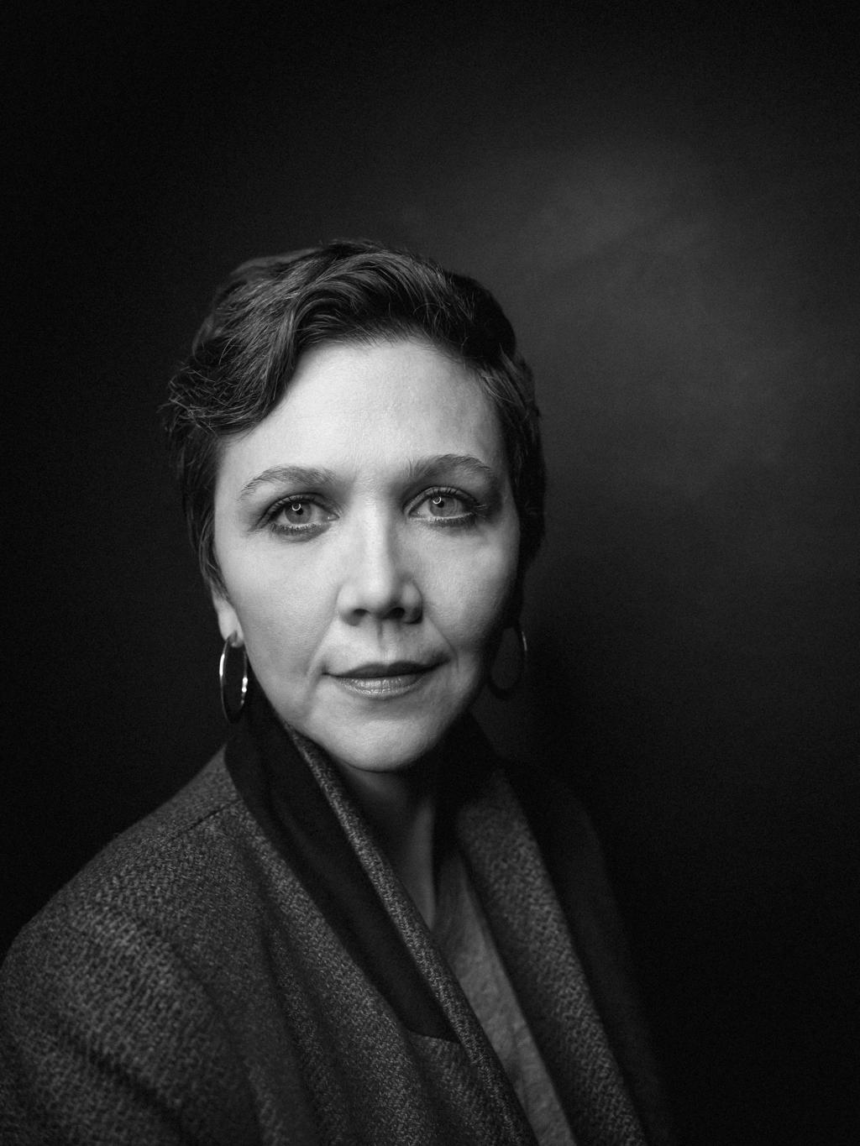
Maggie Gyllenhaal: From Fearless Actress to Defining Voice Behind the Camera
A Career at a Crossroads
For nearly three decades, Maggie Gyllenhaal built a reputation as one of Hollywood’s most daring and emotionally nuanced performers. From Secretary to The Dark Knight and Crazy Heart, her performances consistently pushed boundaries.
- Maggie Gyllenhaal: From Fearless Actress to Defining Voice Behind the Camera
- A Personal Moment That Went Public
- The Vermont Life: A Different Rhythm
- The Turning Point: From Acting to Directing
- The Lost Daughter: Proof of Concept
- The Bride (2026): Scaling Up
- The Philosophy of Control and Expression
- Beyond Film: Cultural and Industry Implications
- A Future Defined Behind the Camera
- Conclusion: Reinvention with Precision
But in 2026, the conversation around Gyllenhaal has shifted decisively. She is no longer just an actor with critical acclaim—she is now a filmmaker redefining her creative identity, openly stating that directing offers what acting never could.
At the same time, her public persona remains grounded in candid, often humorous storytelling—illustrated by a recent confession involving her husband’s beloved bees.
A Personal Moment That Went Public
While promoting her latest work, Gyllenhaal revealed an unexpectedly relatable anecdote about life at home with her husband, actor Peter Sarsgaard.
Sarsgaard, an enthusiastic beekeeper, maintains hives at their Brooklyn home and a rural retreat in Vermont. However, during his absence for film work in Europe, Gyllenhaal was left in charge of the bees—a responsibility that did not end well.
Initially, she framed the incident as a technical error:
“All of his bees in Brooklyn died because he made a mistake, he made a beekeeping mistake and he was so upset about it.”
But when pressed, she admitted her own role:
“Yeah maybe I did.”
The exchange, delivered during a podcast appearance, highlights a recurring aspect of Gyllenhaal’s public image: a willingness to blend honesty with humor. Even in discussing loss—albeit of bees—she reframed the situation with perspective:
“Some people’s only job is doing bees. Give yourself a break.”
This episode, while lighthearted, offers a window into a domestic life that contrasts sharply with her increasingly ambitious professional trajectory.
The Vermont Life: A Different Rhythm
Away from film sets, Gyllenhaal and Sarsgaard maintain a lifestyle that is deliberately removed from Hollywood’s pace. Their Vermont property, located deep within a national forest, reflects Sarsgaard’s affinity for self-sufficiency.
As Gyllenhaal described:
“We have a house in Vermont … Way deep, deep inside the … national forest but I will be honest with you that is really because of my husband …”
The setting is not merely scenic—it is functional. The couple engages in activities such as stacking wood, raising bees and chickens, and tapping maple trees.
“He like raises bees and chickens and taps maple trees and has a lovely garden … “
Yet her perspective remains pragmatic:
“If I knew it was only for a week, I could do a week.”
The contrast is notable. While Sarsgaard embraces rural immersion, Gyllenhaal maintains a measured distance, reflecting a personality that balances creative intensity with selective retreat.
The Turning Point: From Acting to Directing
If the bee incident reveals the personal side of Gyllenhaal, her professional transformation defines her current relevance.
Her transition began around the HBO series The Deuce, where she portrayed a character striving for creative agency behind the camera. That experience proved catalytic.
After years of acting, she reached a critical realization: the medium no longer provided sufficient creative control.
In her own words:
“I don’t know. I really prefer directing. This is a better job for me.”
This statement is not casual—it signals a structural shift in her career.
She elaborated on the limitations she felt as an actress:
“I felt as an actress, to be honest, like I always would hit up against a wall of how much I was able to participate or express.”
Directing, by contrast, removed those constraints entirely.
The Lost Daughter: Proof of Concept
Gyllenhaal’s directorial debut, The Lost Daughter (2021), did more than mark a transition—it validated it.
The film, starring Olivia Colman and Jessie Buckley, earned three Academy Award nominations, including recognition for her adapted screenplay.
Critically, it established her as a filmmaker with a distinct voice—capable of navigating psychological complexity with precision.
Her collaboration with Buckley highlighted a new kind of creative relationship:
“I just spoke to her like I speak to myself. No translation needed.”
This level of alignment, she suggested, was difficult to achieve as an actor operating within predefined frameworks.
The Bride (2026): Scaling Up
Her second feature, The Bride (2026), represents an escalation in both scope and ambition. Featuring Christian Bale and Jessie Buckley in multiple roles, the project positions Gyllenhaal within larger studio systems while preserving her artistic control.
The rapid progression—from debut to major production—indicates industry confidence in her directorial capabilities.
More importantly, it reinforces her own conviction that directing is not an extension of her acting career, but its replacement.
The Philosophy of Control and Expression
The core of Gyllenhaal’s shift lies in authorship.
As an actress, she operated within collaborative constraints—interpreting scripts, adapting to direction, and navigating limited agency. As a director, she defines the environment itself.
This distinction is not merely professional; it is philosophical. Directing allows her to:
- Control narrative structure
- Shape performances holistically
- Create spaces for authentic expression
In her framing, the difference is binary: limitation versus freedom.
Beyond Film: Cultural and Industry Implications
Gyllenhaal’s transition reflects a broader trend within the entertainment industry, where established actors increasingly move into directing to gain creative autonomy.
However, her case stands out for its clarity. She is not hedging between two careers—she is making a decisive pivot.
This has implications for:
- Representation: Expanding the number of female directors with mainstream influence
- Creative ownership: Challenging traditional hierarchies in filmmaking
- Career longevity: Redefining how actors evolve within the industry
Her success suggests that the path from performer to auteur is not only viable but, in some cases, necessary.
A Future Defined Behind the Camera
Despite speculation about a potential return to acting, Gyllenhaal’s own statements suggest otherwise. Her focus is firmly on directing, where she has found both creative fulfillment and professional momentum.
The question is no longer whether she will act again—it is how far she will push her directorial vision.
Given the trajectory from The Lost Daughter to The Bride, the answer appears to be: significantly.
Conclusion: Reinvention with Precision
Maggie Gyllenhaal’s current chapter is defined by two parallel narratives.
On one hand, there is the personal—grounded, candid, occasionally chaotic, as seen in the story of Sarsgaard’s bees. On the other, there is the professional—deliberate, strategic, and increasingly influential.
Together, they form a portrait of an artist in transition, not by necessity but by choice.
Her shift from acting to directing is not a departure—it is a consolidation of creative intent. And if her recent work is any indication, it marks the beginning of her most impactful phase yet.