


Lollapalooza 2026: A Cultural Powerhouse Returns to Chicago
The Sound of Summer, Reimagined
Few global music festivals carry the cultural weight and commercial impact of Lollapalooza. In 2026, the iconic event returns to Grant Park from July 30 through August 2, reaffirming its position not just as a music festival, but as a defining moment in the global entertainment calendar.
- The Sound of Summer, Reimagined
- A Lineup Led by Global Influence
- Beyond the Headliners: Depth and Diversity
- The Economic Engine Behind the Festival
- A Festival That Shapes Urban Identity
- Gender Shift and Industry Signals
- Ticket Strategy and Anticipation
- A Legacy Still Evolving
- Conclusion: More Than a Festival
This year’s announcement of the full lineup signals more than a routine reveal. It reflects a deliberate shift in musical direction, audience targeting, and cultural influence—one that blends pop dominance, electronic energy, and legacy acts into a carefully calibrated experience.
A Lineup Led by Global Influence
The 2026 edition is anchored by a headline roster that spans genres and generations. Among the most prominent names are:
-
Charli XCX
-
Tate McRae
-
Lorde
-
Olivia Dean
-
John Summit
-
Jennie
-
The Smashing Pumpkins
-
The xx
The composition is notable. Female artists and pop-driven acts dominate the top billing, signaling both market demand and evolving audience demographics. At the same time, legacy acts like The Smashing Pumpkins introduce continuity—linking the festival’s 1990s origins to its modern identity.
Notably, The Smashing Pumpkins’ return marks their first domestic appearance at Lollapalooza since 1994, adding historical resonance to the 2026 edition.
Beyond the Headliners: Depth and Diversity
While the headliners attract global attention, the broader lineup demonstrates the festival’s curatorial depth. Artists such as:

-
aespa
-
Lil Uzi Vert
-
YUNGBLUD
-
Beabadoobee
-
Empire of the Sun
-
Zara Larsson
-
Freddie Gibbs
-
Wet Leg
This layered programming strategy ensures cross-genre appeal—capturing fans of pop, indie, hip-hop, electronic, and alternative music within a single ecosystem.
The Economic Engine Behind the Festival
Lollapalooza is not only a cultural event; it is a major economic driver for Chicago.
According to Choose Chicago data, the city recorded 3.56 million hotel room bookings between June and August, generating approximately $949 million in revenue. Lollapalooza plays a central role in this surge, acting as a catalyst for tourism, hospitality, and local business activity.
The scale of this impact positions the festival alongside major global events in terms of economic influence. Hotels, restaurants, transportation networks, and retail sectors all experience measurable spikes during the festival window.

A Festival That Shapes Urban Identity
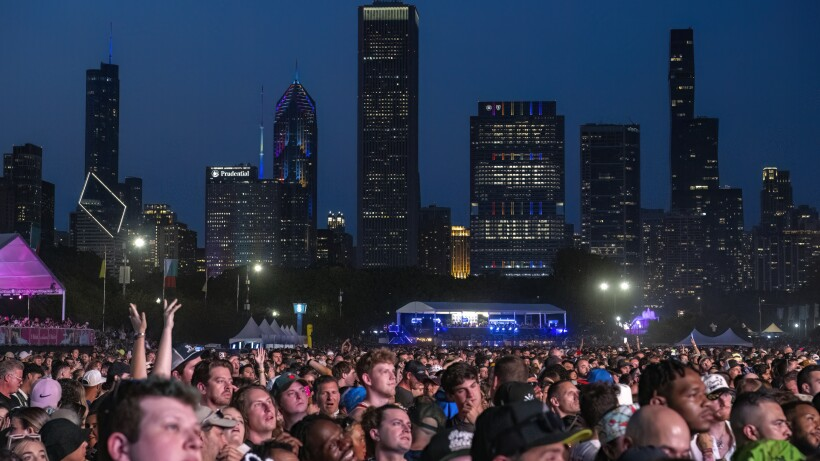
Chicago’s relationship with Lollapalooza extends beyond economics. The event has become embedded in the city’s identity, transforming Grant Park into a global cultural stage each summer.
The surrounding “Loop” district evolves into a high-density cultural zone—where music, fashion, and digital media converge. The festival also influences urban logistics, including road closures, public transit adjustments, and crowd management strategies.
In previous editions, record-breaking attendance and large-scale operations—such as the 2025 event that saw multiple arrests and unprecedented crowd levels—have underscored both the scale and complexity of hosting such a gathering.
Gender Shift and Industry Signals
One of the most notable aspects of the 2026 lineup is its gender balance—particularly at the top tier.
Artists like Charli XCX, Tate McRae, Lorde, Olivia Dean, and Jennie represent a shift toward female-led festival programming. This aligns with broader industry trends, where streaming data and global fan engagement increasingly favor female pop and crossover acts.
This shift is not incidental. It reflects strategic alignment with audience behavior, social media influence, and global music consumption patterns.
Ticket Strategy and Anticipation
Tickets for the 2026 edition are scheduled to go on presale on March 19, following the lineup announcement. The release strategy follows a familiar pattern:
What the process achieves
It creates immediate demand spikes, maximizes early revenue, and leverages social media momentum generated by lineup announcements.
Key steps
-
Lineup announcement generates global search interest
-
Presale opens within days to capture peak demand
-
Tiered pricing structures incentivize early purchases
-
General sale follows based on remaining inventory
This model has proven effective in previous years, often resulting in rapid sellouts and secondary market activity.
A Legacy Still Evolving
Since its inception in the early 1990s, Lollapalooza has transformed from a touring alternative festival into a global, multi-city brand. Yet Chicago remains its flagship location—the cultural anchor of the entire franchise.
The return of legacy acts, combined with contemporary chart-toppers and emerging artists, reflects a festival that understands its history while adapting to the present.
Conclusion: More Than a Festival
Lollapalooza 2026 is not simply another edition of a long-running event. It represents a convergence of music, economics, urban culture, and global audience behavior.
From its carefully curated lineup to its measurable economic impact, the festival continues to function as both a cultural barometer and a commercial powerhouse. As July approaches, attention will shift from announcement to experience—but the underlying significance remains clear.
Lollapalooza is no longer just a festival. It is an institution shaping how music, cities, and audiences intersect.