




Lindsey Vonn: A Career Defined by Speed, Resilience, and One Unfinished Run
The Moment That Changed Everything
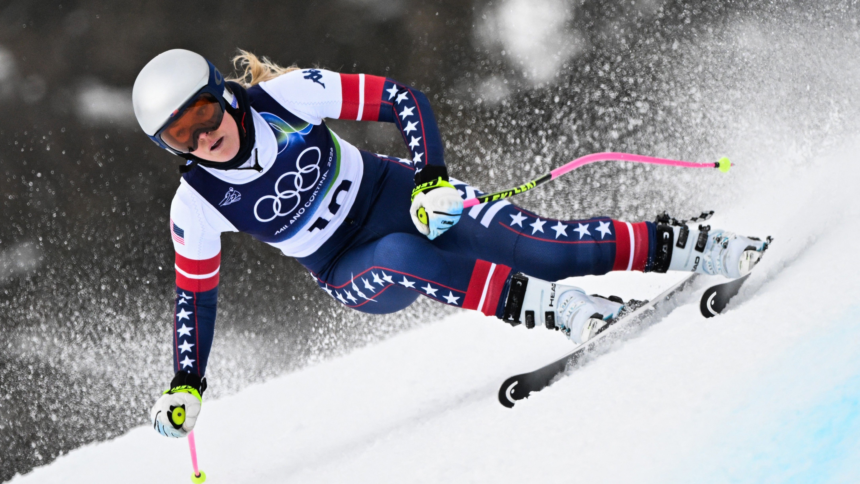
On February 8, 2026, just 13 seconds into a high-stakes Olympic downhill run, Lindsey Vonn saw her comeback story take a devastating turn.
- The Moment That Changed Everything
- A Career Built on Unmatched Excellence
- The 2026 Comeback That Defied Expectations
- The Injury: More Than a Crash
- Life After the Crash: Recovery and Reflection
- The Question of Retirement: Still Unanswered
- A Legacy Beyond Medals
- Cultural Impact and Public Perception
- What Comes Next?
- Conclusion: More Than a Moment
What was meant to be a triumphant return at the Milan-Cortina Winter Olympics instead became one of the most dramatic and defining moments of her career. Her right arm clipped a gate. The impact launched her into the air before she crashed violently onto the slope. Her left leg fractured. Her skis remained attached, twisting her limb into a dangerous position.
“I don’t want 13 seconds to define my career,” she later said.
That statement—direct, defiant, and deeply revealing—captures the essence of Vonn’s story in 2026: a legend unwilling to let a single moment overshadow decades of dominance.
A Career Built on Unmatched Excellence
Before the crash, Vonn’s legacy was already firmly established. Widely regarded as one of the greatest alpine skiers in history, her achievements reflect both longevity and dominance:

- 84 World Cup victories
- 20 World Cup globe titles
- 3 Olympic medals
- 8 World Championship medals
- Record holder for most downhill wins (men or women)
She remains the only American woman to win Olympic downhill gold, achieving the feat at the 2010 Vancouver Games.
Her career has always been defined by speed—both literal and metaphorical. She debuted in the World Cup at age 16 and quickly rose through the ranks, becoming a global face of winter sports.
Yet, her story has never been about uninterrupted success. It has been about returning—again and again—from setbacks that would have ended most careers.
The 2026 Comeback That Defied Expectations
What makes the 2026 crash particularly significant is what came before it.


After retiring in 2019, Vonn spent six years away from competitive skiing. During that time, she explored other pursuits, including car racing and writing, while also dealing with personal loss—most notably the death of her mother, Linda, in 2022 after battling ALS.
In 2024, at age 40, she underwent a partial knee replacement. For most athletes, that would signal a permanent end. For Vonn, it marked a new beginning.
Her return to skiing was initially uncertain. Then it became historic.
- She won the downhill in St. Moritz in December 2025
- She reached No. 1 in the World Cup downhill standings
- She podiumed in 7 of 8 races during her comeback season
“What I did before the Olympics has never been done before,” she said. “I was number one in the standings. No one remembers that I was winning.”
This is central to understanding her frustration: the narrative quickly shifted from triumph to tragedy.
The Injury: More Than a Crash
The Olympic fall was not just another injury—it was life-altering.
Medical assessments revealed a complex tibia fracture requiring immediate intervention. But the situation escalated further when she developed compartment syndrome, a dangerous condition where swelling restricts blood flow and can lead to permanent damage or amputation.
According to her medical team, the risk was severe:
“There was a very significant chance that she was going to lose all function of her leg, if not the leg itself.”
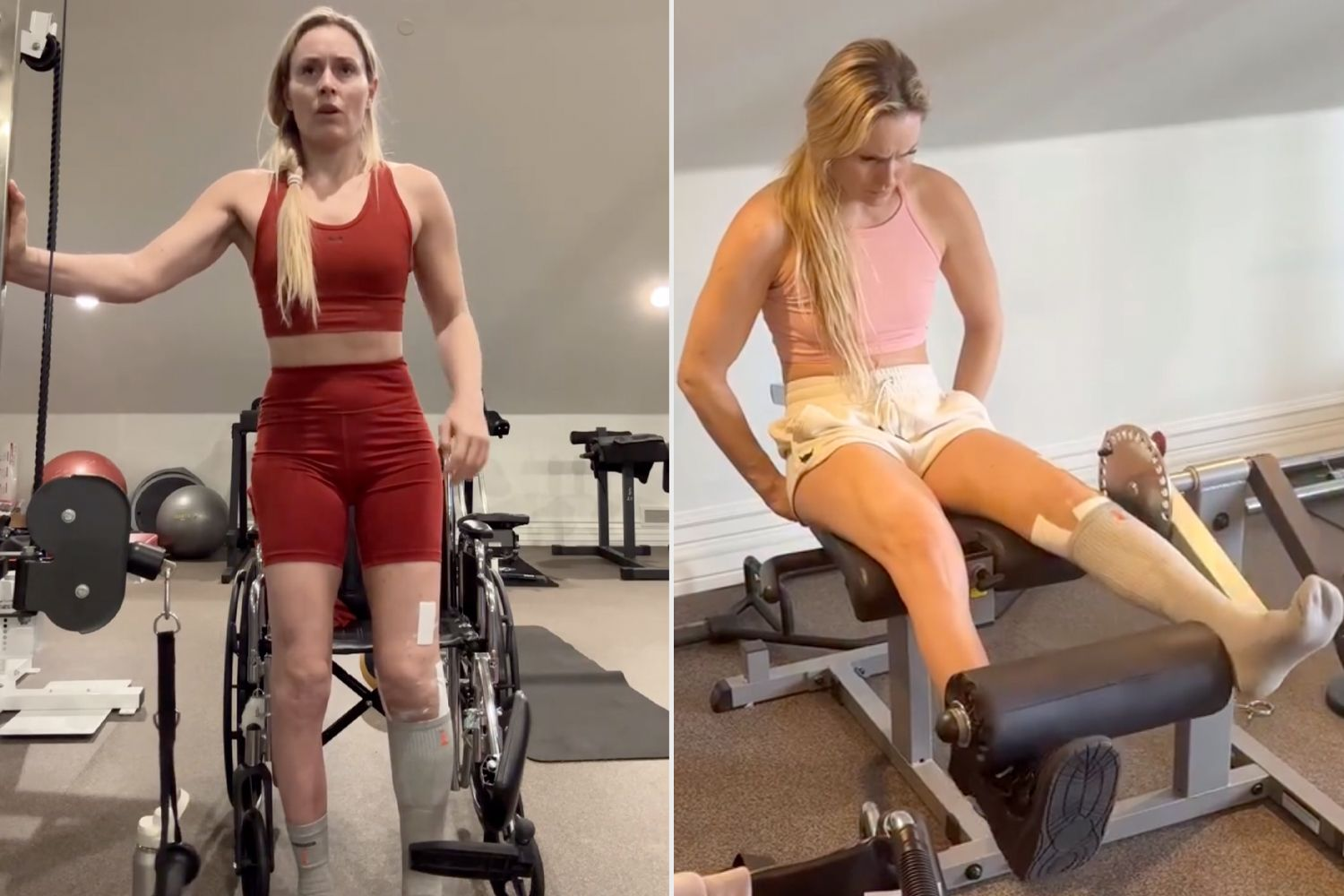
Emergency surgery relieved the pressure, followed by a six-hour reconstructive operation in Colorado. In total, she underwent four surgeries.
The recovery process has been equally intense:
- Two hours of physical therapy daily
- Two hours in a hyperbaric chamber
- Additional gym and rehabilitation work
This is not a passive recovery—it is structured, disciplined, and characteristic of an elite athlete.
Life After the Crash: Recovery and Reflection
Vonn’s recovery has been both physical and psychological.
During her hospital stay, she received support from friends and public figures, including Mariska Hargitay, who visited her and remained in close contact.
“She came to the hospital to see me… she’s amazing,” Vonn said, describing the actor as “salt of the earth good people.”
Outside of rehabilitation, Vonn has found comfort in routine—watching “Law & Order,” revisiting familiar patterns from her upbringing in a family of lawyers.
Yet beneath these quieter moments lies a persistent internal drive.
She has described recurring dreams of finishing the Olympic race she never completed—crossing the line clean, victorious, and fulfilled.
The Question of Retirement: Still Unanswered
Despite the severity of her injury, Vonn has not closed the door on competition.
“I don’t like to close the door on anything,” she said.
“It might be fun to do one more run. We’ll see.”
Her perspective is pragmatic but open-ended. She acknowledges the uncertainty of her future:
“I have no idea what my life will be like in two years or three years or four years.”
At the same time, she rejects external pressure to retire:
“I’m the only one that will decide my future. I don’t need anyone’s permission to do what makes me happy.”
Even as her father publicly urged her to step away from skiing, Vonn responded with clarity:
“I love skiing. I’ll put my feet up when I’m good and ready.”
A Legacy Beyond Medals
What distinguishes Vonn is not just her record-breaking achievements but her relationship with adversity.
Her career includes:
- Multiple ACL and MCL injuries
- Chronic knee damage
- Years of competing through pain
By the 2018 Olympics, she could not fully bend or straighten her right leg. Yet she continued competing at the highest level.
Her 2026 comeback—and subsequent crash—reinforces a central theme: resilience is not incidental to her story; it is the story.
Cultural Impact and Public Perception
Vonn’s influence extends beyond skiing.
She represents a model of longevity in elite sport, challenging assumptions about age and physical limits. At 41, she was not merely competing—she was leading the world standings.
Her openness about injury, recovery, and uncertainty has also reshaped how athletes communicate vulnerability.
The phrase “I don’t want 13 seconds to define my career” resonates beyond sports. It speaks to a broader cultural resistance to being reduced to a single failure.
What Comes Next?
As of April 2026, Vonn’s future remains deliberately undefined.
She is progressing through recovery—reportedly beginning with short cycling sessions and incremental rehabilitation milestones. Whether this leads back to competition is unclear.
But one thing is evident: the possibility remains.
“I never got a final run,” she said.
That unfinished narrative—more than any statistic—now defines the next chapter of her story.
Conclusion: More Than a Moment
Lindsey Vonn’s career cannot be reduced to a crash, a medal count, or even a comeback.
It is a longitudinal story of persistence, reinvention, and control over one’s narrative.
The 2026 Olympic crash may be one of the most dramatic moments of her life, but it is not the defining one—at least not on her terms.
Whether she returns for “one more run” or not, her legacy is already secured. The only question that remains is whether she chooses to write one final chapter.