


Leader Movie 2026: A Reinvention Story in Modern Masala Cinema
Introduction: A Film Built on Redemption and Reinvention
The 2026 Tamil action drama Leader marks a significant turning point in the cinematic journey of Legend Saravanan. Following the widely discussed reception of his debut film The Legend, Saravanan returns with a project that attempts not just to entertain, but to recalibrate his image as a mainstream actor.
- Introduction: A Film Built on Redemption and Reinvention
- The Narrative Core: A Man with a Past, A Mission with Stakes
- A Layered World of Characters and Conflict
- A Familiar Formula, Reworked with Precision
- Pacing and Structure: Urgency as a Driving Force
- Performance Analysis: Growth and Direction
- Box Office Performance: A Gradual Climb
- Themes and Cultural Context
- Strengths and Limitations
- Conclusion: A Step Forward, Not a Final Destination
Directed by R. S. Durai Senthilkumar, Leader positions itself as a fast-paced masala actioner that blends emotional storytelling, high-stakes action, and a layered narrative. The film does not attempt to reinvent the genre but instead refines familiar elements into a more cohesive and engaging experience.
The Narrative Core: A Man with a Past, A Mission with Stakes
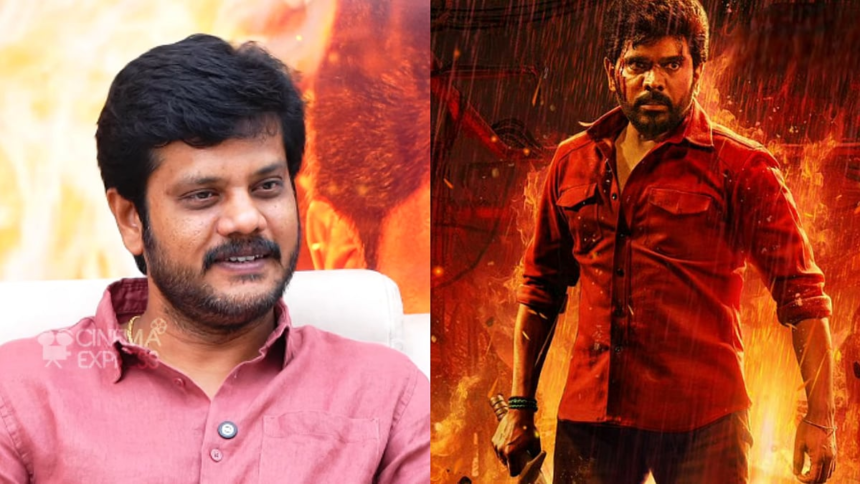
At the heart of Leader lies the story of Sakthivel, portrayed by Saravanan—a seemingly ordinary mechanic whose life is anything but simple. Beneath this modest exterior lies a man with a dangerous past and a mission that unfolds across multiple layers.
The film introduces a central conflict involving a planned attack using ammonium nitrate at the Thoothukudi port, orchestrated by a shadowy international network.



Sakthivel’s involvement is initially ambiguous. However, as the story progresses, it becomes clear that:
- He is deeply connected to the unfolding conspiracy
- His past plays a crucial role in present events
- His personal motivations—especially his relationship with his daughter—drive the narrative forward
The film builds tension through multiple questions: Who is Sakthivel really? What is his connection to law enforcement? And how does he fit into a global threat that extends beyond local crime?



A Layered World of Characters and Conflict
Key Players in the Story
Leader features a strong ensemble cast that contributes to the film’s narrative depth:
- Andrea Jeremiah as Inspector Chandhra Sathyamoorthy
- Shaam as SP Bakthavachalam
- Santhosh Prathap as the antagonist “The Devil”
- Payal Rajput as Meera
The antagonist, referred to as “The Devil,” is central to the film’s stakes, leading a plan tied to global operations and large-scale destruction.
Meanwhile, law enforcement characters operate within a morally complex system—one where corruption, hierarchy, and hidden agendas shape the investigation. The collaboration between Chandhra and Bakthavachalam adds procedural tension to the storyline.
A Familiar Formula, Reworked with Precision
The Masala Template—But Smarter
Leader does not shy away from established tropes of Tamil commercial cinema. Instead, it embraces them:



- The “ordinary man with a hidden past” narrative
- Emotional father-daughter dynamics
- High-intensity action sequences
- A dramatic interval reveal
However, what distinguishes the film is its restraint in execution. Unlike exaggerated portrayals often seen in similar films, Leader attempts to ground its protagonist:
- Sakthivel is not treated as an invincible hero
- Action sequences are designed to serve the narrative rather than dominate it
- Emotional moments are controlled rather than overly melodramatic
This recalibration allows the film to maintain engagement without overwhelming the audience.
Pacing and Structure: Urgency as a Driving Force
One of the defining features of Leader is its fast-paced storytelling. The film moves quickly, rarely pausing to dwell on logic or exposition.
As noted in its reception, the narrative:
- Constantly introduces new developments
- Maintains a ticking-clock tension
- Keeps viewers engaged through momentum rather than complexity
Even when the plot stretches plausibility—with global conspiracies, covert operations, and dramatic action set pieces—it remains compelling due to its pacing.
A standout sequence occurs before the interval, delivering a high-impact moment that anchors the film’s emotional and narrative stakes.
Performance Analysis: Growth and Direction
Saravanan’s Evolution
A central talking point of Leader is Saravanan’s performance. Compared to his debut, this film demonstrates:
- A more subdued acting style
- Better alignment with character requirements
- Reduced reliance on exaggerated heroism
The director plays a crucial role in this transformation by:
- Framing scenes to highlight strengths
- Minimizing exposure of limitations
- Maintaining consistency in tone
The result is a performance that feels more integrated into the story rather than dominating it.
Supporting Cast Contributions
The supporting actors provide stability and credibility:
- Andrea Jeremiah brings intensity to her investigative role
- Shaam adds depth with a character rooted in authority and experience
- Santhosh Prathap’s portrayal of the villain leans into stylized excess, matching the film’s tone
Collectively, the ensemble ensures that Leader functions as a cohesive narrative rather than a single-actor showcase.
Box Office Performance: A Gradual Climb
Commercially, Leader experienced a modest but improving start:
- Opening day: approximately ₹75 lakhs
- Day 2: ₹1.14 crore (52% growth)
- Total India net: ₹1.89 crore
- Total gross: ₹2.17 crore
Occupancy trends showed gradual improvement throughout the day, particularly during night shows, suggesting:
- Growing audience interest
- Potential for weekend momentum
While not an explosive opening, the upward trajectory indicates positive word-of-mouth influence.
Themes and Cultural Context
The Father-Daughter Emotional Core
At its emotional center, Leader explores:
- Parental sacrifice
- Protection and vulnerability
- The intersection of personal and professional conflicts
Sakthivel’s relationship with his daughter serves as the film’s anchor, humanizing an otherwise action-heavy narrative.
Cinema and Star Image Reinvention
The film also reflects a broader trend in Indian cinema:
- Established personalities attempting reinvention
- Audience openness to transformation when supported by strong direction
- A shift from spectacle-driven stardom to narrative-driven performances
Leader positions itself within this evolving landscape, where storytelling and characterization are increasingly prioritized over image-building alone.
Strengths and Limitations
What Works
- Engaging pacing and narrative urgency
- Improved performance by the lead actor
- Strong ensemble cast
- Effective use of familiar cinematic templates
Where It Falters
- Logical inconsistencies in plot elements
- Occasional tonal shifts between seriousness and camp
- Over-reliance on genre conventions
Despite these limitations, the film manages to sustain audience interest through its execution.
Conclusion: A Step Forward, Not a Final Destination
Leader (2026) is not a flawless film, nor does it attempt to redefine the action genre. Instead, it succeeds in something more pragmatic: it stabilizes and strengthens the foundation of its lead actor’s cinematic journey.
By combining controlled storytelling, strategic direction, and a clear understanding of its audience, the film delivers an experience that is both familiar and refined.
In a cinematic landscape where reinvention often determines longevity, Leader stands as a calculated and largely effective step forward.