




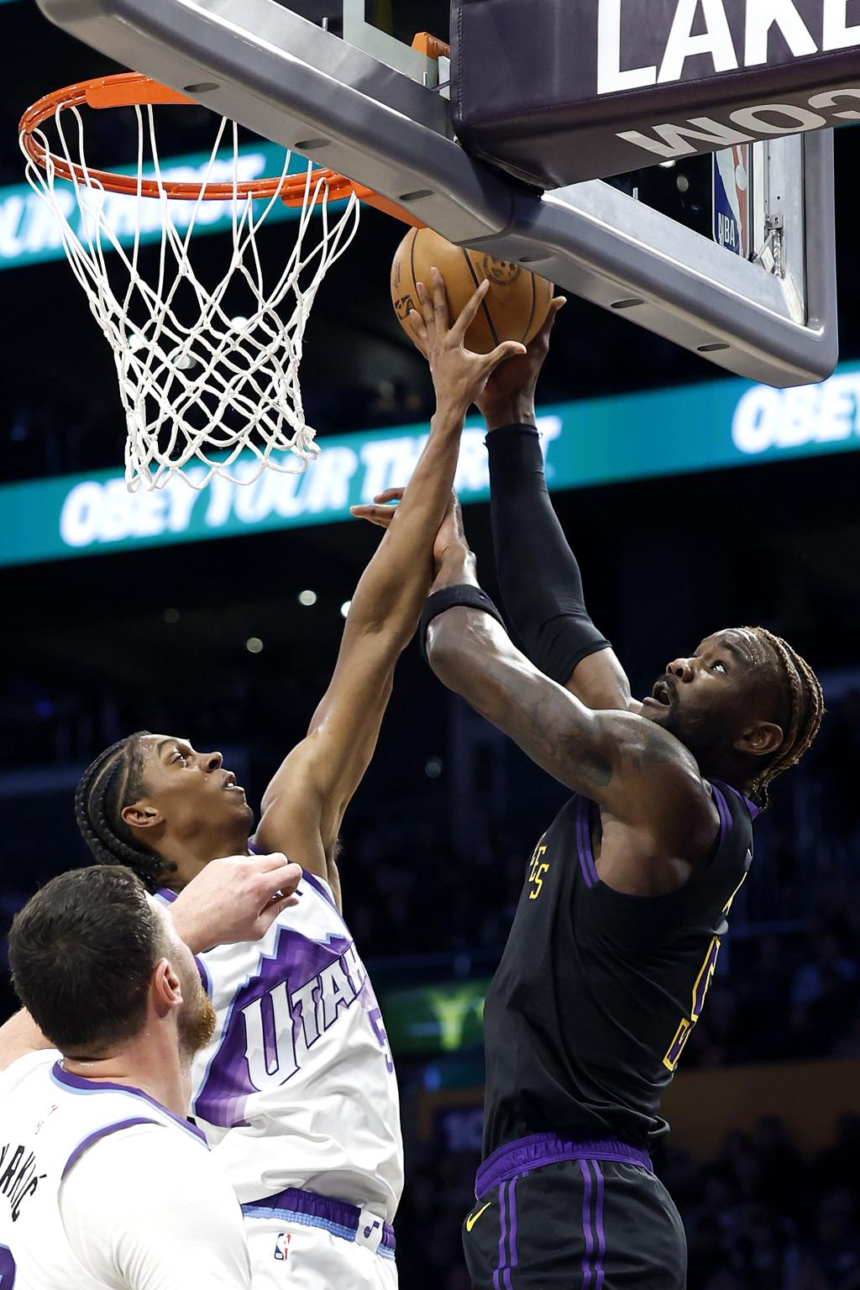
Lakers vs Jazz: A Statement Win That Sets the Tone for the Playoffs
The final night of the NBA regular season rarely carries ambiguity. For some teams, it marks closure. For others, it signals momentum. For the Los Angeles Lakers, their dominant 131–107 victory over the Utah Jazz was not just another win—it was a controlled, deliberate statement ahead of the postseason.
- From Tip-Off to Final Buzzer: Total Control by Los Angeles
- LeBron James Sets the Tone Early
- Balanced Scoring Defines Lakers’ Identity
- Utah’s Effort vs Structural Limitations
- The Numbers Behind the Result
- Tactical Breakdown: Why the Lakers Won
- Season Context: Momentum Meets Positioning
- The Bigger Picture: Experience vs Development
- What This Means Heading Into the Playoffs
- Final Assessment
This was a game defined by clarity of purpose. One team executed with precision and playoff intent; the other continued a long-term rebuild, showing glimpses of promise but lacking cohesion.
From Tip-Off to Final Buzzer: Total Control by Los Angeles
The structure of the game tells the story clearly. From the opening quarter, the Lakers imposed their tempo and never relinquished control.


Quarter Breakdown:
- Q1: Lakers 32 – 22 Jazz
- Q2: Lakers 30 – 23 Jazz
- Q3: Lakers 33 – 29 Jazz
- Q4: Lakers 36 – 33 Jazz
By halftime, the Lakers had already built a comfortable cushion. By the third quarter, the margin had stretched beyond 20 points—effectively ending the contest as a competitive affair.
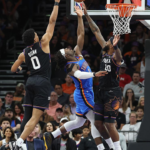

This was not a comeback narrative or a dramatic finish. It was systematic dominance.
LeBron James Sets the Tone Early
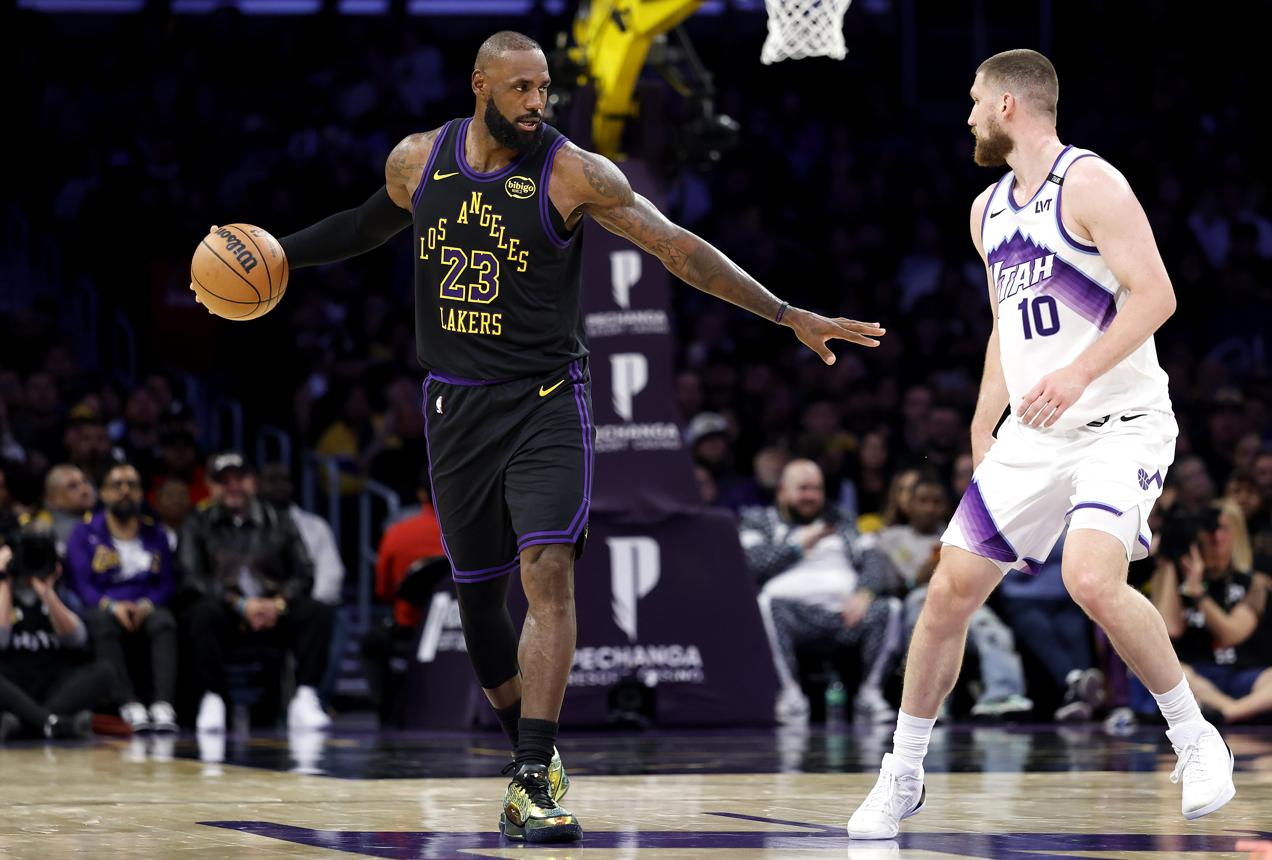
At 41, LeBron James continues to dictate games with efficiency rather than excess. His contribution—18 points, 6 assists, and 4 rebounds in the first half—was enough to establish control.
He did not return after halftime, a decision rooted in strategy rather than necessity. The Lakers are managing workload carefully, prioritizing health as the playoffs begin.
His early sequence—steals converted into fast-break points and a well-timed alley-oop to Deandre Ayton—captured the Lakers’ approach: aggressive, structured, and efficient.



Balanced Scoring Defines Lakers’ Identity
One of the most significant indicators of playoff readiness is offensive distribution. The Lakers demonstrated this clearly, with multiple players contributing at a high level:
- Oscar Tshiebwe: 29 points, 17 rebounds
- Rui Hachimura: 22 points, 10 rebounds
- Deandre Ayton: 22 points, 10 rebounds
- Dalton Knecht: 17 points
The presence of multiple double-doubles highlights a critical advantage—Los Angeles is not reliant on a single offensive engine. Instead, they operate through layered scoring options and consistent interior presence.
Utah’s Effort vs Structural Limitations
For the Jazz, the outcome aligns with a broader season narrative. They finished with a 22–60 record, extending their road losing streak to 11 games.
Despite the loss, individual performances offered insight into the franchise’s future direction:
- Oscar Tshiebwe: 29 points, 17 rebounds
- Bez Mbeng: 14 points, 9 assists
- Ace Bailey: 15 points (7/21 shooting)
- Cody Williams: 14 points, 6 assists
Bailey’s inefficiency reflects a familiar pattern in developing players—high usage combined with inconsistent shot selection. However, his offensive instincts and defensive potential remain evident.
Williams, meanwhile, continues to evolve as a playmaker, showing improved decision-making compared to earlier stages of his career.
The Numbers Behind the Result
A closer look at team statistics explains why the game tilted so heavily in favor of Los Angeles:
- Field Goal Percentage: Lakers 55% | Jazz 44%
- Three-Point Shooting: Lakers 44% | Jazz 21%
- Rebounds: Lakers 49 | Jazz 42
- Assists: Lakers 37 | Jazz 29
The most decisive factor was perimeter efficiency. A 23-point gap in three-point accuracy created a scoring separation that Utah could not recover from.
Ball movement was equally critical. With 37 assists, the Lakers maintained offensive fluidity, consistently finding high-percentage shots.
Tactical Breakdown: Why the Lakers Won
1. Perimeter Efficiency
Los Angeles exploited Utah’s weak perimeter defense, converting nearly half of their three-point attempts.
2. Interior Dominance
With Ayton and Hachimura controlling the paint, the Lakers secured rebounds and second-chance opportunities.
3. Depth and Rotation Management
Even after resting key players in the second half, the Lakers maintained control—an indicator of roster depth.
4. Game Management
Resting stars like James and Luke Kennard reflects long-term planning. This was a team already preparing for the next phase.
Season Context: Momentum Meets Positioning
The implications of this result extend beyond the scoreboard.
- Lakers finished 49–33, securing the No. 4 seed in the Western Conference
- They enter the playoffs on a three-game winning streak
- Next matchup: first-round series against Houston
For Utah:
- Fourth-worst record in the league
- Positioned for strong NBA Draft Lottery odds
- A coin flip will determine whether they hold the fourth or fifth-best odds
This contrast—one team rising, the other rebuilding—defined the game’s underlying narrative.
The Bigger Picture: Experience vs Development
This matchup represents two distinct phases in team building:
Lakers
A veteran-driven team balancing performance and preservation. Their focus is immediate—competing for a championship.
Jazz
A development-focused roster investing in youth, draft capital, and long-term growth.
The result reflects these priorities. Los Angeles executed with urgency; Utah played with patience.
What This Means Heading Into the Playoffs
The Lakers’ performance suggests a team peaking at the right time:
- Offensive balance reduces predictability
- Defensive structure remains consistent
- Veteran leadership provides composure
Their upcoming series against Houston introduces a new dynamic—youthful pace versus experienced execution.
If this game is an indicator, the Lakers are entering the postseason with a clear identity and strategic discipline.
Final Assessment
The Lakers’ 131–107 win over the Jazz was not simply a routine victory. It was a controlled demonstration of readiness.
They dictated pace, executed efficiently, and managed their roster with precision. Utah, while showing individual promise, lacked the structural consistency to compete at that level.
As the playoffs begin, Los Angeles appears organized, balanced, and prepared. Utah, meanwhile, turns its attention to development and the opportunities ahead in the draft.